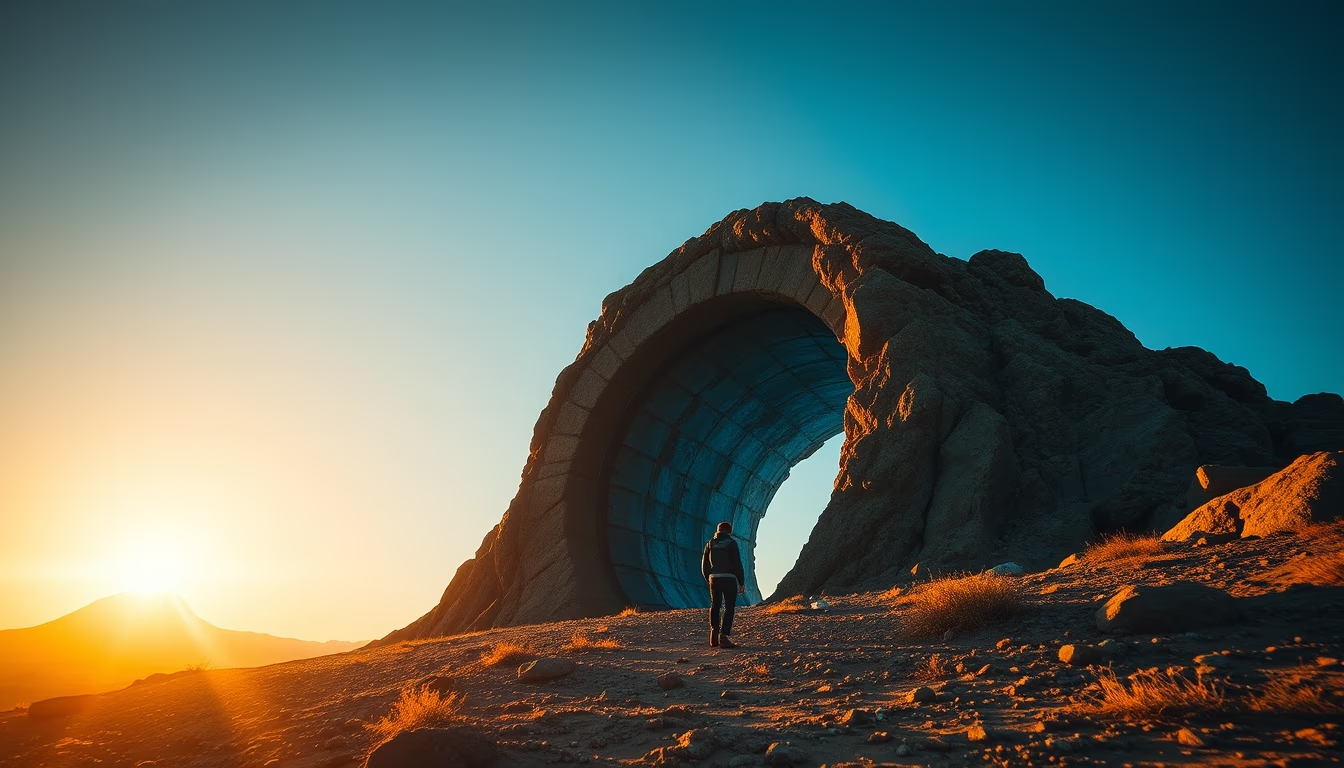
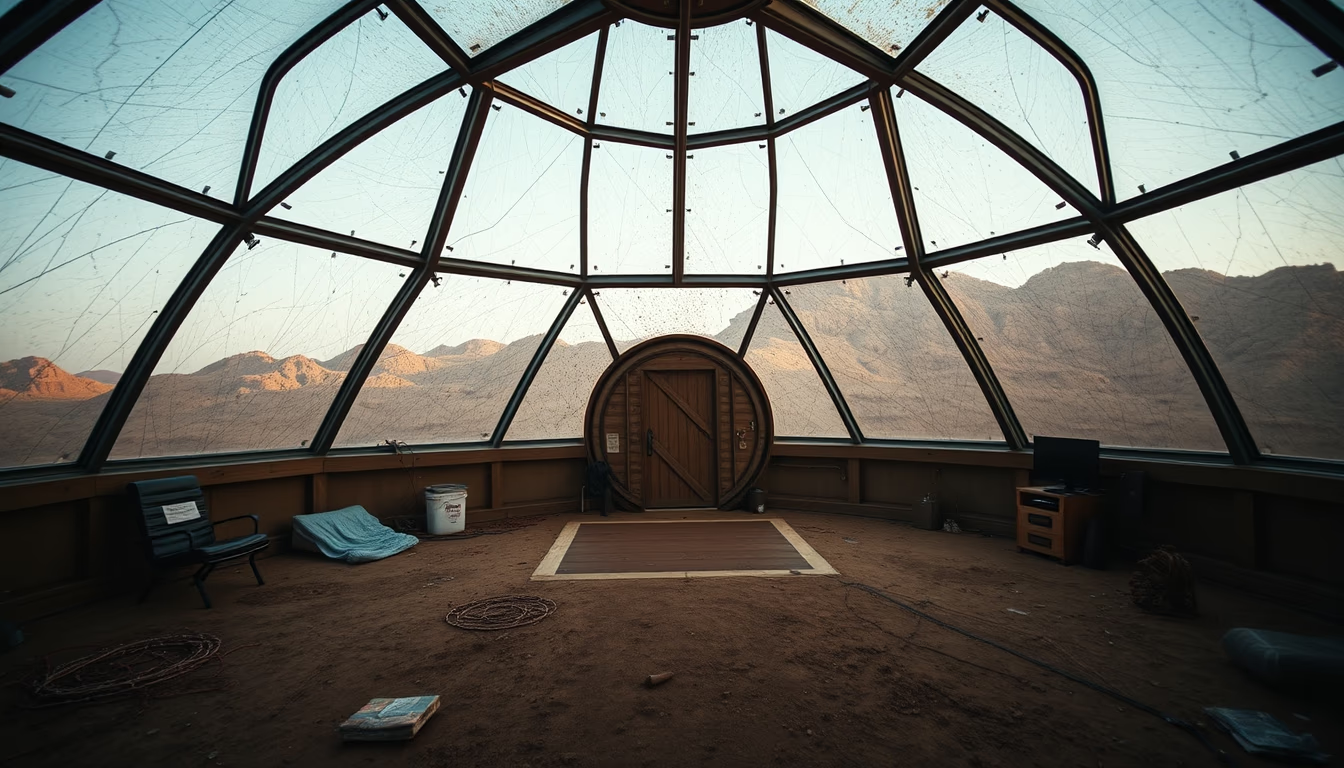
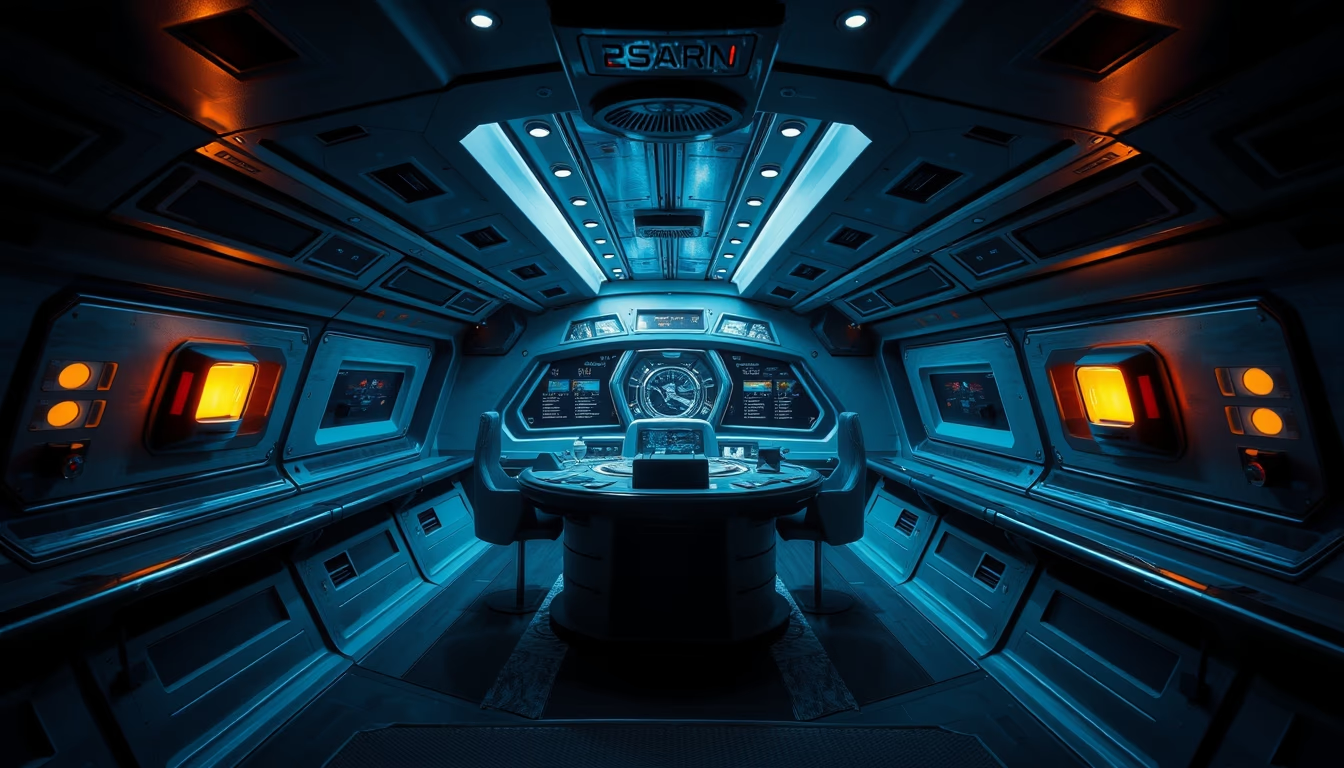
Space station futuristic
1344×768 · AVIF · CC BY 4.0

Futuristic space stations represent humanity's next leap in cosmic exploration, combining advanced engineering and visions of orbital colonies.
About this subject
Since the International Space Station (ISS), launched in 1998, humanity has maintained a continuous presence in low Earth orbit. However, concepts of futuristic space stations go far beyond, proposing colossal structures like the O'Neill cylinder or Stanford torus, capable of housing thousands of people. These projects, inspired by physicist Gerard K. O'Neill in the 1970s, envision self-sufficient habitats with agriculture, artificial gravity generated by rotation, and closed-loop recycling systems. The ISS, 109 meters long and weighing 420 tons, is a technological marvel, but its maintenance cost is staggering: US$ 3-4 billion per year, shared by 15 countries. Future stations could be built with materials mined from the Moon or asteroids, slashing launch costs from Earth. Companies like SpaceX and Blue Origin are already developing reusable rocket technologies that make larger module transport feasible. Moreover, the Axiom Commercial Space Station, set to dock with the ISS in 2024 and later become independent, signals a new era of private orbital infrastructure. Culturally, futuristic space stations populate popular imagination in films like '2001: A Space Odyssey' and 'Interstellar', as well as series like 'The Expanse', which portray realistic political and sustainability challenges in space habitats. In Brazil, interest grows with initiatives from the Brazilian Space Agency and partnerships with NASA for microgravity experiments. The vision of a futuristic space station is not merely aesthetic but functional: they would serve as ports for Mars missions, cutting-edge science labs, and perhaps the first cities beyond Earth.
Frequently Asked Questions
What is the difference between the ISS and a futuristic space station?
The ISS is a modular station in low Earth orbit, focused on research and international cooperation. A futuristic station would be much larger, with artificial gravity, self-sufficiency, and capacity for thousands, functioning as a colony or base for interplanetary missions.
How would artificial gravity be created in a future space station?
By rotating all or part of the station, generating centrifugal force that simulates gravity. Concepts like the O'Neill cylinder use rotation to create artificial gravity inside, allowing occupants to live and work under Earth-like conditions.
Which companies are leading the development of commercial space stations?
Companies like Axiom Space, SpaceX, and Blue Origin are at the forefront. Axiom plans to build the first commercial space station, SpaceX develops the Starship for heavy cargo transport, and Blue Origin works on orbital habitats with the Orbital Reef project.
Direct URL
https://pub-c7d6a6ea828543ac903a74a341ccb2e1.r2.dev/imagens/space-station-futuristic-cinematic-wide-shot-fresh3.avifHow to credit
Include a visible link back to UtilizAí. Copy one of the snippets below:
<a href="https://xn--utiliza-eza.com/en/midia/imagens/space-station-futuristic-cinematic-wide-shot-fresh3">Space station futuristic</a> by <a href="https://xn--utiliza-eza.com">UtilizAí</a>, licensed under <a href="https://creativecommons.org/licenses/by/4.0/">CC BY 4.0</a>.
[Space station futuristic](https://xn--utiliza-eza.com/en/midia/imagens/space-station-futuristic-cinematic-wide-shot-fresh3) by [UtilizAí](https://xn--utiliza-eza.com), CC BY 4.0
License: CC-BY-4.0