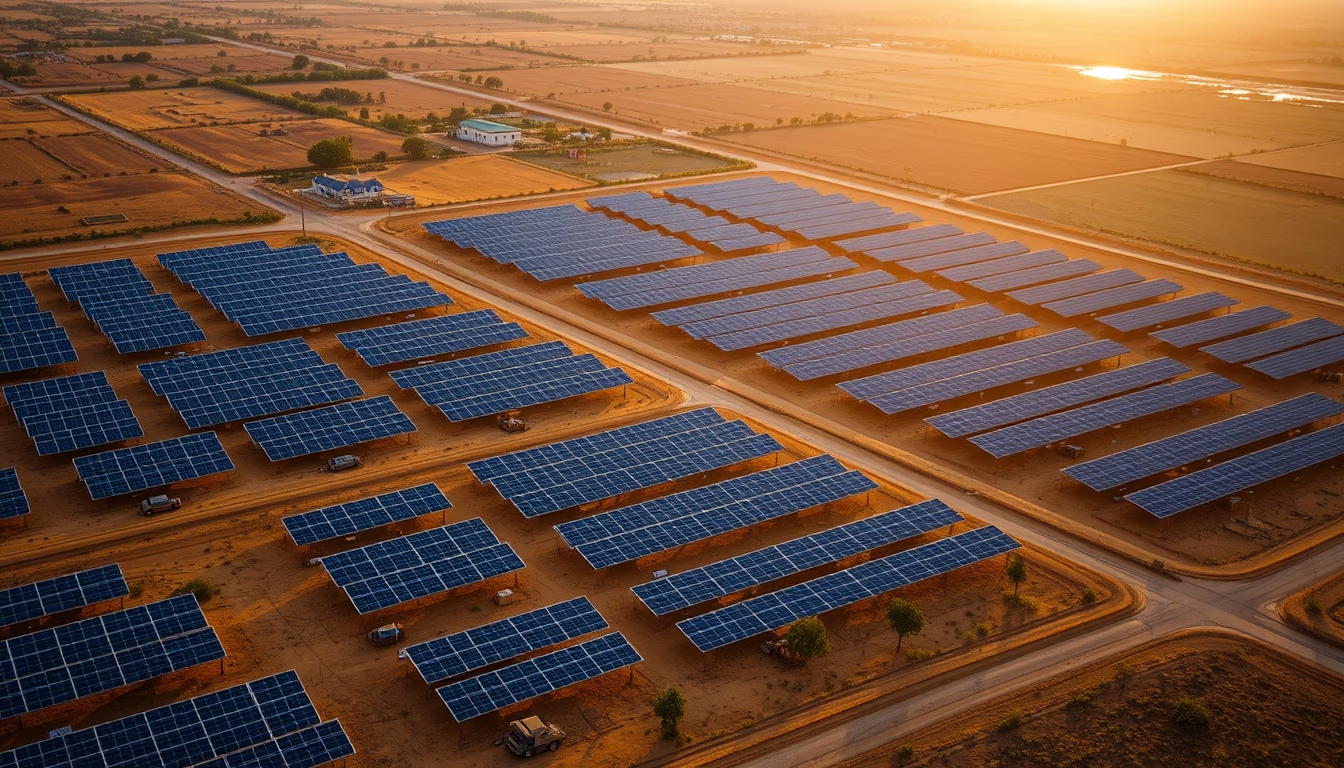
Solar farm aerial vast
1344×768 · AVIF · CC BY 4.0
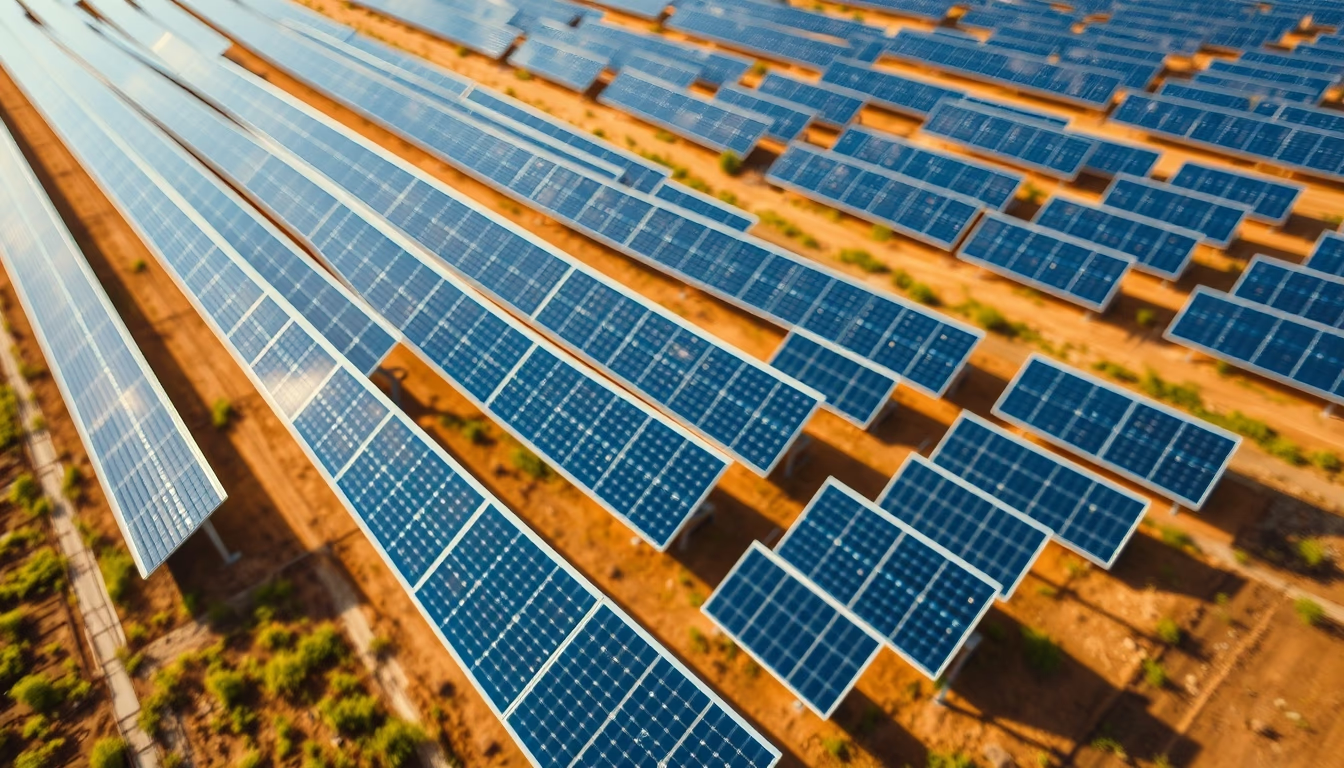
Utility-scale solar farms transform vast areas into clean energy sources, driving the global energy transition.
About this subject
Solar farms are large-scale installations that concentrate thousands of photovoltaic panels to generate electricity at utility scale. Unlike residential or commercial systems, these plants occupy extensive areas, often in arid or semi-arid regions where solar radiation is abundant. In Brazil, the sector has grown remarkably: according to the Brazilian Solar Photovoltaic Energy Association (ABSOLAR), installed capacity from large solar farms surpassed 10 GW in 2023, with highlights in Bahia, Minas Gerais, and Pernambuco.
Globally, countries like China, the United States, and India lead in installed capacity. The world's largest solar farm currently is the Bhadla complex in India, with over 2,200 MW. These projects require billion-dollar investments and employ solar tracking technologies to maximize light capture. Additionally, integration with battery storage systems has become common to mitigate generation intermittency.
A frequently debated aspect is land use. Although solar farms occupy large areas, they can coexist with agriculture in agrivoltaic systems, where crops grow under or between panels. Studies show this approach can increase land-use efficiency by up to 60% while reducing water evaporation. In Brazil's semi-arid region, pilot projects have already demonstrated technical and economic feasibility.
Maintenance of these plants involves periodic panel cleaning and remote monitoring via drones, generating skilled jobs. Typical lifespan of a solar farm is 25-30 years, after which components are recycled. With falling photovoltaic module costs and advancing decarbonization policies, these installations are expected to expand further, contributing to carbon neutrality goals.
Frequently Asked Questions
What is a solar farm?
It is a large-scale power plant composed of thousands of photovoltaic panels that generate electricity for commercial use, usually connected to the national grid.
Which is the largest solar farm in the world?
Currently, the Bhadla complex in India is the largest, with an installed capacity of over 2,200 MW, followed by plants in China and the United Arab Emirates.
What are the environmental impacts of solar farms?
Main impacts include large land use and water for panel cleaning. However, agrivoltaic systems and component recycling help mitigate these effects.
Direct URL
https://pub-c7d6a6ea828543ac903a74a341ccb2e1.r2.dev/imagens/solar-farm-aerial-vast-macro-closeup-p1.avifHow to credit
Include a visible link back to UtilizAí. Copy one of the snippets below:
<a href="https://xn--utiliza-eza.com/en/midia/imagens/solar-farm-aerial-vast-macro-closeup-p1">Solar farm aerial vast</a> by <a href="https://xn--utiliza-eza.com">UtilizAí</a>, licensed under <a href="https://creativecommons.org/licenses/by/4.0/">CC BY 4.0</a>.
[Solar farm aerial vast](https://xn--utiliza-eza.com/en/midia/imagens/solar-farm-aerial-vast-macro-closeup-p1) by [UtilizAí](https://xn--utiliza-eza.com), CC BY 4.0
License: CC-BY-4.0