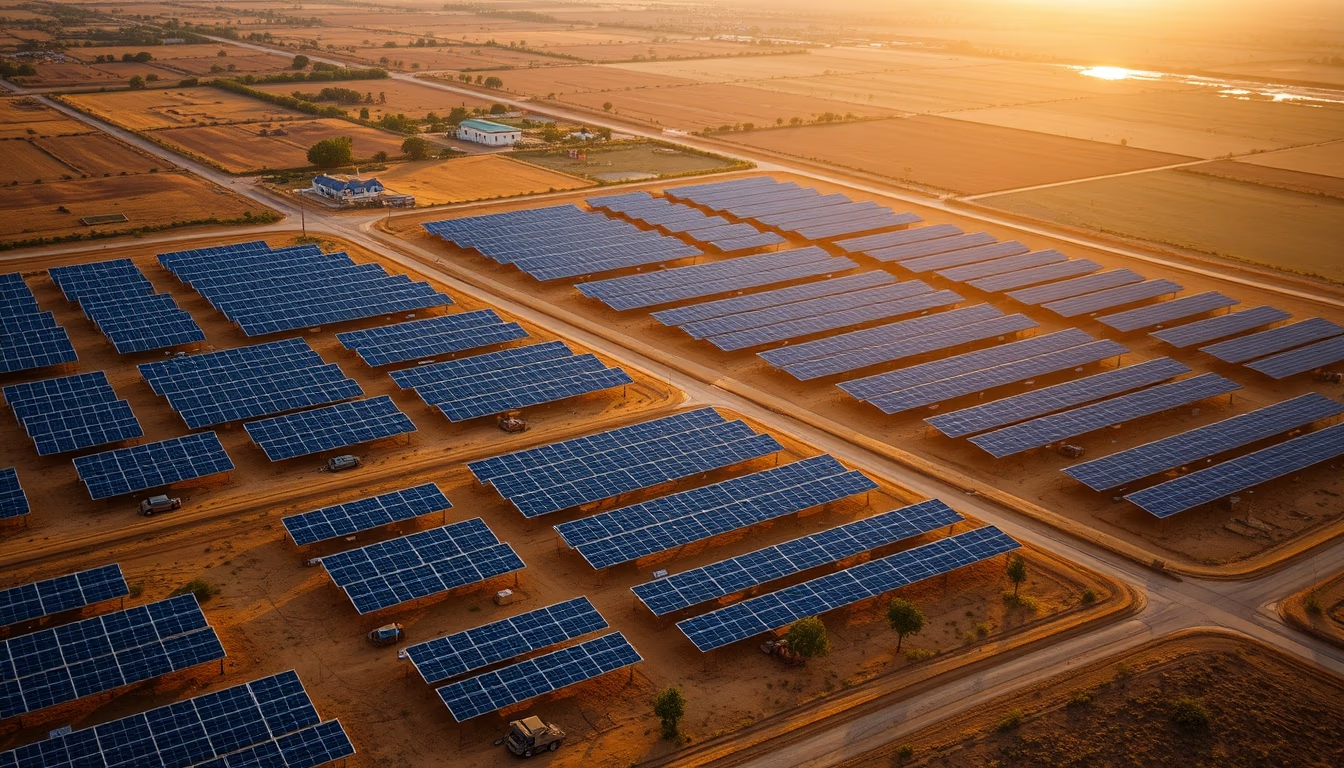
Solar farm aerial vast
1344×768 · AVIF · CC BY 4.0
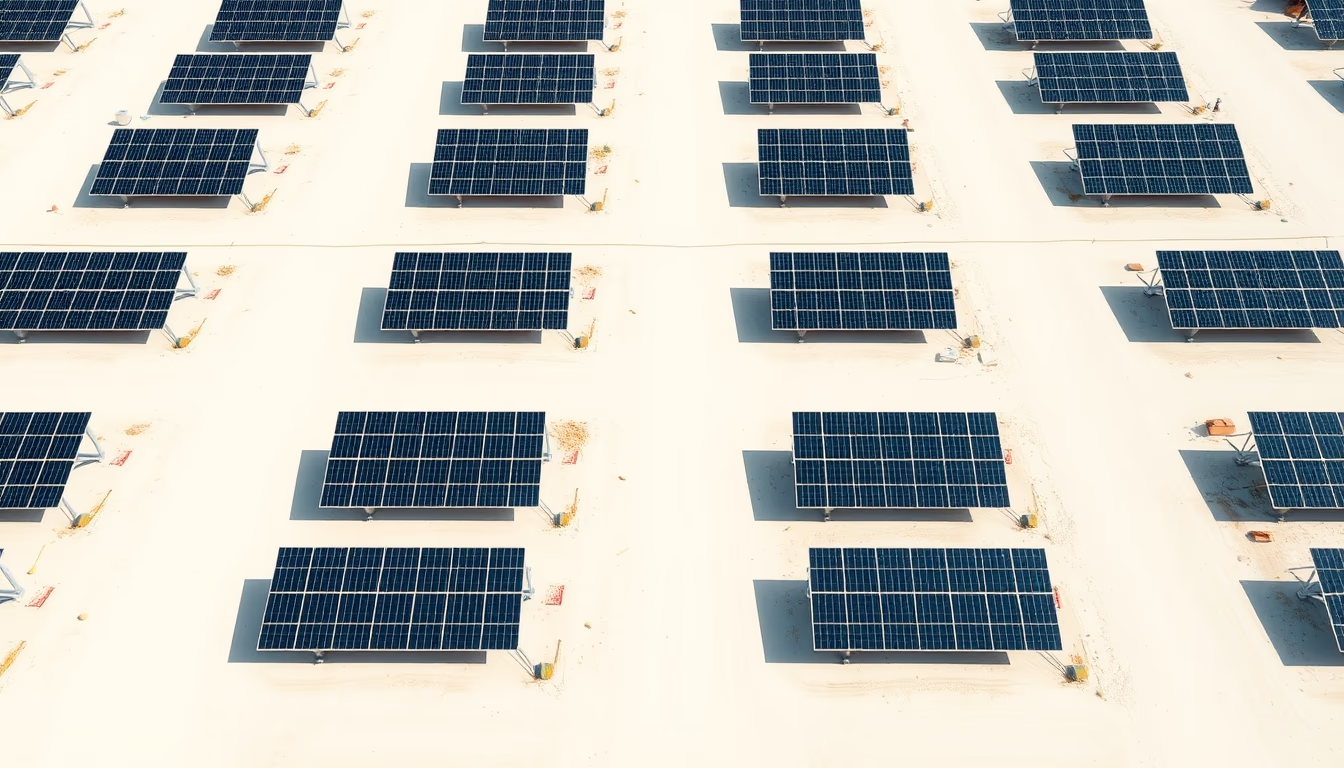
Large-scale solar farms are reshaping the global energy landscape; find data on capacity, growth, and Brazil's role in this sector.
About this subject
Large-scale solar farms are the backbone of the renewable energy transition. In Brazil, installed photovoltaic solar capacity surpassed 30 GW in 2024, according to ABSOLAR, with notable plants such as Janaúba (MG), which has 1.2 GW of power. These complexes occupy vast areas, often in the semi-arid Northeast, where solar irradiation is among the highest in the world. Bifacial panel technology and solar trackers have boosted efficiency to over 25%, lowering the levelized cost of energy (LCOE) to levels competitive with hydroelectricity.
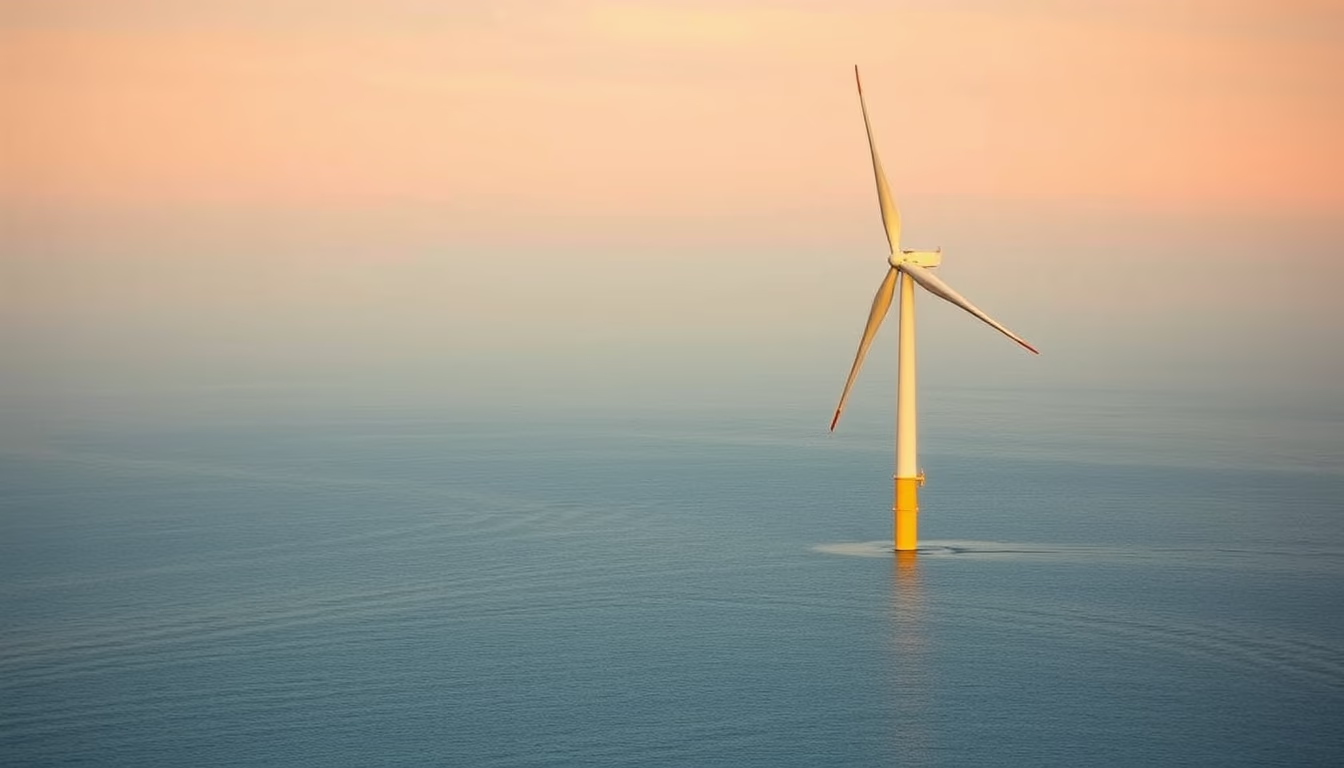
Globally, China leads with over 400 GW cumulative capacity, followed by the United States and India. The world's largest plant, the Bhadla Solar Park in India, covers 56 km² and generates 2.2 GW. In Brazil, integrating solar farms with existing hydropower allows better use of reservoirs, as solar complements dry periods. Hybrid projects combine solar and wind, such as the Serra Branca complex (RN), totaling 1 GW solar and 1.5 GW wind.
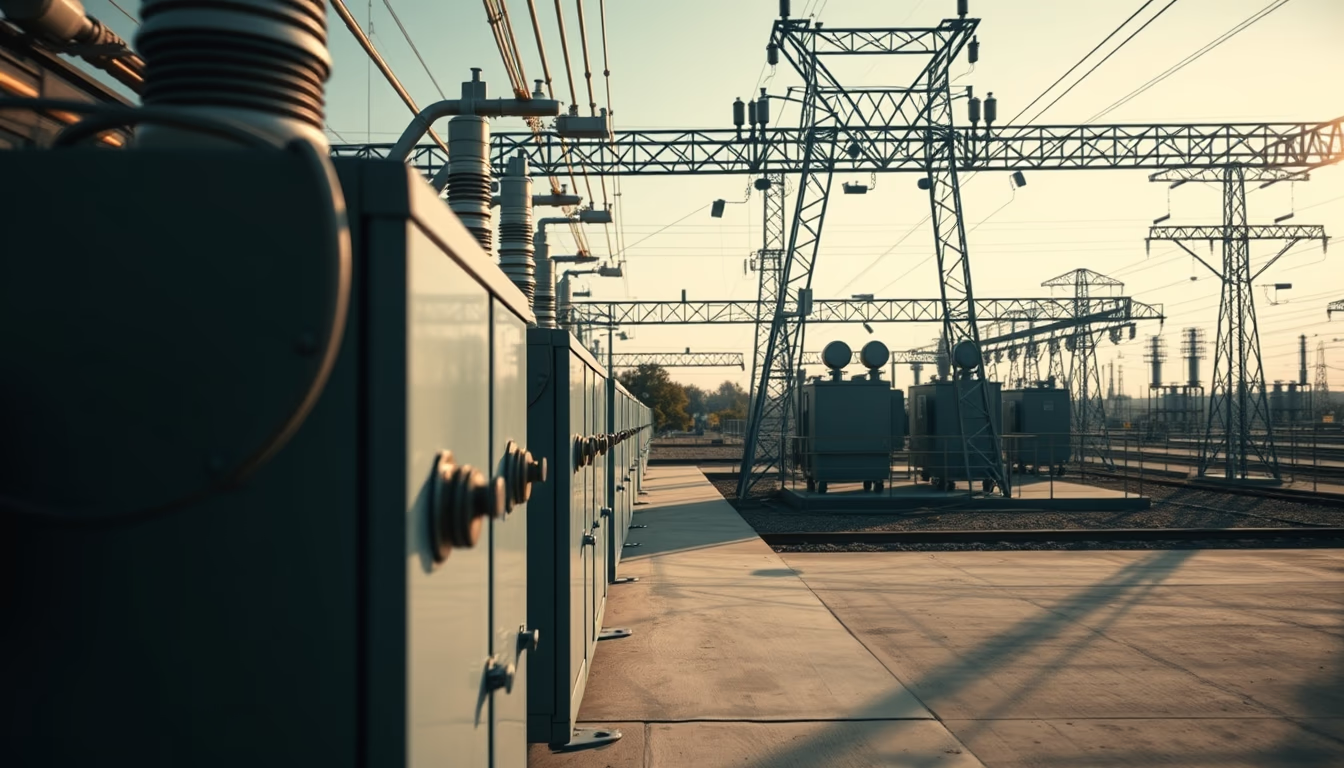
Expansion challenges include the need for long-distance transmission lines and land-use compatibility. However, Brazil's potential is immense: the Northeast region receives up to 2,200 kWh/m²/year of irradiation, and EPE studies indicate the country could reach 45 GW of centralized solar by 2030. Distributed generation via rooftop panels is also growing, but large plants remain the most cost-effective solution for industrial demand. Battery storage, though nascent, is already being deployed in projects like the Coremas plant (PB), adding 100 MW of batteries to stabilize the grid.
Frequently Asked Questions
What is the largest solar farm in Brazil?
The largest solar farm in operation in Brazil is the Janaúba complex in Minas Gerais, with 1.2 GW of installed capacity. Another highlight is the São Gonçalo park in Piauí, with 1.1 GW.
How do solar farms impact the environment?
Solar farms emit zero greenhouse gases during operation. The main impacts are land use (potentially affecting local ecosystems) and water consumption for panel cleaning, but practices like agrivoltaics and robotic cleaning reduce these effects.
Does Brazil have potential to expand centralized solar energy?
Yes, the Brazilian Northeast has one of the highest solar irradiations in the world. Studies by the Energy Research Office indicate the country could reach 45 GW of centralized solar by 2030, driven by energy auctions and falling equipment costs.
Direct URL
https://pub-c7d6a6ea828543ac903a74a341ccb2e1.r2.dev/imagens/solar-farm-aerial-vast-commercial-product-photography-p5.avifHow to credit
Include a visible link back to UtilizAí. Copy one of the snippets below:
<a href="https://xn--utiliza-eza.com/en/midia/imagens/solar-farm-aerial-vast-commercial-product-photography-p5">Solar farm aerial vast</a> by <a href="https://xn--utiliza-eza.com">UtilizAí</a>, licensed under <a href="https://creativecommons.org/licenses/by/4.0/">CC BY 4.0</a>.
[Solar farm aerial vast](https://xn--utiliza-eza.com/en/midia/imagens/solar-farm-aerial-vast-commercial-product-photography-p5) by [UtilizAí](https://xn--utiliza-eza.com), CC BY 4.0
License: CC-BY-4.0