Solar farm aerial vast
1344×768 · AVIF · CC BY 4.0
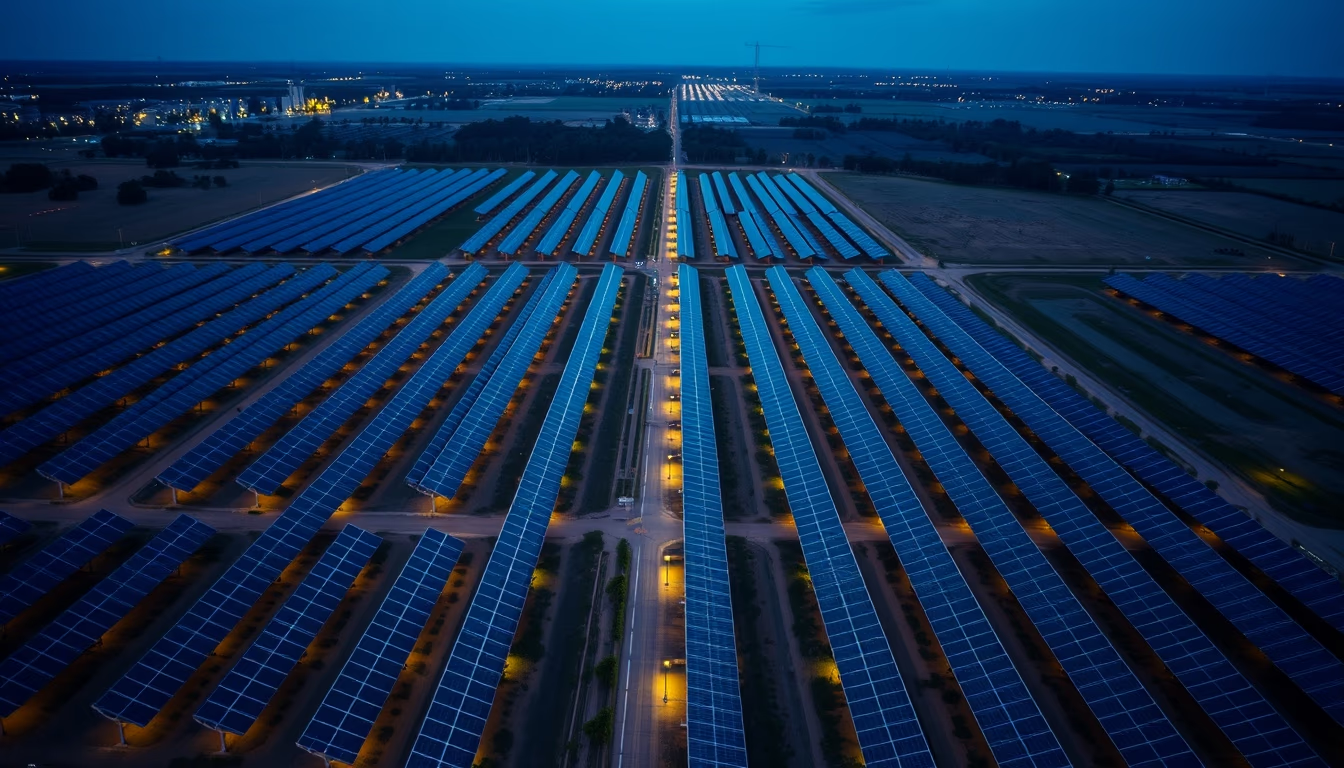
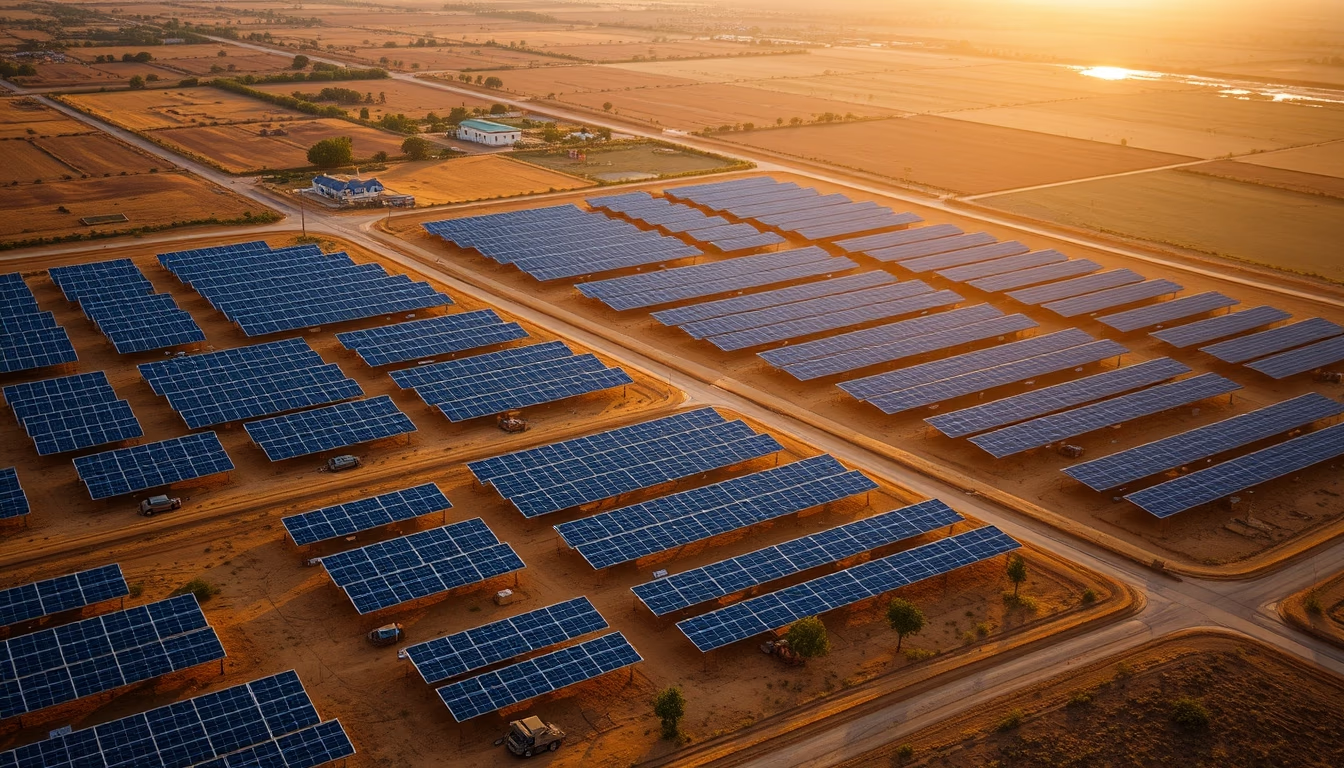
Large-scale solar farms span hectares with photovoltaic panels, generating clean energy for thousands of homes and reducing carbon emissions.
About this subject
Large-scale solar farms, also called solar parks or power plants, concentrate thousands of photovoltaic panels over continuous land areas to generate electricity at utility scale. The world's largest solar farm, the Bhadla Solar Park in India's Thar Desert, spans 5,700 hectares and has a capacity of 2.2 GW, enough to power over 1.5 million homes. In Brazil, the highest solar irradiation levels occur in the Northeast region, with annual averages above 2,000 kWh/m², making it ideal for such installations.
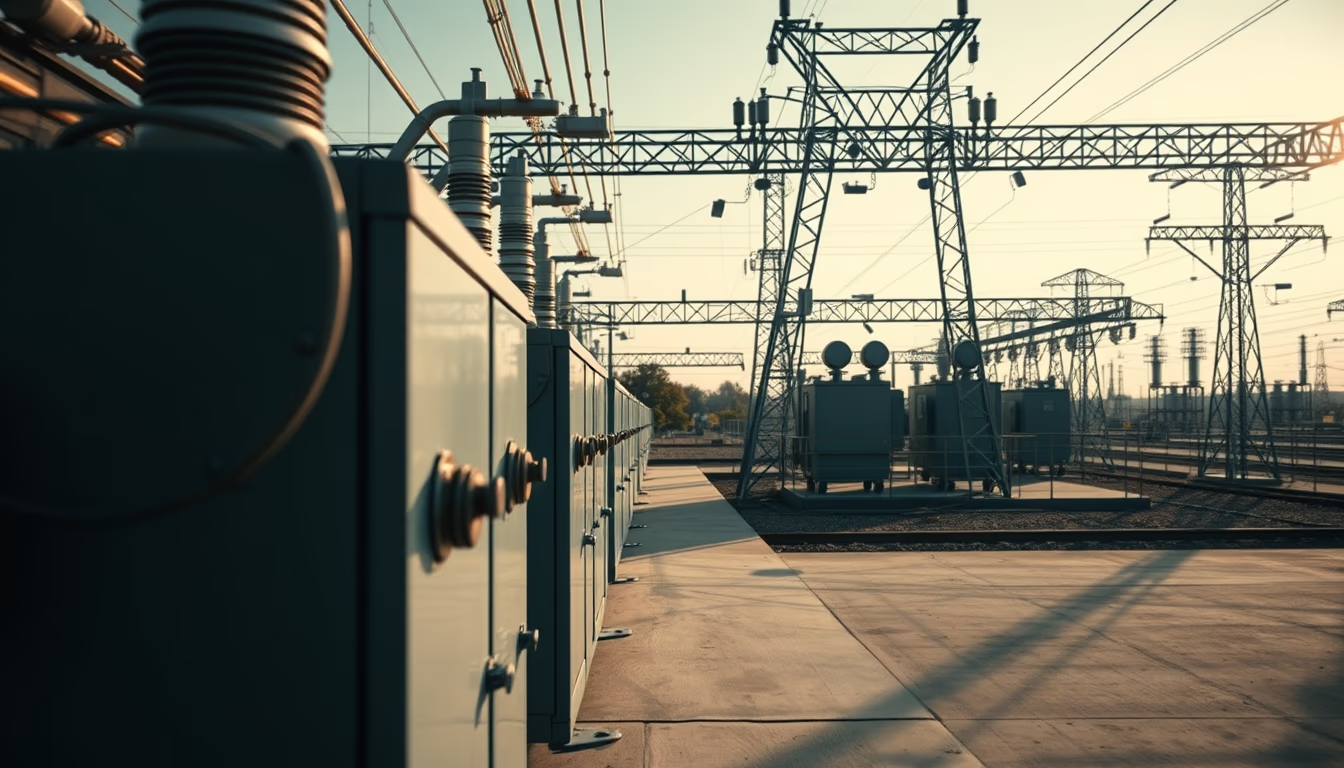
Modern solar farms use monocrystalline or polycrystalline silicon panels with efficiencies ranging from 18% to 22%. Many incorporate single-axis or dual-axis tracking systems that rotate panels to follow the sun, boosting energy capture by up to 25% compared to fixed mounts. The direct current produced is converted to alternating current via inverters and stepped up with transformers for grid connection. Capacity factors in sunny regions typically range from 20% to 25%, with Brazil's semi-arid zone achieving top values.
The global solar boom is driven by plummeting costs: the levelized cost of electricity (LCOE) for utility-scale solar has fallen by nearly 90% since 2009. China, the United States, and India are the top three markets, with China alone accounting for over 30% of global capacity. However, large land requirements (roughly 2 to 4 hectares per MW) raise concerns about land-use competition, habitat fragmentation, and visual impact. Innovations like agrivoltaics (co-locating crops and panels) and floating solar on reservoirs are addressing these issues.
Environmental benefits are significant: a 100 MW solar farm can offset approximately 120,000 tons of CO₂ per year compared to coal-fired generation. Life-cycle emissions (including manufacturing, installation, and decommissioning) are about 40 g CO₂/kWh, far lower than fossil fuels. Recycling panels at end-of-life (circa 30 years) is still developing, but EU directives have set targets for recovery rates above 80%. As battery storage costs decline, solar farms are increasingly paired with energy storage to provide dispatchable power, accelerating the transition to a low-carbon grid.
Frequently Asked Questions
How much land is needed for a 1 MW solar farm?
Typically, a 1 MW solar farm requires 2 to 4 hectares, depending on panel type, tracking systems, and latitude. In sun-rich regions like the US Southwest, around 2.5 hectares per MW is common.
What are the main environmental impacts of large solar farms?
Key impacts include land use changes, habitat fragmentation, and water use for panel cleaning. End-of-life panel disposal also poses challenges. However, dual-use approaches (agrivoltaics) and floating solar can reduce land competition.
How does solar farm output vary by season and time of day?
Output peaks around solar noon and drops to zero at night. Seasonal variation is significant: summer generates more due to longer days and higher sun angle. Tracking systems can boost early morning and late afternoon production.
Direct URL
https://pub-c7d6a6ea828543ac903a74a341ccb2e1.r2.dev/imagens/solar-farm-aerial-vast-aerial-drone-shot-p0.avifHow to credit
Include a visible link back to UtilizAí. Copy one of the snippets below:
<a href="https://xn--utiliza-eza.com/en/midia/imagens/solar-farm-aerial-vast-aerial-drone-shot-p0">Solar farm aerial vast</a> by <a href="https://xn--utiliza-eza.com">UtilizAí</a>, licensed under <a href="https://creativecommons.org/licenses/by/4.0/">CC BY 4.0</a>.
[Solar farm aerial vast](https://xn--utiliza-eza.com/en/midia/imagens/solar-farm-aerial-vast-aerial-drone-shot-p0) by [UtilizAí](https://xn--utiliza-eza.com), CC BY 4.0
License: CC-BY-4.0