Smart meter wall
1344×768 · AVIF · CC BY 4.0
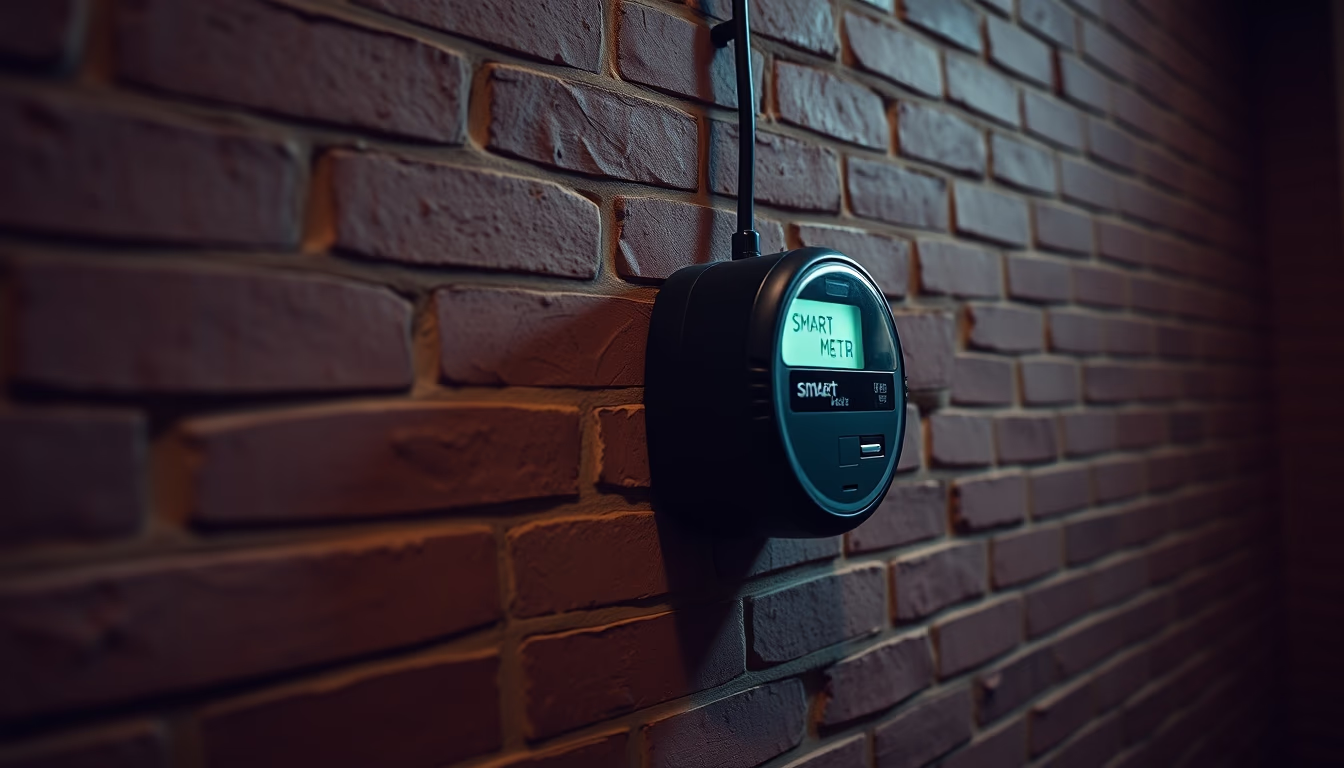
Smart meters revolutionize electricity management by enabling remote monitoring and greater efficiency in distribution networks.
About this subject
Smart meters are digital devices that record electricity consumption at regular intervals and automatically transmit this data to the utility company. Unlike traditional analog meters that require manual reading, smart meters use wireless communication networks such as RF mesh or cellular technology to relay real-time information. This innovation allows energy distributors to monitor demand, detect grid faults, and adjust supply dynamically, reducing technical and commercial losses. In Brazil, the National Electric Energy Agency (ANEEL) has set targets for the gradual replacement of conventional meters with smart models, especially in large urban areas. Mass adoption, however, still faces challenges such as high equipment costs and the need for robust communication infrastructure. Globally, countries like Sweden, Italy, and the United States have already deployed millions of smart meters, reaping benefits such as peak demand reduction and integration of distributed renewable sources like residential solar panels. Consumers also gain from detailed insights into their usage patterns, which can encourage more conscious and economical habits. Furthermore, smart meters are a key component of smart grids, which promise greater reliability and energy sustainability in the near future.
Frequently Asked Questions
How does a smart meter work?
A smart meter measures energy consumption at frequent intervals (e.g., every 15 or 30 minutes) and automatically transmits this data to the utility company via wireless communication networks such as cellular or radio frequency.
Can a smart meter lower my electricity bill?
Yes, by providing detailed consumption information, the smart meter helps you identify peak usage times and adopt savings measures, such as turning off appliances during high-demand periods. Some utilities also offer time-of-use tariffs.
What are the privacy risks of smart meters?
Consumption data can reveal household routines, but utilities must comply with data protection regulations. In Brazil, the LGPD (General Data Protection Law) applies, and many systems use encryption to prevent unauthorized access.
Direct URL
https://pub-c7d6a6ea828543ac903a74a341ccb2e1.r2.dev/imagens/smart-meter-wall-lo-fi-disposable-camera-p3.avifHow to credit
Include a visible link back to UtilizAí. Copy one of the snippets below:
<a href="https://xn--utiliza-eza.com/en/midia/imagens/smart-meter-wall-lo-fi-disposable-camera-p3">Smart meter wall</a> by <a href="https://xn--utiliza-eza.com">UtilizAí</a>, licensed under <a href="https://creativecommons.org/licenses/by/4.0/">CC BY 4.0</a>.
[Smart meter wall](https://xn--utiliza-eza.com/en/midia/imagens/smart-meter-wall-lo-fi-disposable-camera-p3) by [UtilizAí](https://xn--utiliza-eza.com), CC BY 4.0
License: CC-BY-4.0