Smart contract code on monitor with solidity syntax highlighted
1344×768 · AVIF · CC BY 4.0

Solidity smart contract code displayed on a monitor during twilight, highlighting the programming of smart contracts on the Ethereum blockchain.
About this subject
Smart contracts are self-executing programs that run on blockchains like Ethereum, primarily written in Solidity, a high-level contract-oriented programming language. The code displayed on the monitor, with syntax highlighting, shows functions such as transfer and balanceOf, common in ERC-20 tokens, which define rules for transferring digital assets without intermediaries. The image captures a twilight moment, a time when developers often work on projects after hours.
Developing smart contracts requires precision, as errors can lead to irreversible loss of funds. Solidity was created in 2014 by Gavin Wood and is influenced by C++, Python, and JavaScript. Today, it is the primary language for contracts on the Ethereum Virtual Machine (EVM), supporting inheritance, libraries, and complex user-defined types.
The symmetrical composition of the screen with code reflects the logical and orderly structure of contracts, while the twilight blue hue evokes security and trust, core values of blockchain technology. The image also shows an anomaly detected in the code, possibly a bug or vulnerability, a common scenario during security audits, which are essential to ensure contract integrity.
Interestingly, the first smart contract in history was part of the Ethereum protocol, enabling decentralized applications. Today, millions of contracts are deployed on the network, moving billions of dollars in value. The nocturnal scene symbolizes the continuous work of developers worldwide, who dedicate hours to creating decentralized solutions.
Frequently Asked Questions
What is Solidity and why is it used for smart contracts?
Solidity is a high-level programming language created for writing smart contracts on Ethereum. It is designed for the Ethereum Virtual Machine (EVM) and supports inheritance, libraries, and complex types, facilitating the creation of secure and efficient contracts.
What does an anomaly detected in a smart contract mean?
An anomaly detected indicates a possible bug, vulnerability, or unexpected behavior in the contract code. This can be identified during security audits and must be fixed to prevent financial loss or malicious exploitation.
How does token transfer work in an ERC-20 smart contract?
The transfer function in an ERC-20 contract allows a holder to send tokens to another address. It checks if the sender has sufficient balance and updates both balances, all executed automatically on the blockchain without intermediaries.
Direct URL
https://pub-c7d6a6ea828543ac903a74a341ccb2e1.r2.dev/imagens/smart-contract-code-on-monitor-with-solidity-syntax-highlighted-symmetric-composition-twilight-blue-hour.avifHow to credit
Include a visible link back to UtilizAí. Copy one of the snippets below:
<a href="https://xn--utiliza-eza.com/en/midia/imagens/smart-contract-code-on-monitor-with-solidity-syntax-highlighted-symmetric-composition-twilight-blue-hour">Smart contract code on monitor with solidity syntax highlighted</a> by <a href="https://xn--utiliza-eza.com">UtilizAí</a>, licensed under <a href="https://creativecommons.org/licenses/by/4.0/">CC BY 4.0</a>.
[Smart contract code on monitor with solidity syntax highlighted](https://xn--utiliza-eza.com/en/midia/imagens/smart-contract-code-on-monitor-with-solidity-syntax-highlighted-symmetric-composition-twilight-blue-hour) by [UtilizAí](https://xn--utiliza-eza.com), CC BY 4.0
License: CC-BY-4.0
Tags
Related images
 Smart contract code on monitor with solidity syntax highlighted
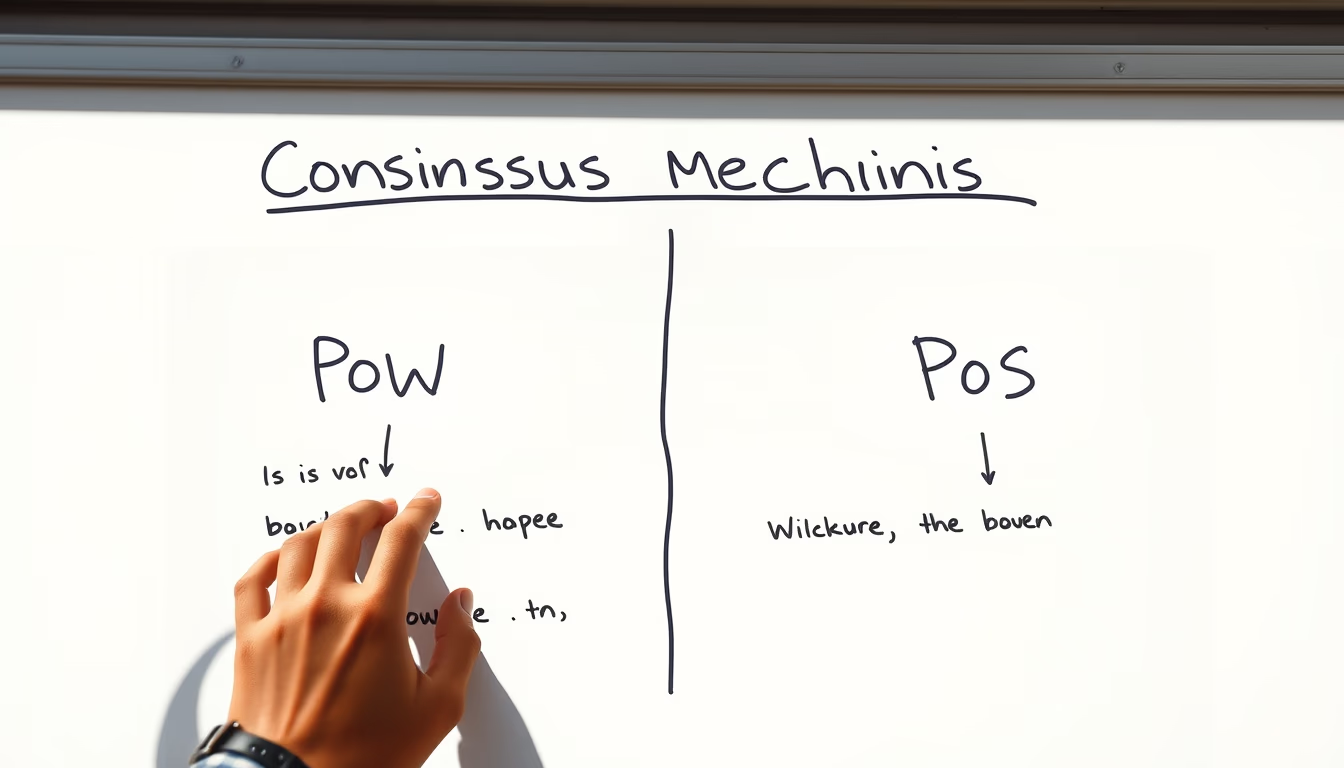 Consensus mechanism diagram on whiteboard showing PoW vs PoS
 Distributed ledger multiple servers in data center
 Hash function visualization cryptographic equations on glass screen
 Hash function visualization cryptographic equations on glass screen
 Hash function visualization cryptographic equations on glass screen