Smart contract code on monitor with solidity syntax highlighted
1344×768 · AVIF · CC BY 4.0
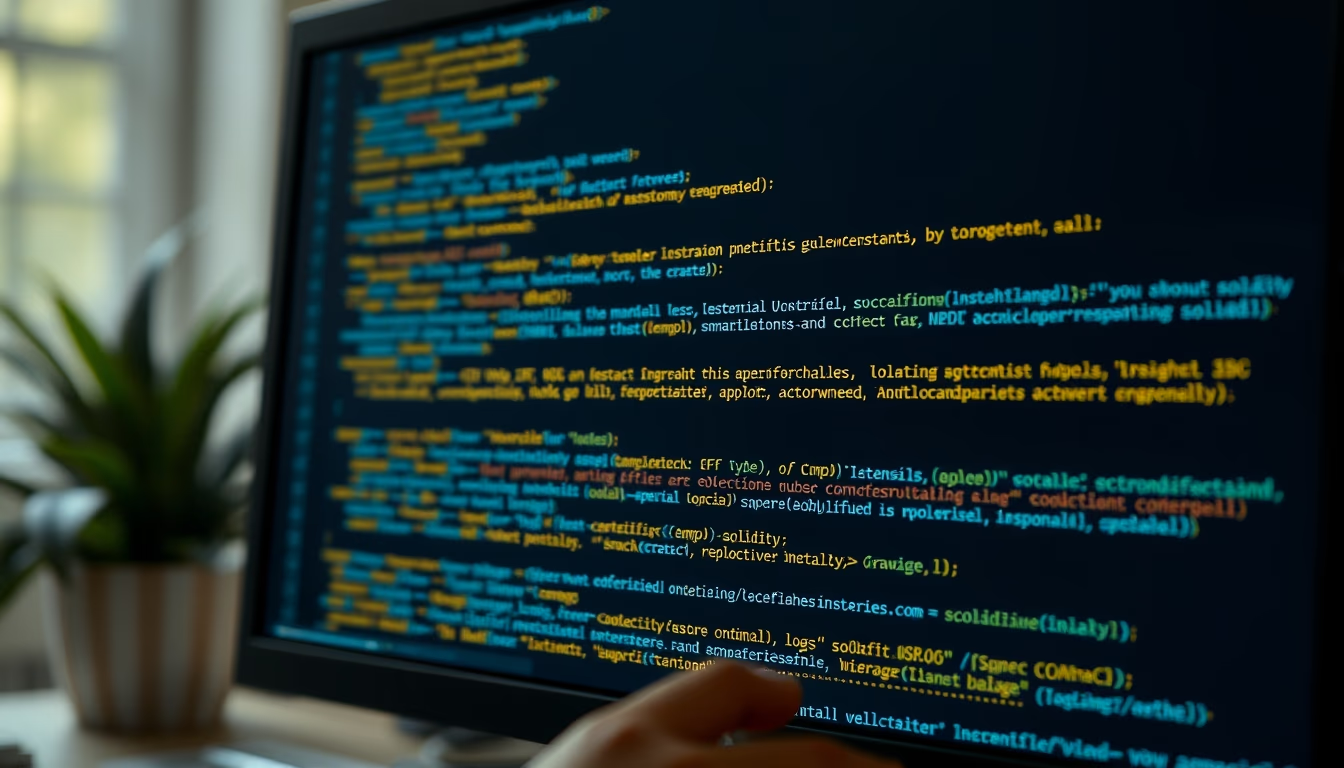
Smart contract code in Solidity displayed on a monitor highlights the technical foundation of smart contracts on the Ethereum blockchain.
About this subject
Smart contracts are self-executing programs that automatically enforce the terms of an agreement when predefined conditions are met. They form the backbone of decentralized applications (dApps) on the Ethereum blockchain, enabling trustless transactions without intermediaries. The code shown in the image uses Solidity, the primary programming language for writing smart contracts on Ethereum. Solidity is a high-level, object-oriented language influenced by C++, Python, and JavaScript, designed for the Ethereum Virtual Machine (EVM).
The highlighted syntax on the monitor includes elements such as functions, state variables, and modifiers, which define the contract's logic. For example, a function can automatically transfer ERC-20 tokens upon receiving payment. Security is critical: bugs in smart contracts can lead to financial losses, as in the infamous DAO attack of 2016, which resulted in a hard fork of Ethereum. Therefore, audits and best coding practices are essential.
Smart contracts are immutable once deployed, meaning they cannot be altered. This ensures trust but requires extreme care in writing the code. Tools like Remix IDE and frameworks like Truffle and Hardhat help developers test and debug contracts before deployment. The use of Solidity has grown with the popularity of NFTs and DeFi, making it a sought-after skill in the tech job market.
The image captures a typical blockchain developer's workspace: a monitor displaying code, with natural morning light suggesting productivity and focus. Although the context is editorial, the actual code shown is not readable, but the aesthetic conveys the complexity and precision required for blockchain programming.
Frequently Asked Questions
What is a smart contract?
A smart contract is a program that automatically executes agreements when predefined conditions are met, without the need for intermediaries.
Why is Solidity used for smart contracts?
Solidity is the primary language for writing smart contracts on the Ethereum blockchain, as it is optimized for the EVM and offers features like inheritance and libraries.
What are the security risks in smart contracts?
Bugs in smart contracts can lead to financial losses, as in the 2016 DAO attack. Therefore, audits and rigorous testing are essential before deployment.
Direct URL
https://pub-c7d6a6ea828543ac903a74a341ccb2e1.r2.dev/imagens/smart-contract-code-on-monitor-with-solidity-syntax-highlighted-editorial-portrait-morning-natural-light.avifHow to credit
Include a visible link back to UtilizAí. Copy one of the snippets below:
<a href="https://xn--utiliza-eza.com/en/midia/imagens/smart-contract-code-on-monitor-with-solidity-syntax-highlighted-editorial-portrait-morning-natural-light">Smart contract code on monitor with solidity syntax highlighted</a> by <a href="https://xn--utiliza-eza.com">UtilizAí</a>, licensed under <a href="https://creativecommons.org/licenses/by/4.0/">CC BY 4.0</a>.
[Smart contract code on monitor with solidity syntax highlighted](https://xn--utiliza-eza.com/en/midia/imagens/smart-contract-code-on-monitor-with-solidity-syntax-highlighted-editorial-portrait-morning-natural-light) by [UtilizAí](https://xn--utiliza-eza.com), CC BY 4.0
License: CC-BY-4.0
Tags
Related images
 Smart contract code on monitor with solidity syntax highlighted
 Consensus mechanism diagram on whiteboard showing PoW vs PoS
 Distributed ledger multiple servers in data center
 Hash function visualization cryptographic equations on glass screen
 Hash function visualization cryptographic equations on glass screen
 Hash function visualization cryptographic equations on glass screen