Smart contract code on monitor with solidity syntax highlighted
1344×768 · AVIF · CC BY 4.0
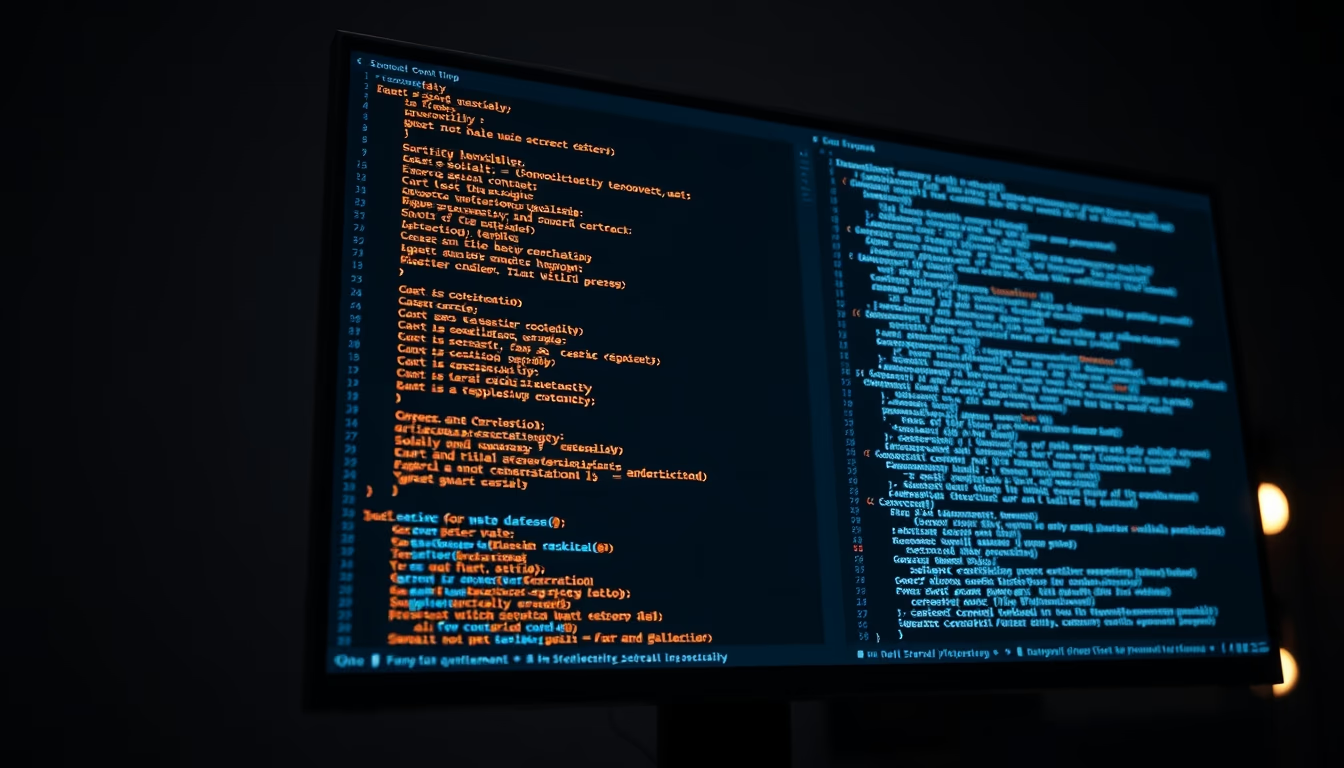
Smart contract code in Solidity displayed on a high-resolution monitor with syntax highlighting, representing the programming of smart contracts on the Ethereum blockchain.
About this subject
Solidity is an object-oriented programming language created in 2014 by Gavin Wood, Christian Reitwiessner, and other contributors to the Ethereum project. It was designed for developing smart contracts that run on the Ethereum Virtual Machine (EVM). The code displayed on the monitor, with syntax highlighting, reflects the typical structure of a smart contract: state variable declarations, functions, modifiers, and events. The syntax is similar to JavaScript but with static typing and contract inheritance.
Smart contracts in Solidity are immutable after deployment, requiring rigorous testing and auditing. Syntax highlighting helps developers quickly identify elements like 'pragma', 'contract', 'function', 'mapping', and 'require'. The language supports multiple inheritance, libraries, and user-defined complex types. According to the official website, Solidity is currently the most popular language for smart contracts, with thousands of projects deployed on networks like Ethereum, Binance Smart Chain, and Polygon.
A curiosity: the name "Solidity" was chosen to reflect the idea that smart contracts are solid and trustworthy. However, the language evolved rapidly, with versions like 0.8.0 introducing automatic overflow and underflow checks. The community maintains a style guide and best practices, including the use of patterns like OpenZeppelin for security. The code on the monitor could represent an ERC-20 token contract, one of the most common use cases, defining functions such as transfer, balanceOf, and approve.
The image with professional lighting and cinematic framing suggests a serious, modern development environment, common in tech studios or blockchain startups. The syntax highlighting in colors (blue for keywords, green for strings, orange for numbers) facilitates reading and debugging. This type of visualization is essential for tutorials, documentation, and presentations on decentralized development.
Frequently Asked Questions
What is Solidity and what is it used for?
Solidity is a high-level, contract-oriented programming language used to write smart contracts on the Ethereum blockchain. It enables the creation of decentralized applications (dApps) that automatically execute predefined rules without intermediaries.
What are the main features of the Solidity code shown in the image?
The code displays syntax highlighting with keywords like 'pragma', 'contract', 'function', 'mapping', and 'require'. The structure includes version declaration, contract definition, state variables, and functions, typical of an ERC-20 or similar contract.
How to ensure the security of a Solidity smart contract?
Security is critical. Use audited libraries like OpenZeppelin, perform unit tests, external audits, and avoid vulnerable patterns such as reentrancy. Since version 0.8.0, the language includes automatic overflow checks.
Direct URL
https://pub-c7d6a6ea828543ac903a74a341ccb2e1.r2.dev/imagens/smart-contract-code-on-monitor-with-solidity-syntax-highlighted-cinematic-wide-shot-studio-professional-lighting.avifHow to credit
Include a visible link back to UtilizAí. Copy one of the snippets below:
<a href="https://xn--utiliza-eza.com/en/midia/imagens/smart-contract-code-on-monitor-with-solidity-syntax-highlighted-cinematic-wide-shot-studio-professional-lighting">Smart contract code on monitor with solidity syntax highlighted</a> by <a href="https://xn--utiliza-eza.com">UtilizAí</a>, licensed under <a href="https://creativecommons.org/licenses/by/4.0/">CC BY 4.0</a>.
[Smart contract code on monitor with solidity syntax highlighted](https://xn--utiliza-eza.com/en/midia/imagens/smart-contract-code-on-monitor-with-solidity-syntax-highlighted-cinematic-wide-shot-studio-professional-lighting) by [UtilizAí](https://xn--utiliza-eza.com), CC BY 4.0
License: CC-BY-4.0
Tags
Related images
 Smart contract code on monitor with solidity syntax highlighted
 Consensus mechanism diagram on whiteboard showing PoW vs PoS
 Distributed ledger multiple servers in data center
 Hash function visualization cryptographic equations on glass screen
 Hash function visualization cryptographic equations on glass screen
 Hash function visualization cryptographic equations on glass screen