Smart contract code on monitor with solidity syntax highlighted
1344×768 · AVIF · CC BY 4.0
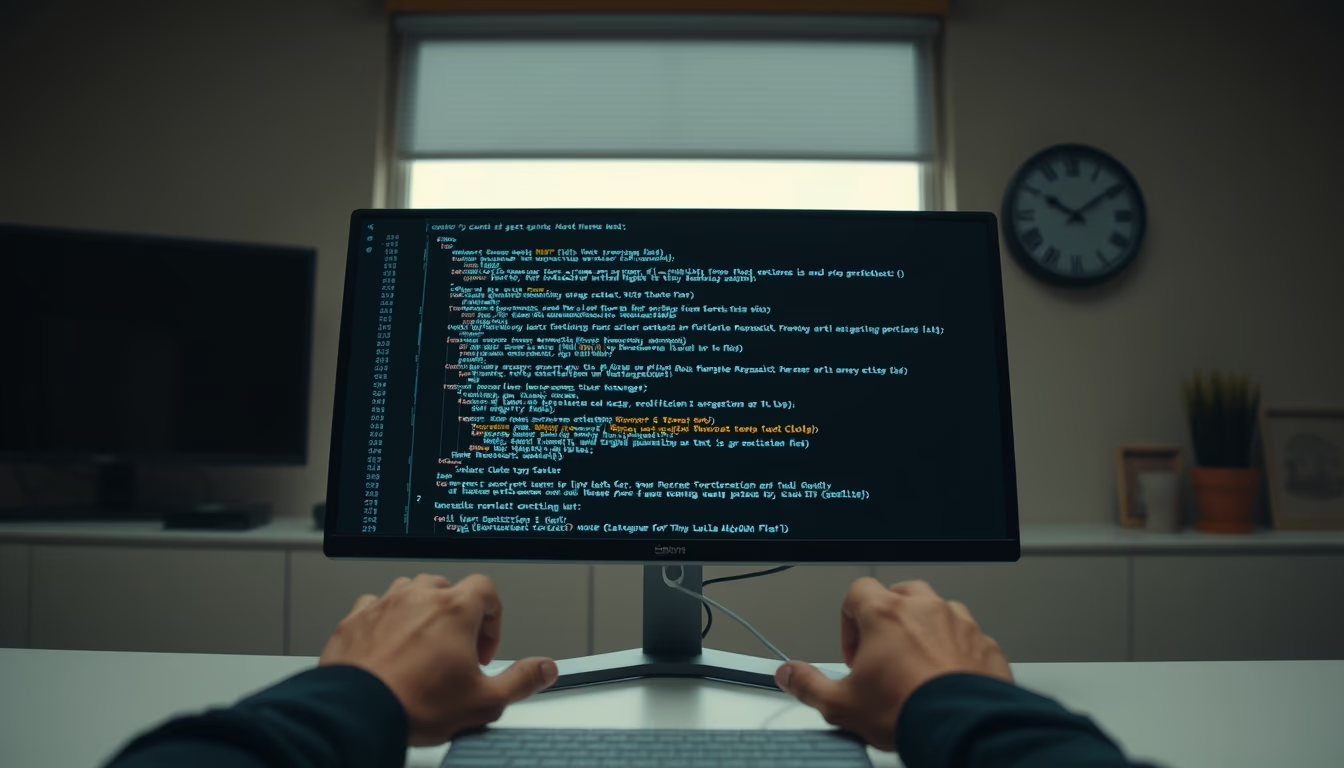
Smart contract code in Solidity displayed on a monitor, highlighting the syntax of the language used on Ethereum and compatible blockchains.
About this subject
Solidity is a high-level, contract-oriented programming language designed for developing smart contracts that run on the Ethereum Virtual Machine (EVM). It was created by Gavin Wood, Christian Reitwiessner, and other Ethereum contributors, and first released in 2014. Solidity's syntax is influenced by JavaScript, C++, and Python, making it accessible to developers familiar with these languages. Smart contracts written in Solidity are compiled into EVM bytecode and deployed on blockchains such as Ethereum, Binance Smart Chain, Polygon, and many other EVM-compatible networks.
The image shows a code snippet with syntax highlighting, where keywords like 'contract', 'function', 'uint', and 'mapping' appear in distinct colors, aiding readability and debugging. The development environment could be Remix IDE, a popular web-based tool for writing, testing, and deploying Solidity smart contracts. Other editors like Visual Studio Code also offer plugins with syntax highlighting and static analysis tools. Security is critical: bugs in smart contracts can lead to financial losses, as seen in the infamous 2016 DAO attack, which resulted in a hard fork of Ethereum.
Fun fact: Solidity is not the only language for EVM smart contracts; Vyper and Yul are alternatives, but Solidity dominates the ecosystem with the largest developer base and library support. The language evolves constantly: version 0.8 introduced automatic arithmetic checks to prevent overflow, and recent versions include support for multiple inheritance, interfaces, and fallback functions. Learning Solidity is a fundamental step for anyone looking to develop decentralized applications (dApps) and decentralized finance (DeFi) protocols.
Frequently Asked Questions
What is Solidity and what is it used for?
Solidity is a programming language for writing smart contracts on the Ethereum Virtual Machine (EVM). It allows creating autonomous contracts that execute predefined rules on blockchains, used in DeFi applications, NFTs, tokens, and decentralized governance.
What tools are used for Solidity programming?
The most common environment is Remix IDE, an online editor that compiles and deploys contracts. Other options include Visual Studio Code with Solidity extensions, Truffle, and Hardhat for advanced testing and deployment.
What are the security risks when developing in Solidity?
Bugs like reentrancy, overflow, and misconfigured permissions can lead to loss of funds. It is recommended to use static analysis tools, audits, and follow best practices such as the Checks-Effects-Interactions pattern.
Direct URL
https://pub-c7d6a6ea828543ac903a74a341ccb2e1.r2.dev/imagens/smart-contract-code-on-monitor-with-solidity-syntax-highlighted-cinematic-wide-shot-overcast-soft-daylight.avifHow to credit
Include a visible link back to UtilizAí. Copy one of the snippets below:
<a href="https://xn--utiliza-eza.com/en/midia/imagens/smart-contract-code-on-monitor-with-solidity-syntax-highlighted-cinematic-wide-shot-overcast-soft-daylight">Smart contract code on monitor with solidity syntax highlighted</a> by <a href="https://xn--utiliza-eza.com">UtilizAí</a>, licensed under <a href="https://creativecommons.org/licenses/by/4.0/">CC BY 4.0</a>.
[Smart contract code on monitor with solidity syntax highlighted](https://xn--utiliza-eza.com/en/midia/imagens/smart-contract-code-on-monitor-with-solidity-syntax-highlighted-cinematic-wide-shot-overcast-soft-daylight) by [UtilizAí](https://xn--utiliza-eza.com), CC BY 4.0
License: CC-BY-4.0
Tags
Related images
 Smart contract code on monitor with solidity syntax highlighted
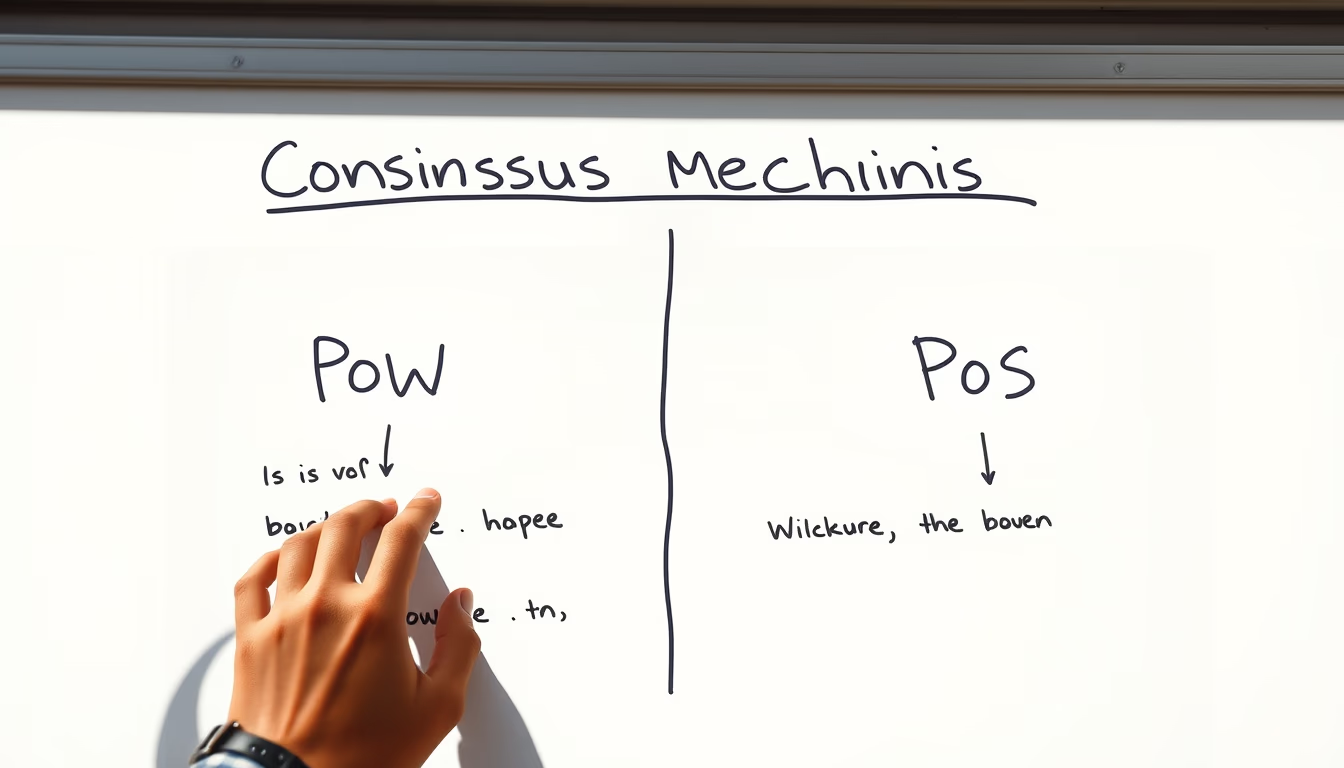 Consensus mechanism diagram on whiteboard showing PoW vs PoS
 Distributed ledger multiple servers in data center
 Hash function visualization cryptographic equations on glass screen
 Hash function visualization cryptographic equations on glass screen
 Hash function visualization cryptographic equations on glass screen