Ski poles modern
1344×768 · AVIF · CC BY 4.0
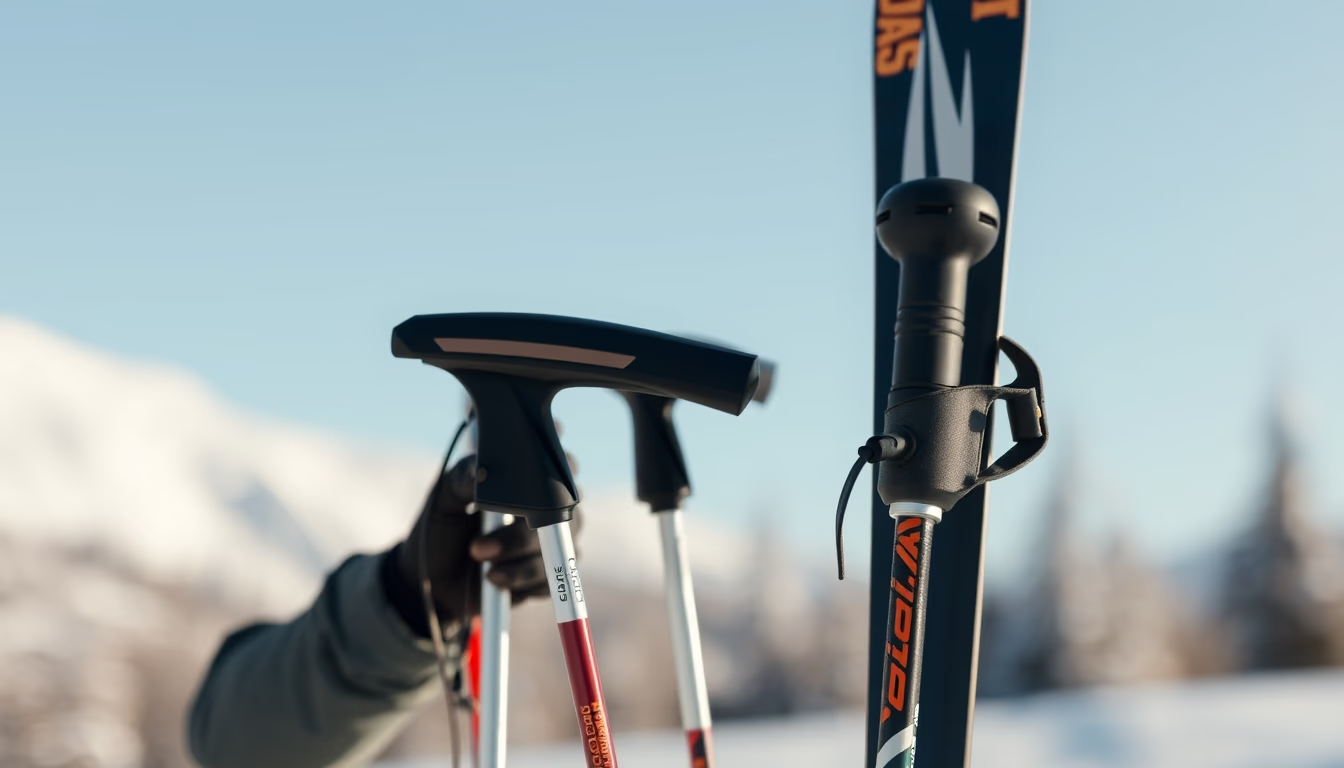
Modern ski poles combine lightweight materials and ergonomic design to enhance performance and safety on the slopes.
About this subject
Modern ski poles have evolved significantly from the bamboo or steel models of past decades. Today, they are predominantly made from high-strength aluminum or carbon fiber, materials that offer an exceptional balance of lightness and durability. Carbon fiber, in particular, is favored by advanced skiers and competitors for its ability to absorb vibrations and reduce muscle fatigue during long descents or cross-country courses.
Current designs feature anatomically shaped grips, usually made of rubber or cork, that provide comfortable hold even with thick gloves. The adjustable safety straps allow quick release in case of a fall. The tips, made of tungsten carbide or hardened steel, ensure grip on ice and compacted snow, while baskets vary in size according to the discipline: larger for powder snow and smaller for groomed runs.
Pole length is crucial for proper technique. The traditional rule of thumb indicates that the pole should touch the ground with the arm forming a 90-degree angle when the tip is on the ground. Modern models often feature telescopic or quick-adjust systems, allowing adaptation to different terrains and preferences. In addition, some poles include internal shock absorbers, especially useful in alpine skiing to reduce impact on uneven terrain.
In the context of competitions, slalom and downhill poles are more curved and robust to facilitate gate contact and improve aerodynamics. In cross-country skiing, poles are longer and lighter, with emphasis on thrust efficiency. Production technology has also advanced with processes such as induction welding and laser polishing, ensuring precision and consistency. The choice of the ideal pole depends on the skier's level, style of practice, and snow conditions, but all modern models share the goal of maximizing control and energy efficiency.
Frequently Asked Questions
What is the difference between aluminum and carbon fiber ski poles?
Aluminum poles are more durable and cheaper but heavier. Carbon fiber poles are lighter, absorb vibrations better, and are preferred by advanced skiers, though they are more expensive and may break under severe lateral impact.
How do I choose the correct size of ski poles?
The classic rule is to hold the pole upside down with your hand under the basket: your elbow should form a 90-degree angle. For alpine skiing, the pole typically reaches from the ground to your armpit; for cross-country, it is slightly longer, up to your chin.
Are telescopic ski poles recommended for beginners?
Yes, adjustable poles are great for beginners because they allow experimenting with different lengths and adapting to various disciplines. They are also practical for travel as they can be shortened to fit in luggage.
Direct URL
https://pub-c7d6a6ea828543ac903a74a341ccb2e1.r2.dev/imagens/ski-poles-modern-documentary-nature-style-fresh12.avifHow to credit
Include a visible link back to UtilizAí. Copy one of the snippets below:
<a href="https://xn--utiliza-eza.com/en/midia/imagens/ski-poles-modern-documentary-nature-style-fresh12">Ski poles modern</a> by <a href="https://xn--utiliza-eza.com">UtilizAí</a>, licensed under <a href="https://creativecommons.org/licenses/by/4.0/">CC BY 4.0</a>.
[Ski poles modern](https://xn--utiliza-eza.com/en/midia/imagens/ski-poles-modern-documentary-nature-style-fresh12) by [UtilizAí](https://xn--utiliza-eza.com), CC BY 4.0
License: CC-BY-4.0