Ski poles modern
1344×768 · AVIF · CC BY 4.0
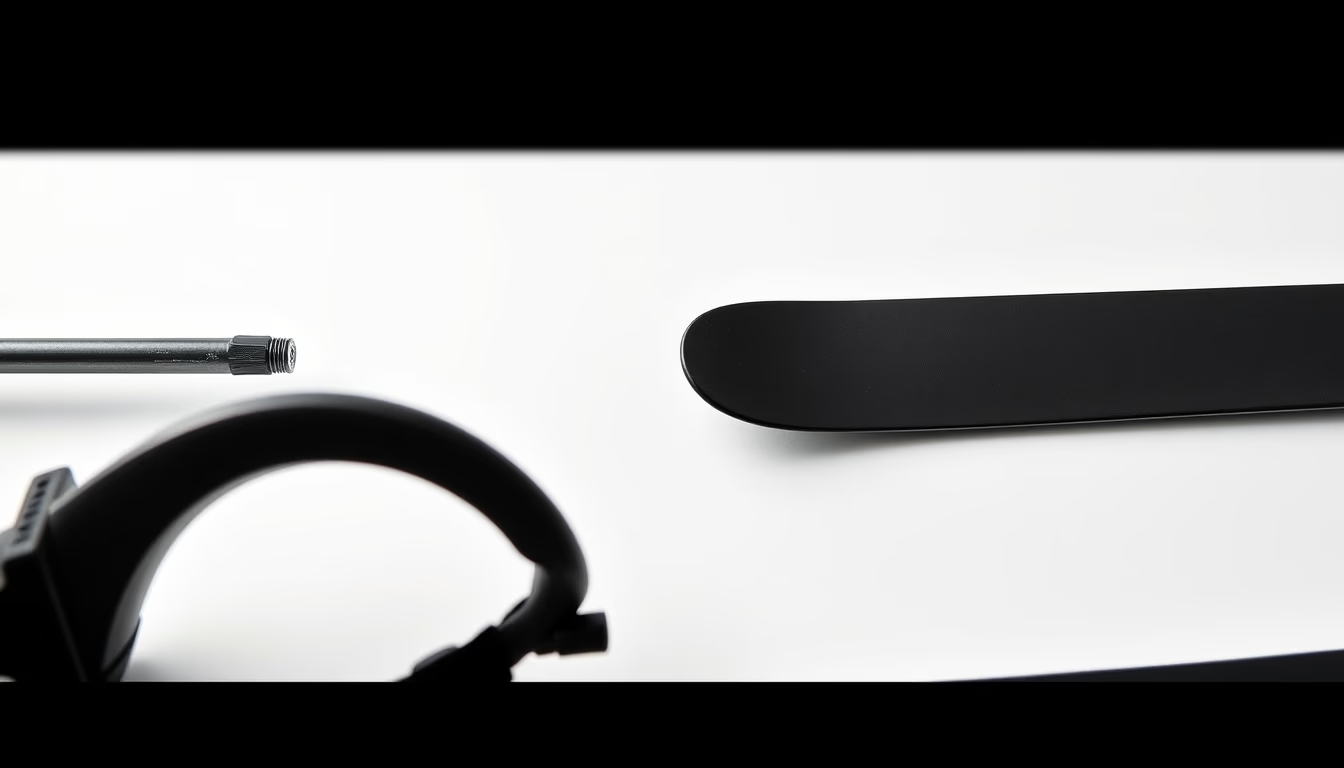
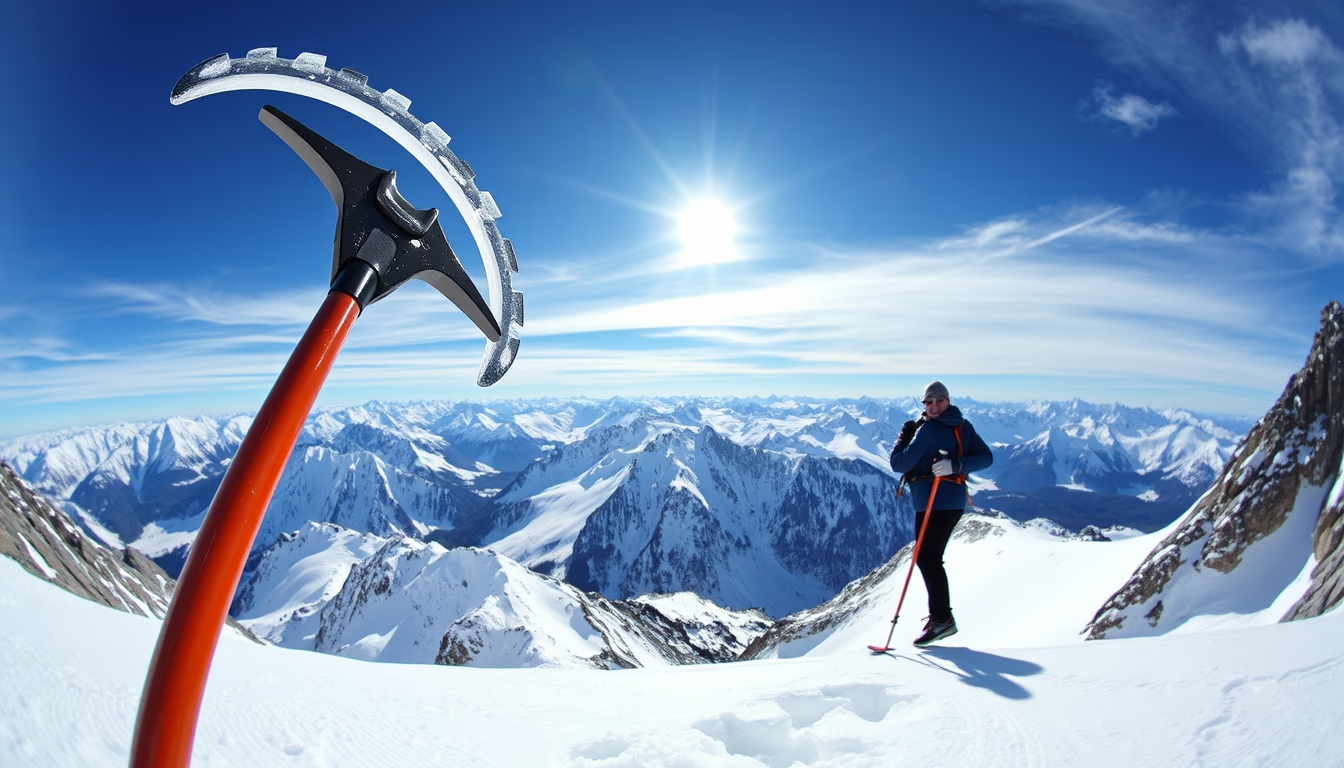
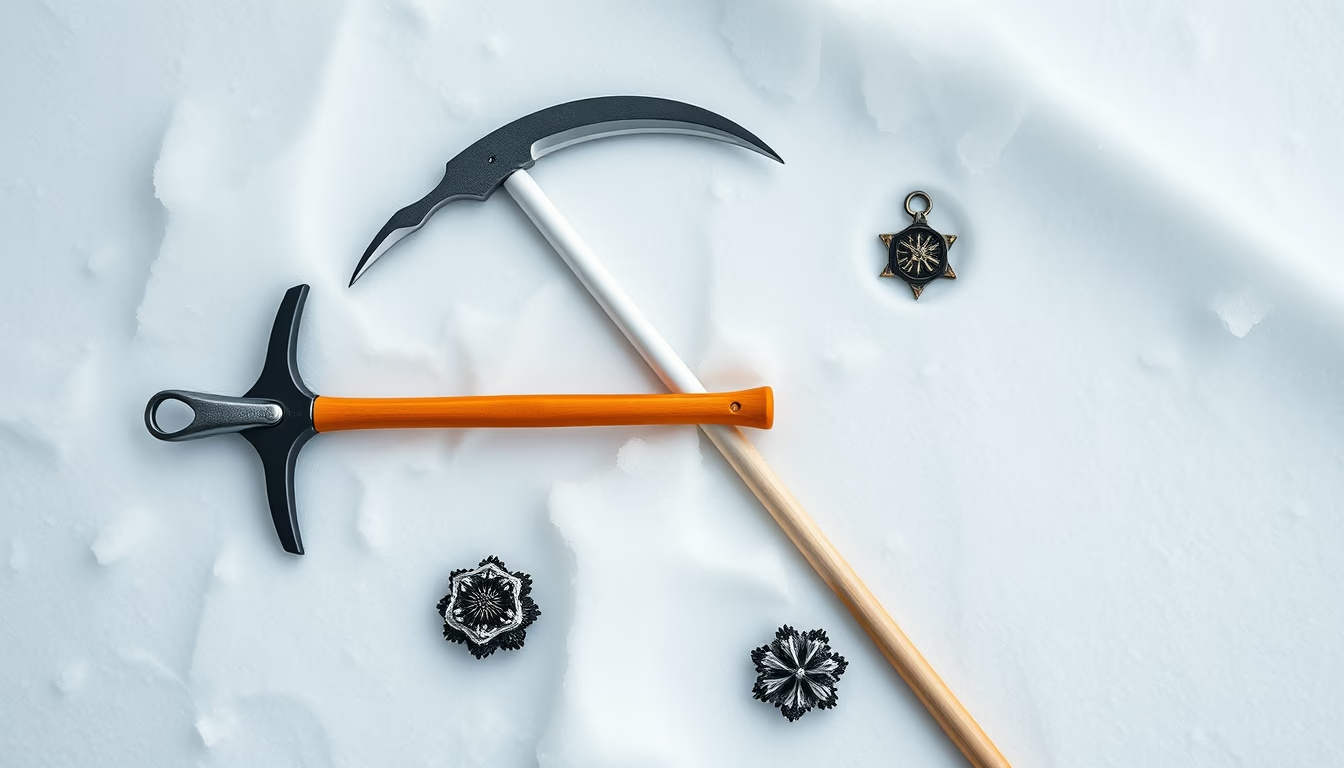
Modern ski poles combine advanced materials like carbon fiber and aluminum with ergonomic design to enhance performance, comfort, and safety on snowy slopes.
About this subject
Ski poles are essential equipment in skiing, aiding in balance, propulsion, and rhythm. Their evolution over decades reflects the pursuit of lightness, strength, and ergonomics. Early models were made of wood or steel, but today the dominant materials are aluminum (more affordable and durable) and carbon fiber (ultralight with excellent vibration dampening). Tips are typically tungsten carbide for grip on ice, while grips and straps are contoured to fit the hand comfortably.
Choosing the correct pole length depends on the discipline: for alpine skiing, the recommended length is achieved when the inverted pole tip touches the ground with the arm at a 90-degree angle; for cross-country, poles are longer to maximize propulsion. Modern poles may be telescopic, allowing adjustment for different terrain and preferences. Additionally, interchangeable baskets enable adaptation to powder or firm snow.
Recent innovations include quick-release straps, slight shaft curvature to improve biomechanics, and composite materials that reduce overall weight. Elite athletes use custom poles with specific stiffness for each event. Even for beginners, proper poles can prevent shoulder and wrist injuries and facilitate learning techniques like pole planting.
Interestingly, in the 1970s Swedish skier Ingemar Stenmark popularized longer poles for greater leverage. Today the trend is opposite for alpine skiing, with shorter poles favoring aggressive stances. The industry also focuses on sustainability, with brands producing natural cork grips and recyclable shafts.
Frequently Asked Questions
What is the purpose of ski poles?
Ski poles aid in balance, propulsion (especially on flats and uphills), and timing of turns. They also provide safety by helping to prevent falls and assisting in recovery.
How to choose the correct ski pole length?
For alpine skiing, invert the pole and hold it below the grip; your arm should form a 90-degree angle. For cross-country, multiply your height by 0.85 to 0.90. Consult specific discipline charts.
Carbon vs aluminum: which is better?
Carbon is lighter and dampens more vibration, ideal for athletes or performance-oriented skiers. Aluminum is cheaper, more impact-resistant, and better for beginners or park use.
Direct URL
https://pub-c7d6a6ea828543ac903a74a341ccb2e1.r2.dev/imagens/ski-poles-modern-commercial-product-photography-fresh11.avifHow to credit
Include a visible link back to UtilizAí. Copy one of the snippets below:
<a href="https://xn--utiliza-eza.com/en/midia/imagens/ski-poles-modern-commercial-product-photography-fresh11">Ski poles modern</a> by <a href="https://xn--utiliza-eza.com">UtilizAí</a>, licensed under <a href="https://creativecommons.org/licenses/by/4.0/">CC BY 4.0</a>.
[Ski poles modern](https://xn--utiliza-eza.com/en/midia/imagens/ski-poles-modern-commercial-product-photography-fresh11) by [UtilizAí](https://xn--utiliza-eza.com), CC BY 4.0
License: CC-BY-4.0