Ski boots boots snow
1344×768 · AVIF · CC BY 4.0
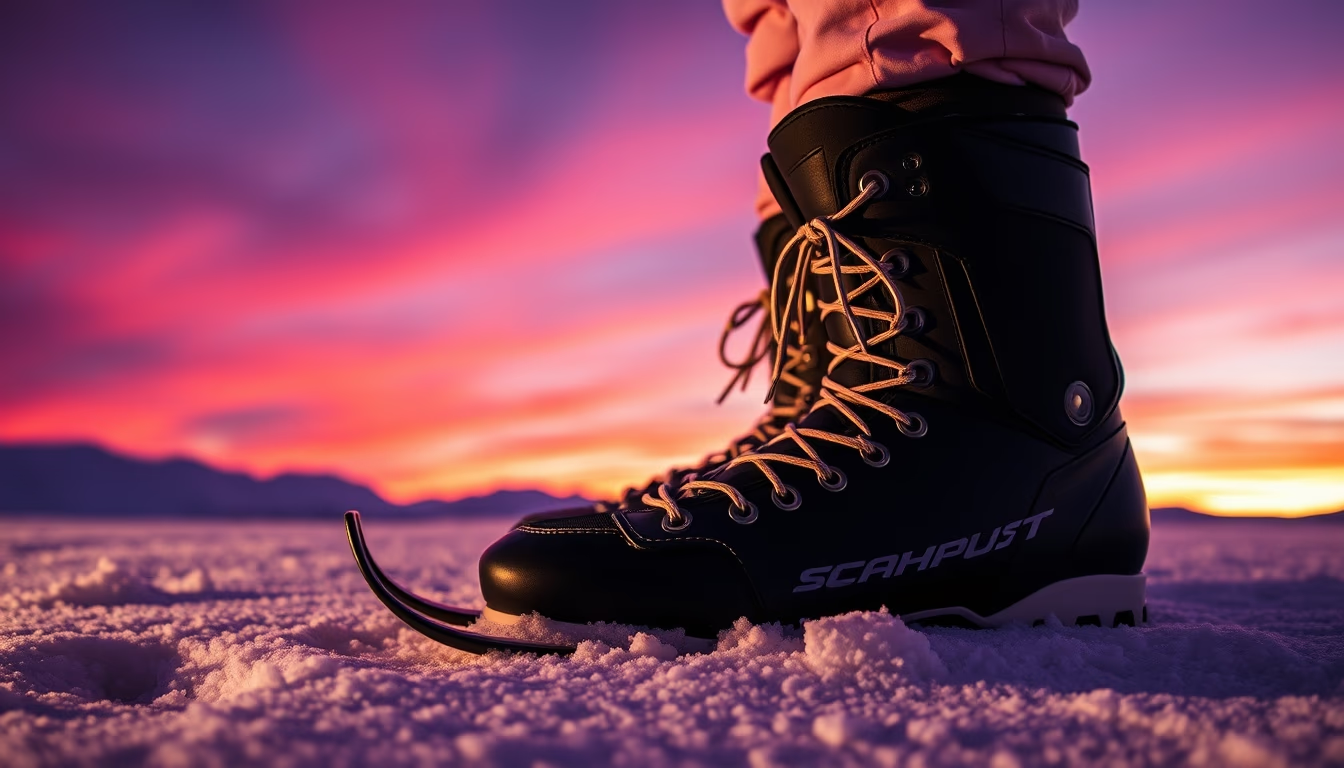
Ski boots are essential equipment for the sport, designed to transmit power and ensure safety on the slopes.
About this subject
Modern ski boots are made from materials like polyurethane and polyamide, offering stiffness and durability. The design prioritizes efficient energy transfer from the leg to the ski, crucial for precise turns and speed control. The flex rating ranges from 60 (soft) to 130 (very stiff), allowing skiers to choose based on weight, skill, and style.
Different types of boots exist for specific disciplines. Alpine (downhill) boots feature high cuffs and four-buckle closures, ensuring maximum firmness. Touring boots are lighter and articulated for walking on steep ascents. Hybrid models combine features for skiers who alternate between pistes and backcountry.
The fitting process is meticulous. Custom footbeds and heat-molding of the liner create an anatomical fit, eliminating pressure points and improving response to movements. Regular maintenance, such as lubricating buckles and checking soles, extends the equipment's lifespan and performance.
Fun fact: the first ski boots were made of leather with leather laces, lacking lateral stiffness. The revolution came in the 1960s with injected plastics, allowing better fit and safety. Today, technology incorporates materials like carbon fiber to reduce weight without compromising stiffness.
Frequently Asked Questions
How to choose the ideal flex for ski boots?
The ideal flex depends on the skier's weight, skill level, and skiing style. Beginners typically use flex 60-80, intermediate 80-100, and advanced 100-130 or more. A shop technician can help with the choice.
What is the difference between alpine and touring boots?
Alpine boots are stiffer with a fixed cuff, optimized for downhill pistes. Touring boots are lighter, with a cuff that articulates for walking and soles compatible with binding crampons for ascents.
How do I know if ski boots fit correctly?
The boots should be snug but not painful. The heel should be immobile, and toes may lightly touch the front when standing, but pull back when flexing knees. Try them with thin ski socks.
Direct URL
https://pub-c7d6a6ea828543ac903a74a341ccb2e1.r2.dev/imagens/ski-boots-boots-snow-long-exposure-fresh0.avifHow to credit
Include a visible link back to UtilizAí. Copy one of the snippets below:
<a href="https://xn--utiliza-eza.com/en/midia/imagens/ski-boots-boots-snow-long-exposure-fresh0">Ski boots boots snow</a> by <a href="https://xn--utiliza-eza.com">UtilizAí</a>, licensed under <a href="https://creativecommons.org/licenses/by/4.0/">CC BY 4.0</a>.
[Ski boots boots snow](https://xn--utiliza-eza.com/en/midia/imagens/ski-boots-boots-snow-long-exposure-fresh0) by [UtilizAí](https://xn--utiliza-eza.com), CC BY 4.0
License: CC-BY-4.0