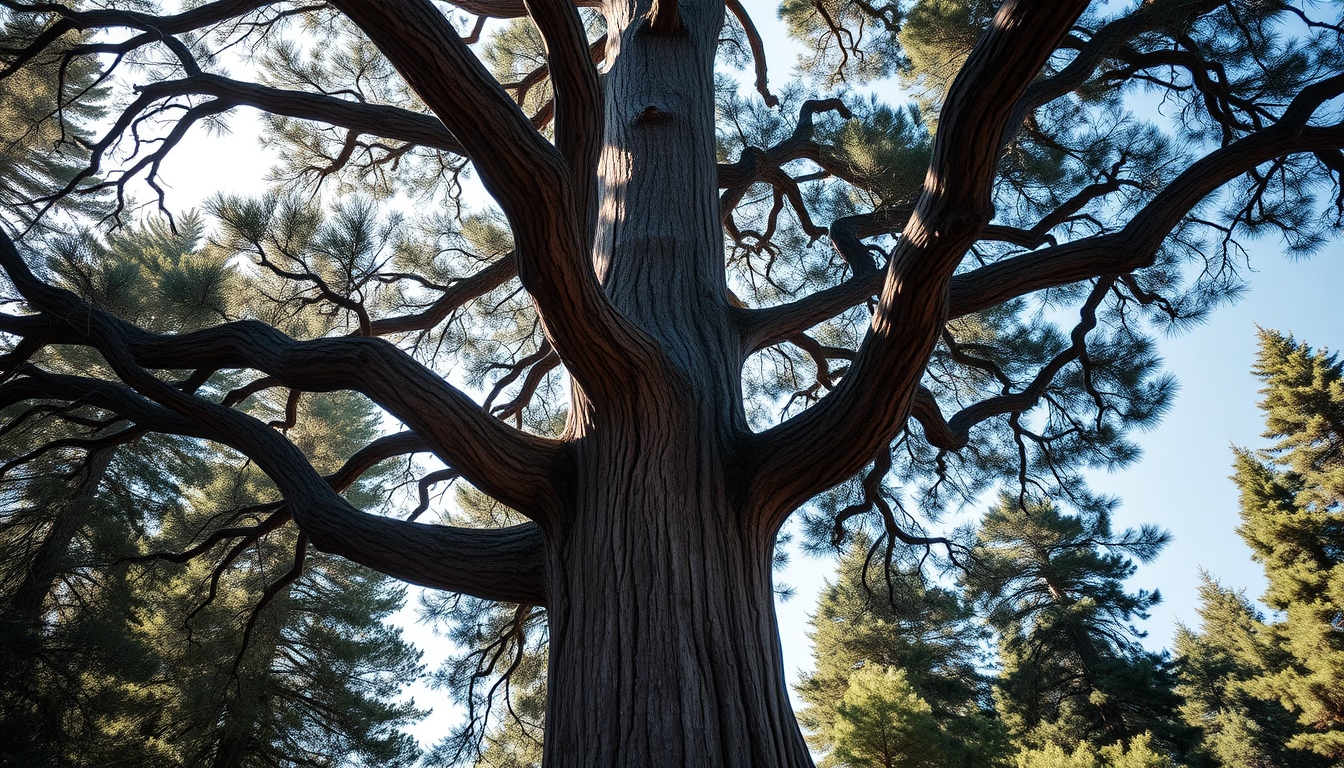
Sequoia giant tree
1344×768 · AVIF · CC BY 4.0
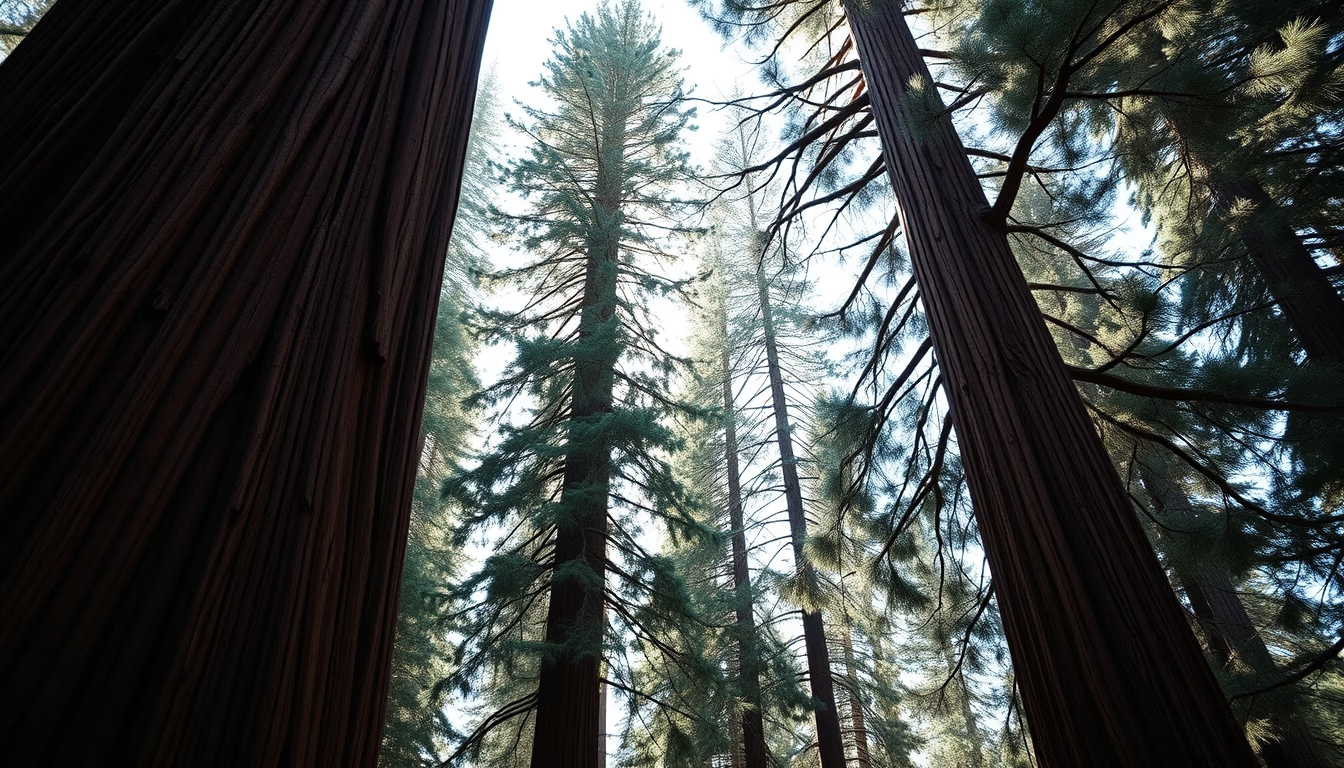
Giant sequoias (Sequoiadendron giganteum) are the most massive trees on Earth, native to the western slopes of the Sierra Nevada in California.
About this subject
Giant sequoias (Sequoiadendron giganteum) are coniferous trees in the cypress family Cupressaceae, endemic to a narrow belt of montane forests on the western slopes of the Sierra Nevada in California, United States. They grow in about 75 scattered groves, typically between 4,600 and 8,000 feet (1,400, 2,400 m) elevation, on well-drained granitic soils. The largest known living specimen is the General Sherman tree in Sequoia National Park, with an estimated volume of 1,487 cubic meters, a height of 83.8 meters (275 ft), and a basal diameter of 11 meters (36 ft). These trees can live for over 3,000 years, with the oldest recorded individual aged about 3,266 years by tree-ring analysis.
Giant sequoia wood is highly resistant to decay and insect attack due to its high tannin content, but commercial logging was limited because of the difficulty in felling and transporting such massive trunks. In the late 1800s and early 1900s, many groves were protected thanks to campaigns by naturalists like John Muir. Today, the main threats are climate change, which reduces snowpack moisture and increases the frequency of intense wildfires, along with prolonged drought. Controlled burns are essential for regeneration, as seeds require exposed mineral soil and moderate heat to germinate.
A fascinating fact is that giant sequoias are not the tallest trees (that title belongs to coastal redwoods, Sequoia sempervirens) but are the most massive by volume. Their fibrous bark, up to 60 cm (2 ft) thick, acts as thermal insulation against fire. Cones take 18, 20 months to mature and may remain closed for years, releasing seeds only after fire or branch death. Although each cone contains up to 230 seeds, seedling mortality is extremely high, making the conservation of these giants an ongoing challenge.
Frequently Asked Questions
What is the difference between a giant sequoia and a coastal redwood?
Giant sequoias (Sequoiadendron giganteum) are the most massive trees by volume, with wider trunks, while coastal redwoods (Sequoia sempervirens) are the tallest, exceeding 115 meters (380 ft) but with more slender trunks.
Where can I see giant sequoias?
Giant sequoias are only native to California, USA. The best places to see them are Sequoia and Kings Canyon National Parks, Yosemite National Park (Mariposa Grove), and Calaveras Big Trees State Park.
How old can a giant sequoia get?
Giant sequoias can live over 3,000 years. The oldest known specimen, the 'President Tree', is about 3,266 years old based on tree-ring dating.
Direct URL
https://pub-c7d6a6ea828543ac903a74a341ccb2e1.r2.dev/imagens/sequoia-giant-tree-documentary-photography-p4.avifHow to credit
Include a visible link back to UtilizAí. Copy one of the snippets below:
<a href="https://xn--utiliza-eza.com/en/midia/imagens/sequoia-giant-tree-documentary-photography-p4">Sequoia giant tree</a> by <a href="https://xn--utiliza-eza.com">UtilizAí</a>, licensed under <a href="https://creativecommons.org/licenses/by/4.0/">CC BY 4.0</a>.
[Sequoia giant tree](https://xn--utiliza-eza.com/en/midia/imagens/sequoia-giant-tree-documentary-photography-p4) by [UtilizAí](https://xn--utiliza-eza.com), CC BY 4.0
License: CC-BY-4.0