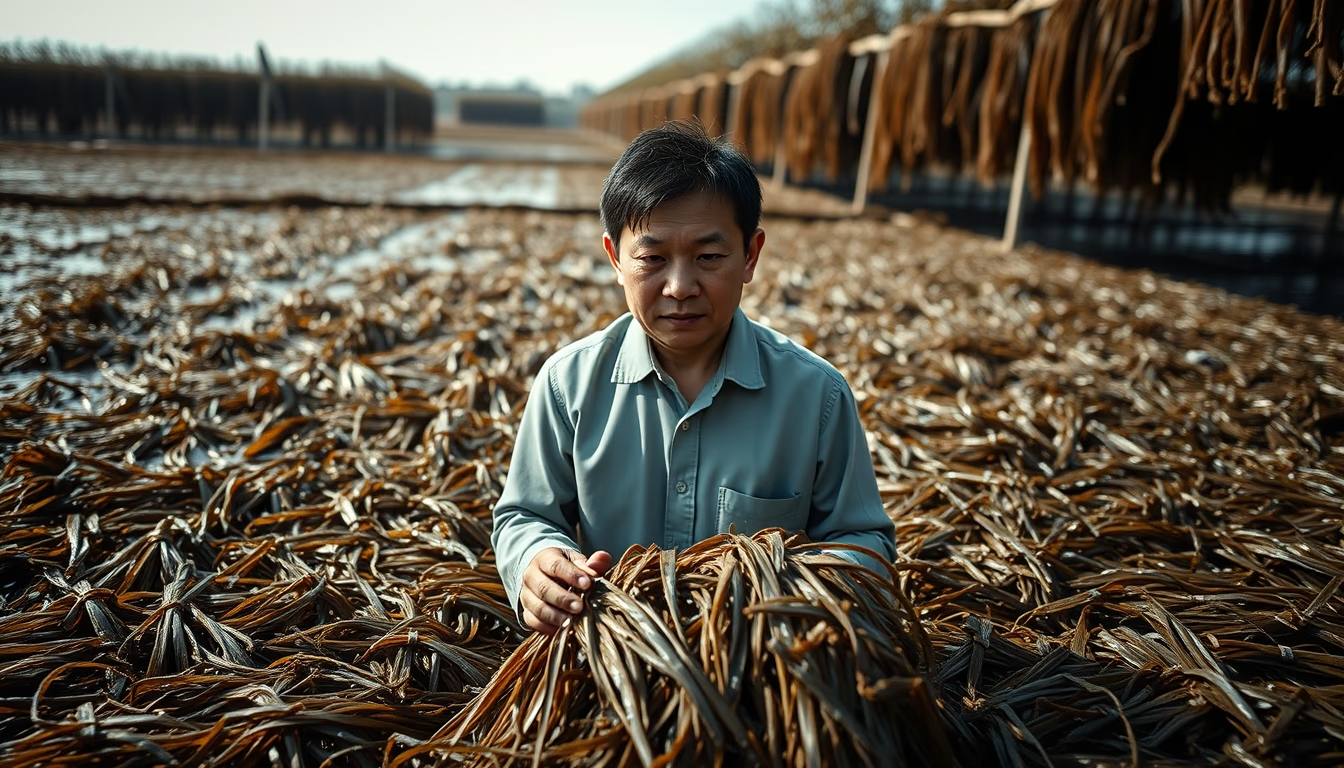
Seaweed farm asian
1344×768 · AVIF · CC BY 4.0
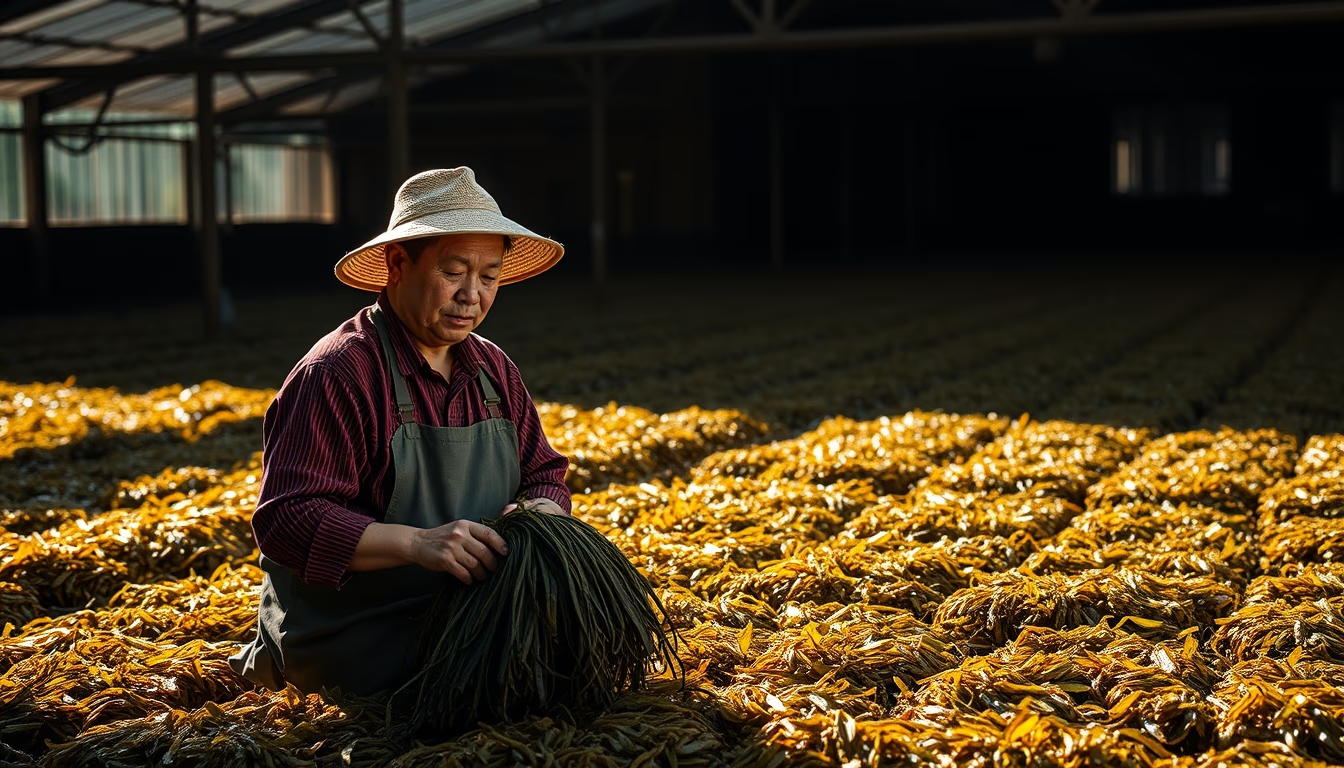
Seaweed farming in Asia dominates global production, accounting for over 95% of the total. Leading countries include China, Indonesia, and South Korea, supplying food, cosmetics, and biofuels.
About this subject
Seaweed farming in Asia is a millennia-old practice dating back over a thousand years. Traditional techniques using bamboo and ropes to anchor seaweed in shallow waters are still employed, now combined with modern large-scale cultivation methods. China leads global production, followed by Indonesia and the Philippines. Key cultivated species include Kombu, Nori, and Wakame, widely used in Japanese, Korean, and Chinese cuisines for soups, sushi, and salads.
Beyond human food, seaweed has significant industrial applications. It provides thickeners like agar-agar and carrageenan used in processed foods, cosmetics, and pharmaceuticals. Seaweed is also used as organic fertilizer and for biofuel production. Seaweed aquaculture contributes to climate change mitigation by absorbing carbon dioxide and improving water quality, promoting marine biodiversity. Sustainable projects aim to enhance these benefits.
Notably, Indonesia has over 95,000 kilometers of coastline suitable for cultivation, providing livelihoods for millions of coastal families. Global seaweed production grew from 10 million tons in 2000 to over 35 million tons in 2020, with an estimated annual market value of $14 billion. The seaweed market continues to expand, driven by demand for healthy food and sustainable products.
Frequently Asked Questions
What is the importance of seaweed aquaculture in Asia?
Asia accounts for over 95% of global seaweed production, providing jobs and income for coastal communities. Cultivation also helps mitigate climate change by absorbing CO2 and supplying raw materials for food, cosmetics, and biofuels.
How are seaweeds cultivated?
Seaweeds are grown in shallow coastal waters using structures like bamboo poles, ropes, or nets. Seedlings are attached and grow within weeks. Techniques range from traditional methods to industrial systems with quality control.
What are the main uses of seaweed?
Seaweed is used for food (sushi, soups, salads), as thickeners (agar-agar, carrageenan) in processed foods and cosmetics, and as fertilizer or biofuel feedstock.
Direct URL
https://pub-c7d6a6ea828543ac903a74a341ccb2e1.r2.dev/imagens/seaweed-farm-asian-rembrandt-lighting-dramatic-shadows-fresh12.avifHow to credit
Include a visible link back to UtilizAí. Copy one of the snippets below:
<a href="https://xn--utiliza-eza.com/en/midia/imagens/seaweed-farm-asian-rembrandt-lighting-dramatic-shadows-fresh12">Seaweed farm asian</a> by <a href="https://xn--utiliza-eza.com">UtilizAí</a>, licensed under <a href="https://creativecommons.org/licenses/by/4.0/">CC BY 4.0</a>.
[Seaweed farm asian](https://xn--utiliza-eza.com/en/midia/imagens/seaweed-farm-asian-rembrandt-lighting-dramatic-shadows-fresh12) by [UtilizAí](https://xn--utiliza-eza.com), CC BY 4.0
License: CC-BY-4.0