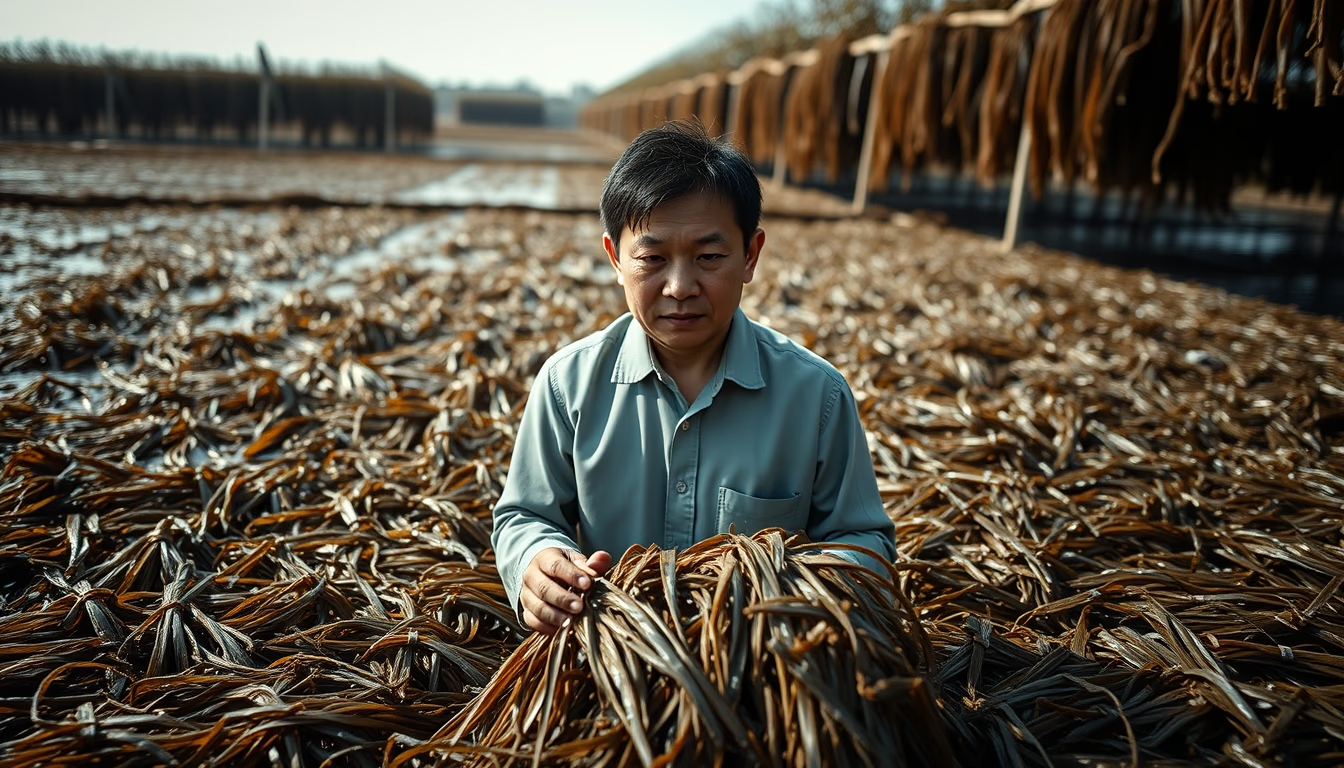
Seaweed farm asian
1344×768 · AVIF · CC BY 4.0
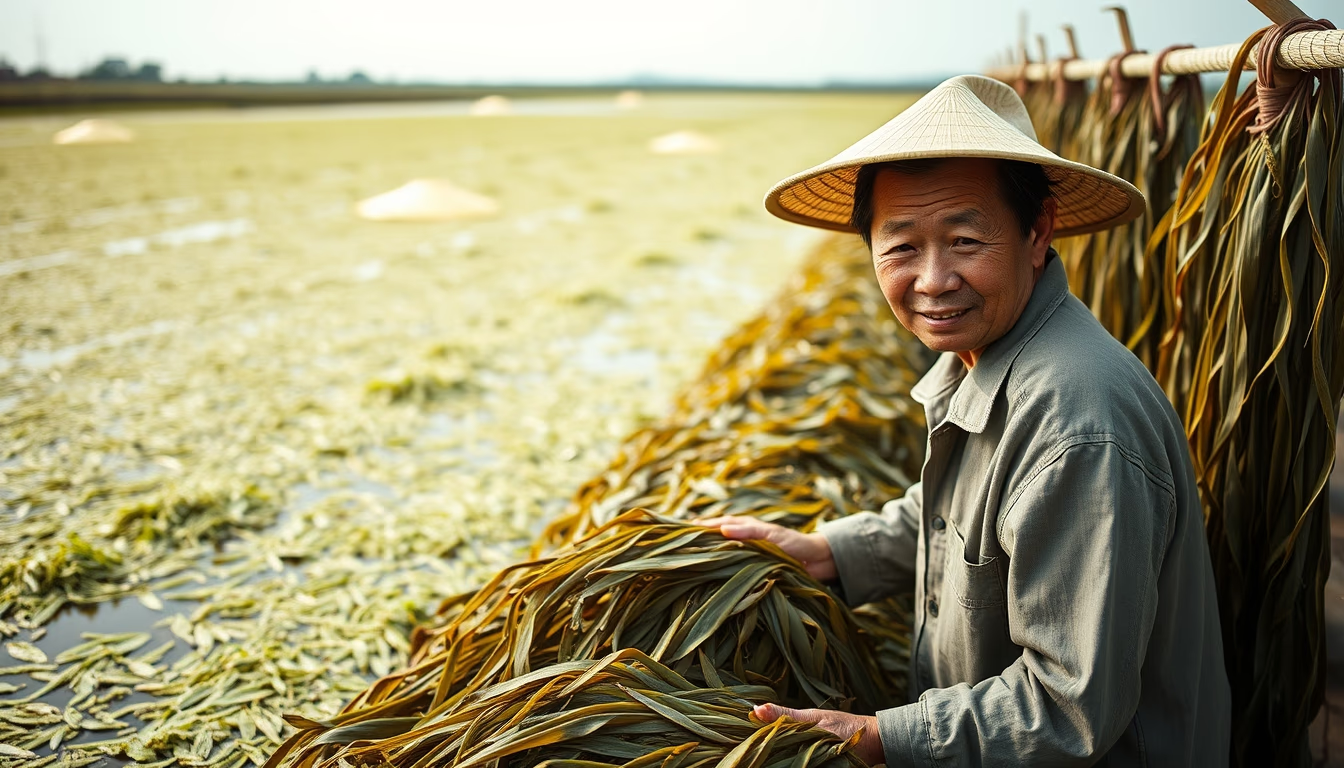
Seaweed farming in Asia: an age-old practice that supports coastal economies and provides sustainable solutions for food and industry.
About this subject
Seaweed farming in Asia is a practice with over 1,500 years of history, especially in China, Japan, and Korea. Today, the region accounts for more than 95% of global seaweed production, led by species such as Laminaria japonica (kombu), Porphyra (nori), and Gracilaria. Countries like Indonesia, the Philippines, and Vietnam have become major producers, driven by global demand for carrageenan and agar.
The most common technique is longline cultivation, where ropes are stretched between floats in shallow coastal waters. Seaweeds grow quickly, sequestering carbon and nutrients, which helps mitigate eutrophication. A single farm can yield up to 50 tons per hectare per year. Beyond human food, seaweeds are used for bioplastics, fertilizers, and biofuels.
In Asian cuisine, nori is essential for sushi, kombu is the base of dashi, and wakame appears in soups. Farming also provides income for coastal communities, especially women, who make up the majority of the workforce. Organic certification and fair trade initiatives have gained traction, valuing artisanal production.
Climate change poses challenges, such as rising water temperatures and ocean acidification affecting productivity. However, seaweed farming is considered a low-impact crop, requiring no freshwater or fertilizers, and is seen as an ally in global food security.
Frequently Asked Questions
Which are the main seaweed-producing countries in Asia?
China, Indonesia, the Philippines, South Korea, and Japan lead production. China accounts for about 60% of global volume, mainly kombu and nori.
How does seaweed farming benefit the environment?
Seaweeds absorb CO2 and excess nutrients, helping combat acidification and eutrophication. They require no freshwater, fertilizers, or pesticides, and provide habitat for marine life.
What are industrial uses of seaweed beyond food?
They are used to produce carrageenan and agar (thickeners in food and cosmetics), bioplastics, fertilizers, biofuels, and even pharmaceuticals.
Direct URL
https://pub-c7d6a6ea828543ac903a74a341ccb2e1.r2.dev/imagens/seaweed-farm-asian-documentary-nature-style-fresh2.avifHow to credit
Include a visible link back to UtilizAí. Copy one of the snippets below:
<a href="https://xn--utiliza-eza.com/en/midia/imagens/seaweed-farm-asian-documentary-nature-style-fresh2">Seaweed farm asian</a> by <a href="https://xn--utiliza-eza.com">UtilizAí</a>, licensed under <a href="https://creativecommons.org/licenses/by/4.0/">CC BY 4.0</a>.
[Seaweed farm asian](https://xn--utiliza-eza.com/en/midia/imagens/seaweed-farm-asian-documentary-nature-style-fresh2) by [UtilizAí](https://xn--utiliza-eza.com), CC BY 4.0
License: CC-BY-4.0