Seaweed farm asian
1344×768 · AVIF · CC BY 4.0
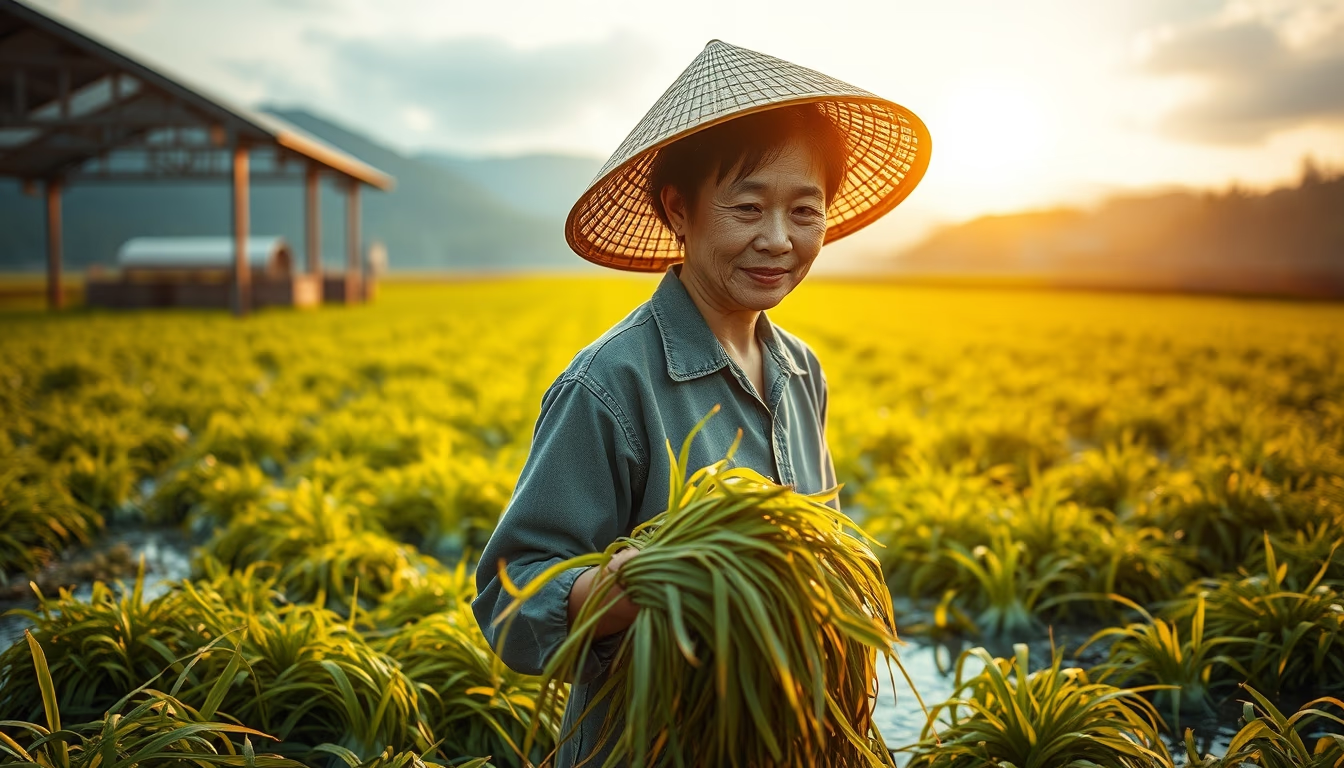
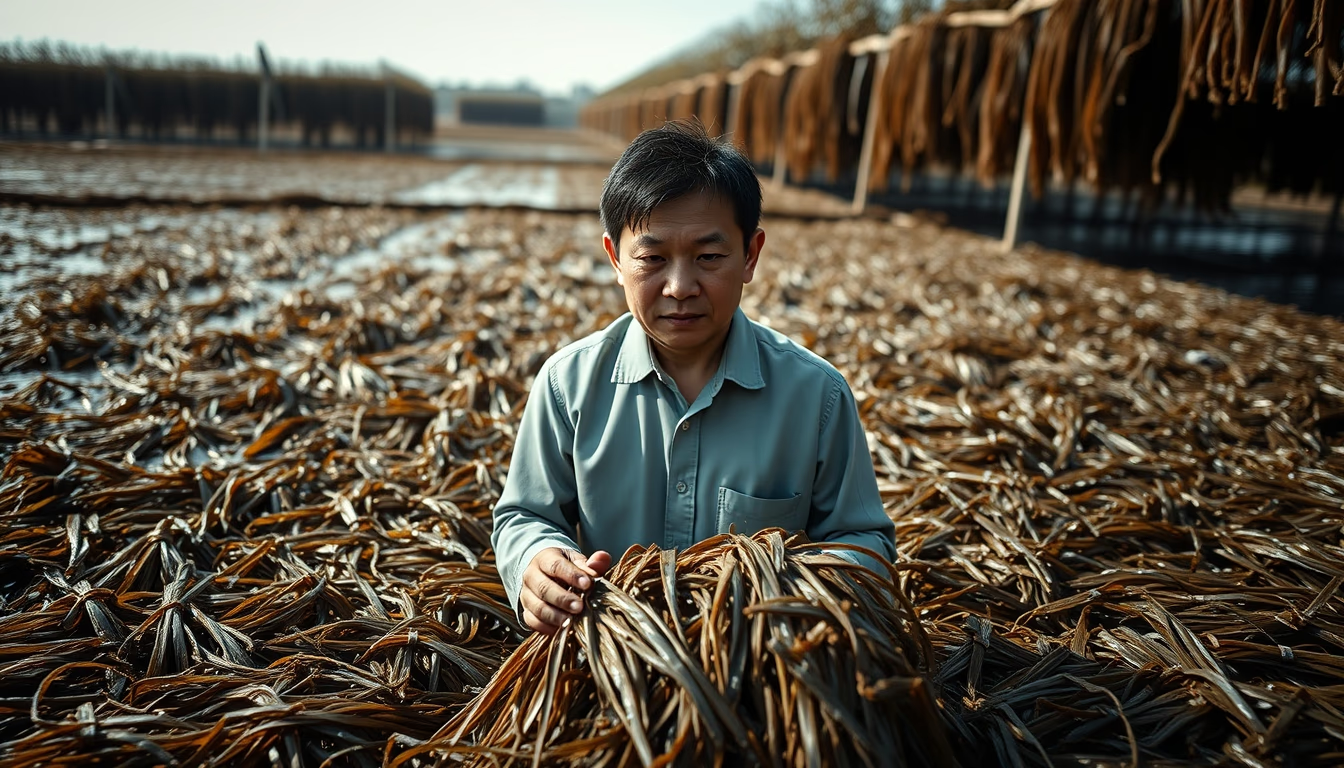
Seaweed farming in Asia: an ancient technique supplying food, cosmetics, and biofuel industries, while also fighting climate change.
About this subject
Seaweeds are photosynthetic organisms that grow in shallow coastal waters and are cultivated on a large scale in Asia, especially in Japan, South Korea, China, and Indonesia. The practice dates back over a thousand years, with records in Japan from the Nara period (710-794 AD). Today, Asia produces over 95% of the world's seaweed, with China accounting for about 60% of global production. Main cultivated species include nori (Porphyra), used in sushi, wakame (Undaria pinnatifida), and kombu (Saccharina japonica).
Seaweed farming requires no fertilizers, fresh water, or arable land, making it a sustainable alternative for food security and income generation in coastal communities. Besides its nutritional value, seaweeds are rich in vitamins, minerals, and bioactive compounds such as antioxidants and fibers. The cosmetic industry uses seaweed extracts in moisturizers and anti-aging products, while research explores their potential for third-generation biofuels.
Seaweed farms also act as carbon sinks, absorbing CO2 and excess nutrients, which helps mitigate ocean acidification and eutrophication. Studies suggest that expanding seaweed cultivation to 5% of global coastal areas could sequester the equivalent of 10% of annual carbon emissions. However, challenges such as diseases, climate variability, and competition for space with tourism and fisheries require careful management.
Traditionally hand-harvested, seaweeds are sun-dried or processed in factories. Recent innovations include automated monitoring systems using drones and sensors, as well as offshore cultivation techniques to avoid conflicts with other activities. Organic certification and fair trade are gaining traction, especially for high-quality nori products destined for the international market.
Frequently Asked Questions
What are the main types of seaweed cultivated in Asia?
The main species are nori (Porphyra), used in sushi, wakame (Undaria pinnatifida), and kombu (Saccharina japonica). Each has distinct culinary uses and nutritional properties.
How does seaweed farming help combat climate change?
Seaweeds absorb dissolved CO2 during photosynthesis, acting as carbon sinks. Studies show that expanding cultivation could sequester large amounts of carbon and reduce ocean acidification.
Is seaweed farming sustainable?
Yes, because it requires no inputs like fertilizers, fresh water, or arable land. It also promotes marine biodiversity and provides income for coastal communities, though careful management is needed to avoid local impacts.
Direct URL
https://pub-c7d6a6ea828543ac903a74a341ccb2e1.r2.dev/imagens/seaweed-farm-asian-cinematic-wide-shot-fresh14.avifHow to credit
Include a visible link back to UtilizAí. Copy one of the snippets below:
<a href="https://xn--utiliza-eza.com/en/midia/imagens/seaweed-farm-asian-cinematic-wide-shot-fresh14">Seaweed farm asian</a> by <a href="https://xn--utiliza-eza.com">UtilizAí</a>, licensed under <a href="https://creativecommons.org/licenses/by/4.0/">CC BY 4.0</a>.
[Seaweed farm asian](https://xn--utiliza-eza.com/en/midia/imagens/seaweed-farm-asian-cinematic-wide-shot-fresh14) by [UtilizAí](https://xn--utiliza-eza.com), CC BY 4.0
License: CC-BY-4.0