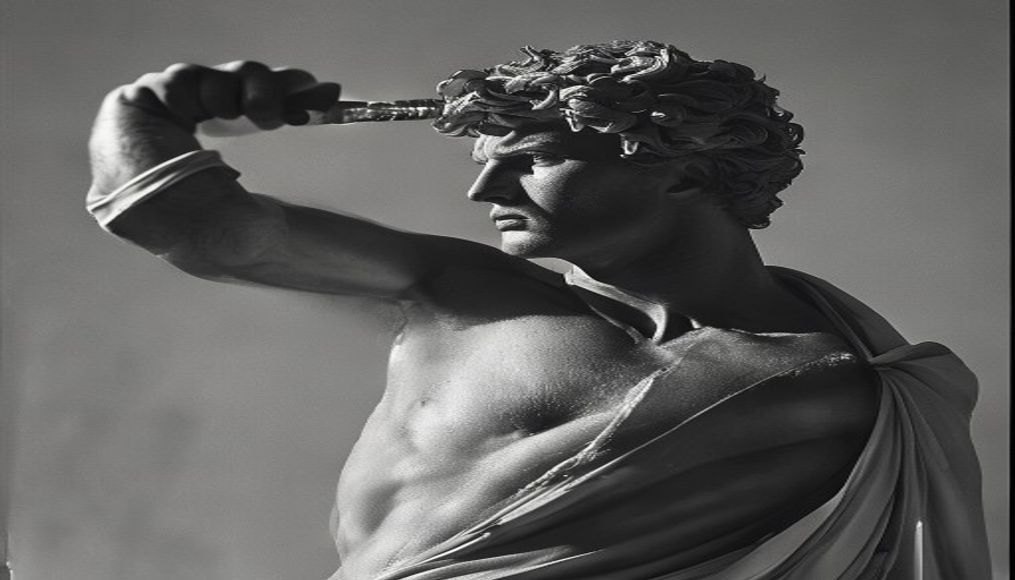
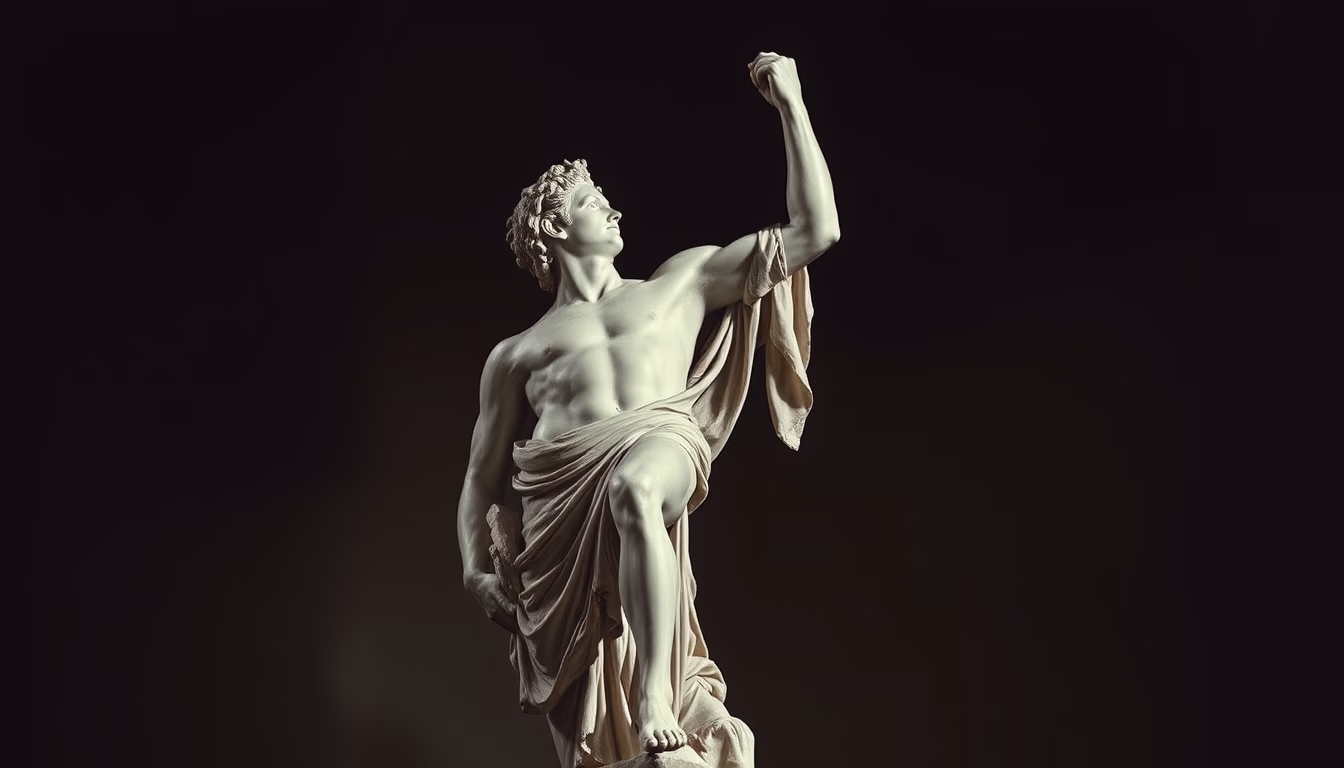
Sculpture david michelangelo
1344×768 · AVIF · CC BY 4.0
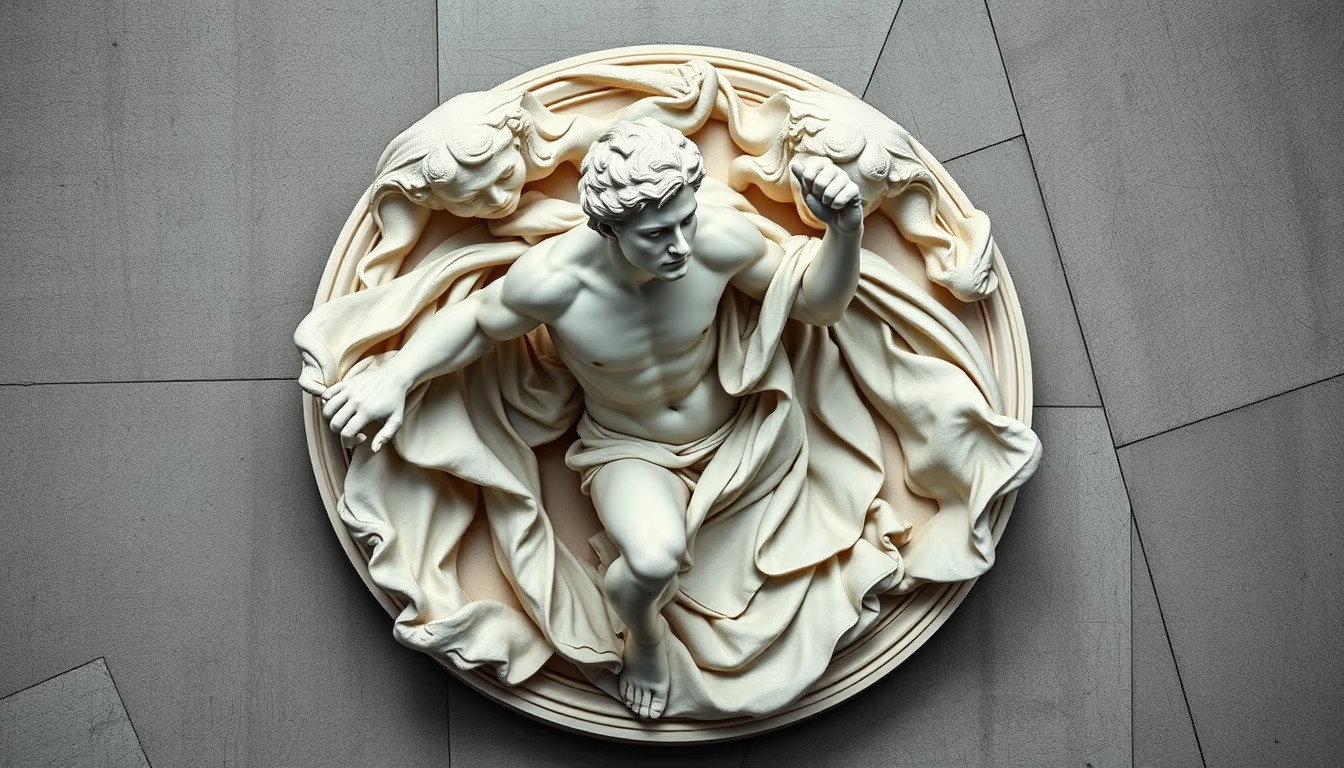
Michelangelo's David sculpture is an icon of the Italian Renaissance, depicting the biblical hero in white marble, standing 5.17 meters tall.
About this subject
Michelangelo's David is one of the most recognized works in art history, sculpted between 1501 and 1504 from Carrara marble. The sculpture depicts the biblical hero David before his battle with Goliath, capturing a moment of tension and concentration. Standing 5.17 meters tall and weighing approximately 5.5 tons, it was originally commissioned for the top of Florence Cathedral, but was instead placed in Piazza della Signoria in front of the Palazzo Vecchio as a symbol of the Florentine Republic.
Michelangelo was only 26 when he received the commission, and he carved the figure from a block of marble that other artists had considered unusable. The detailed anatomy, with precise veins and muscles, demonstrates the artist's deep knowledge of the human body gained through dissections. David is shown nude, with a sling over his left shoulder, contrasting with earlier representations that depicted him victorious over Goliath. In 1873, the sculpture was moved to the Galleria dell'Accademia in Florence to protect it from the elements, where it remains today.
The work has influenced countless artists and is considered a masterpiece of the Renaissance. Its reproduction and adaptation are common in various media, including photographs, prints, and even commercial products. David's image has also been used as a political and cultural symbol, representing the struggle for freedom and aesthetic perfection. Currently, a plaster replica stands in Piazza della Signoria, while the original attracts millions of visitors to the Accademia each year.
Frequently Asked Questions
Where is the original David sculpture by Michelangelo located?
The original David is displayed at the Galleria dell'Accademia in Florence, Italy, since 1873. A plaster replica stands in its original place at Piazza della Signoria.
What is the significance of David's pose in the sculpture?
David's pose, with weight on the right leg and torso slightly twisted, is known as contrapposto. It conveys a moment of dynamic balance and concentration before the battle with Goliath.
How many times has Michelangelo's David been damaged or vandalized?
David suffered damage in 1527 during a riot in Florence, when the left arm was broken, and in 1991, when a man struck its left foot with a hammer, causing minor damage.
Direct URL
https://pub-c7d6a6ea828543ac903a74a341ccb2e1.r2.dev/imagens/sculpture-david-michelangelo-isometric-flat-lay-p1.avifHow to credit
Include a visible link back to UtilizAí. Copy one of the snippets below:
<a href="https://xn--utiliza-eza.com/en/midia/imagens/sculpture-david-michelangelo-isometric-flat-lay-p1">Sculpture david michelangelo</a> by <a href="https://xn--utiliza-eza.com">UtilizAí</a>, licensed under <a href="https://creativecommons.org/licenses/by/4.0/">CC BY 4.0</a>.
[Sculpture david michelangelo](https://xn--utiliza-eza.com/en/midia/imagens/sculpture-david-michelangelo-isometric-flat-lay-p1) by [UtilizAí](https://xn--utiliza-eza.com), CC BY 4.0
License: CC-BY-4.0