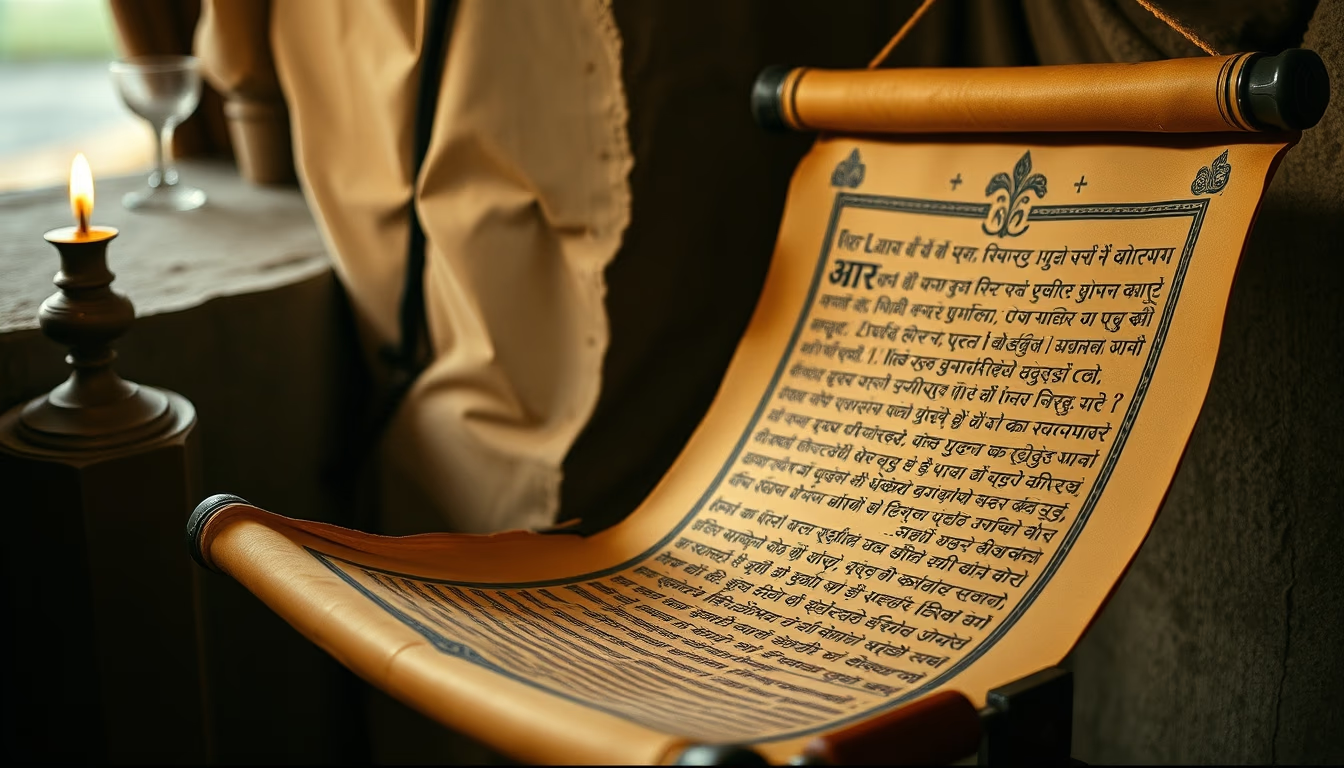
Sanskrit ancient scroll
1344×768 · AVIF · CC BY 4.0
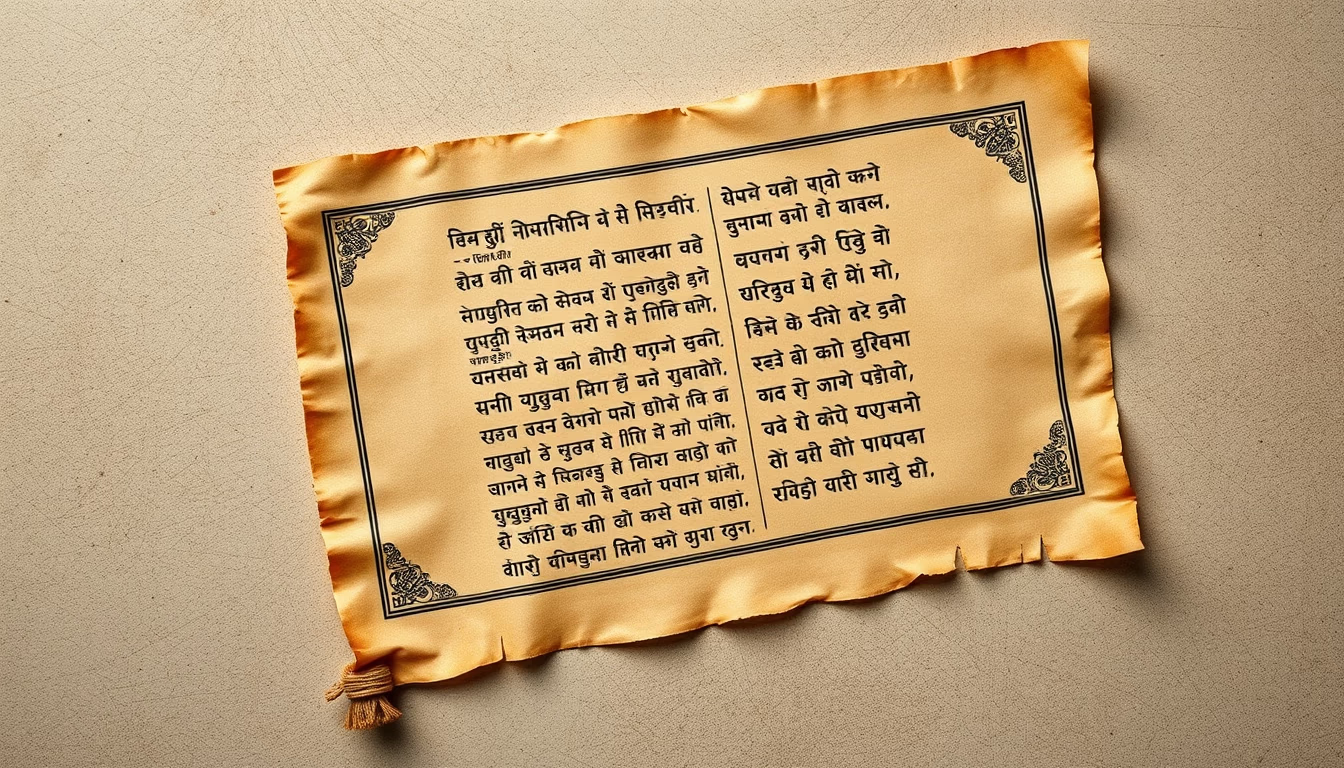
Sanskrit manuscripts on palm leaves and birch bark preserve Vedic, philosophical, and literary texts from ancient India.
About this subject
Sanskrit manuscripts represent one of the oldest and largest written corpora in human history. They were produced on various supports over centuries, including palm leaves, birch bark, and later paper. Palm leaves, common in South India and Southeast Asia, were treated with oil and inscribed with a stylus, while birch bark, used in the Himalayas and Kashmir, offered a smoother surface. These organic materials are fragile and require dry climates or careful preservation to survive.
Most surviving manuscripts date from the 5th to 19th centuries CE, though older fragments, such as those found in Xinjiang, China, date back to the 1st century CE. They contain everything from the Vedas, Hindu sacred texts composed around 1500 BCE, to treatises on grammar, astronomy, medicine, and literary works like the Mahabharata and Ramayana. Oral transmission dominated for millennia, but writing became crucial for preserving accurate versions and scholarly commentaries.
Historical libraries, such as Nalanda (founded in the 5th century CE), housed thousands of Sanskrit manuscripts, but many were destroyed by invasions and natural disasters. Today, important collections are held at institutions like the Bodleian Library in England and the National Library of Nepal. Cataloging and digitizing these manuscripts is an international effort to access knowledge about ancient Indian philosophy, mathematics, and science. Sanskrit paleography helps date and locate texts, revealing the evolution of scripts such as Brahmi, Gupta, and Devanagari.
Frequently Asked Questions
What is the oldest known Sanskrit manuscript?
The oldest known Sanskrit manuscript is a fragment of the Rigveda found in Xinjiang, China, dated to the 1st century CE. It is written in Brahmi script and belongs to an oral tradition dating back to around 1500 BCE.
Why was birch bark used for manuscripts?
Birch bark was valued for being lightweight, flexible, and resistant to insects. It was primarily used in the Himalayan region and Kashmir, where birch trees were abundant, and could be cut into sheets and sewn into notebooks.
How were palm leaf manuscripts preserved?
Palm leaves were boiled, dried, and polished, then treated with oil to repel insects. Inscriptions were made with a stylus and rubbed with soot or pigment to highlight the writing. The manuscripts were stored in stacks between wooden boards and wrapped in cloth.
Direct URL
https://pub-c7d6a6ea828543ac903a74a341ccb2e1.r2.dev/imagens/sanskrit-ancient-scroll-isometric-flat-lay-fresh2.avifHow to credit
Include a visible link back to UtilizAí. Copy one of the snippets below:
<a href="https://xn--utiliza-eza.com/en/midia/imagens/sanskrit-ancient-scroll-isometric-flat-lay-fresh2">Sanskrit ancient scroll</a> by <a href="https://xn--utiliza-eza.com">UtilizAí</a>, licensed under <a href="https://creativecommons.org/licenses/by/4.0/">CC BY 4.0</a>.
[Sanskrit ancient scroll](https://xn--utiliza-eza.com/en/midia/imagens/sanskrit-ancient-scroll-isometric-flat-lay-fresh2) by [UtilizAí](https://xn--utiliza-eza.com), CC BY 4.0
License: CC-BY-4.0