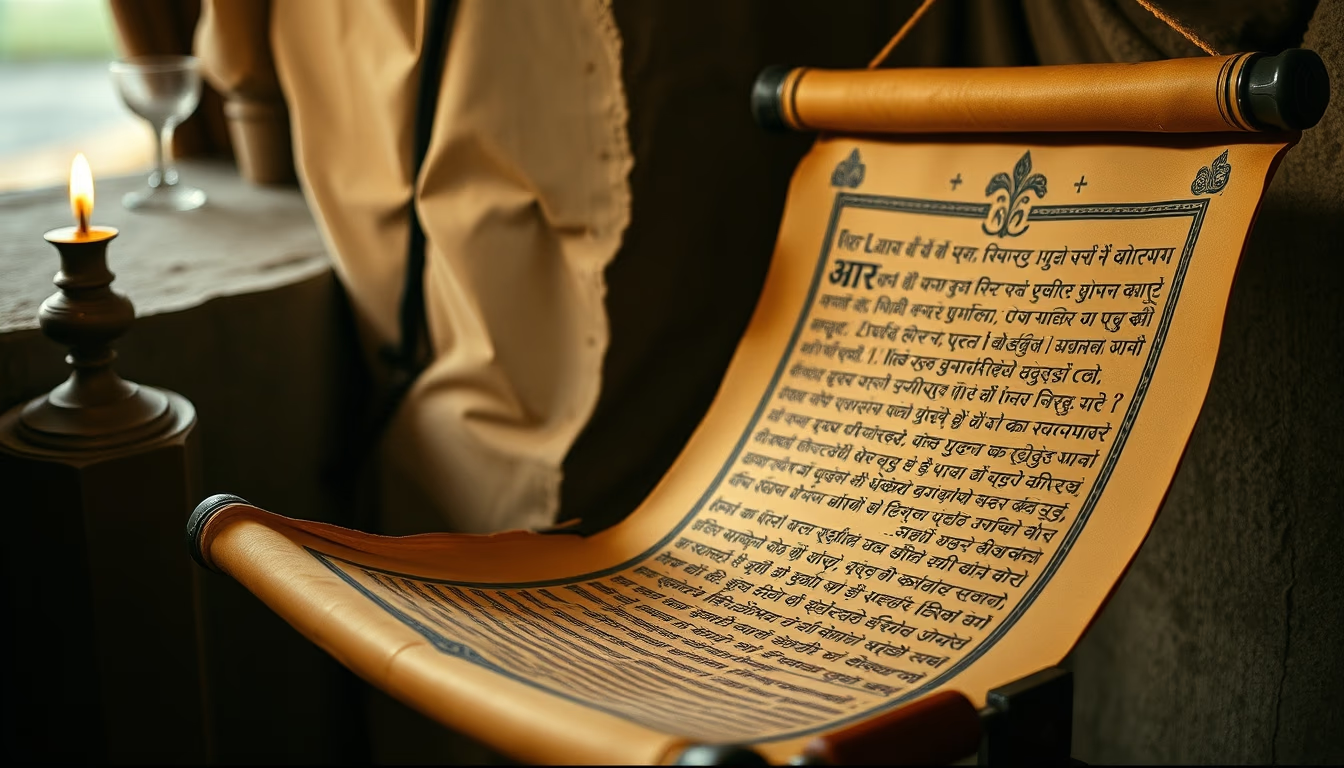
Sanskrit ancient scroll
1344×768 · AVIF · CC BY 4.0
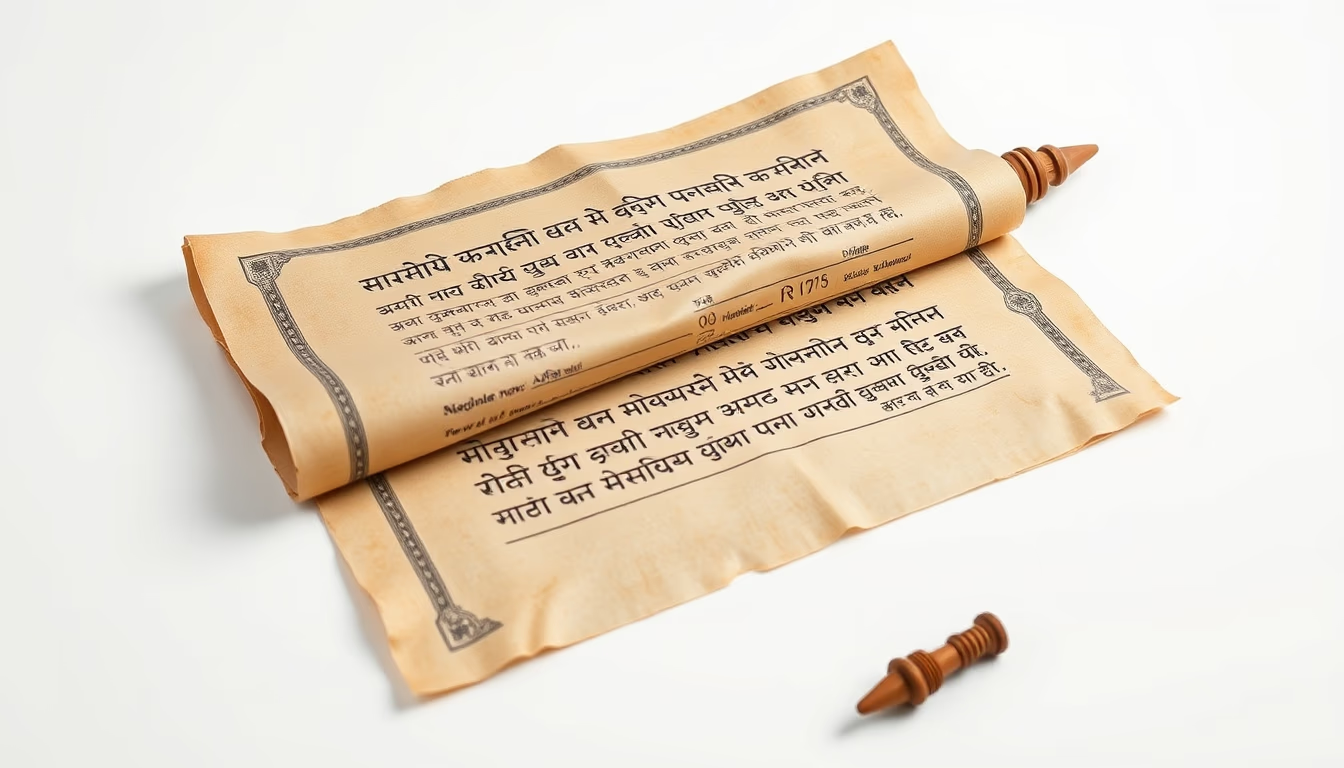
Ancient Sanskrit scrolls are manuscripts on palm leaves or birch bark, used to transmit Vedic and philosophical texts.
About this subject
Ancient Sanskrit scrolls represent one of the oldest writing traditions in India, dating back to at least 500 BCE. They were primarily made from palm leaves (talapatra) or birch bark (bhurjapatra), durable materials readily available in the region. Vedic texts, Upanishads, epics like the Mahabharata and Ramayana, and treatises on grammar, medicine, and astronomy were preserved on these supports.
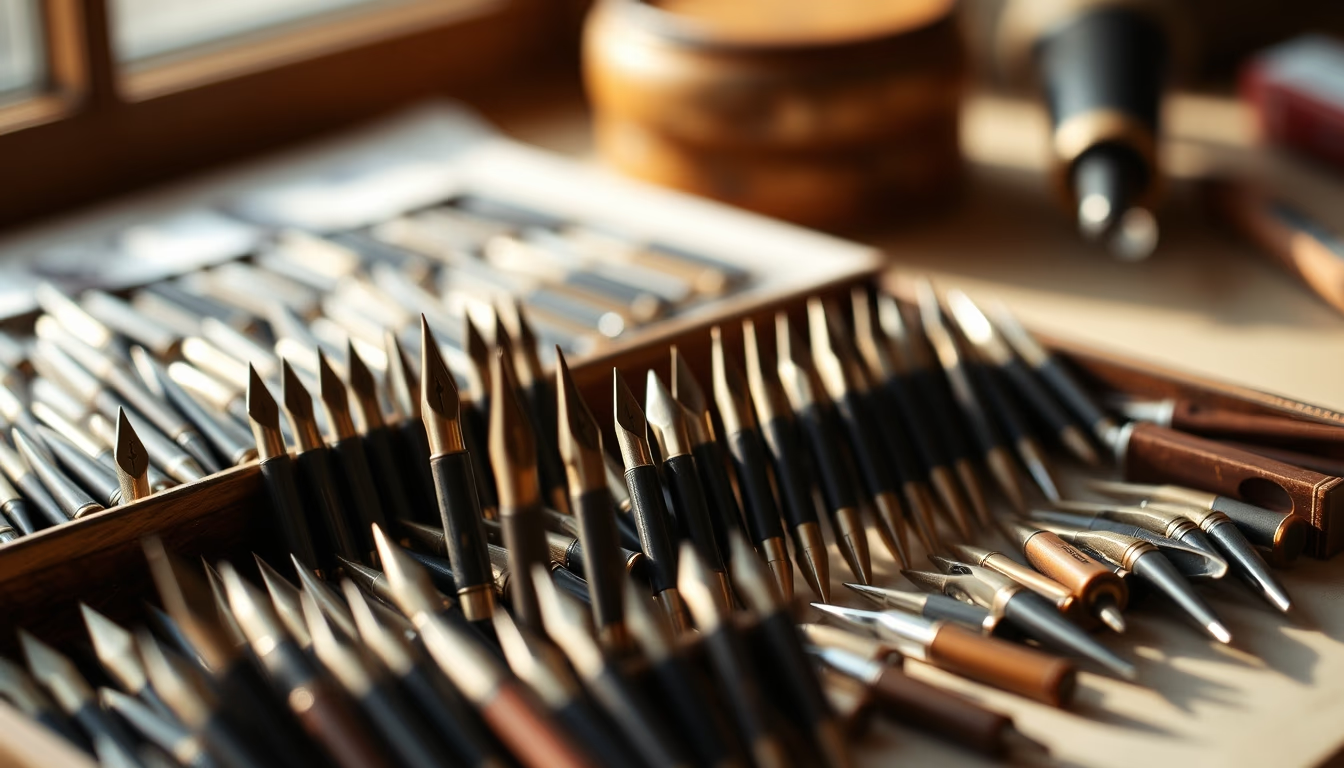
The writing technique involved using a metal stylus to engrave letters onto the surface, which were then rubbed with soot to make the inscriptions visible. The leaves were perforated and tied together with string to form volumes. India's humid climate required careful storage, often in temples or monastic libraries. Many ancient scrolls were lost due to moisture, insects, or destruction, but thousands have survived in collections in India, Nepal, Tibet, and other countries.
The importance of Sanskrit scrolls extends beyond religious content; they are vital for the study of historical linguistics, paleography, and cultural history. For example, the Gilgit manuscripts discovered in Pakistan contain some of the earliest known Buddhist texts. UNESCO has recognized several such manuscripts as Memory of the World. Today, digitization projects like the Digital Sanskrit Library aim to preserve and make these precious documents accessible.
Frequently Asked Questions
What is the most common material used in ancient Sanskrit scrolls?
The most common materials are palm leaves (talapatra) and birch bark (bhurjapatra). Palm leaves were widely used in southern India, while birch bark was preferred in the north and the Himalayas.
How were Sanskrit scrolls written?
A metal stylus was used to engrave characters onto the surface, and then soot or ink was applied to make the letters visible. The leaves were then tied together with string to form a volume.
Where can I find ancient Sanskrit scrolls today?
They are preserved in libraries and museums in India, Nepal, Tibet, Japan, and Europe. Notable examples include the Gilgit manuscripts in Pakistan and the collection at the Bhandarkar Library in Pune.
Direct URL
https://pub-c7d6a6ea828543ac903a74a341ccb2e1.r2.dev/imagens/sanskrit-ancient-scroll-commercial-product-photography-fresh14.avifHow to credit
Include a visible link back to UtilizAí. Copy one of the snippets below:
<a href="https://xn--utiliza-eza.com/en/midia/imagens/sanskrit-ancient-scroll-commercial-product-photography-fresh14">Sanskrit ancient scroll</a> by <a href="https://xn--utiliza-eza.com">UtilizAí</a>, licensed under <a href="https://creativecommons.org/licenses/by/4.0/">CC BY 4.0</a>.
[Sanskrit ancient scroll](https://xn--utiliza-eza.com/en/midia/imagens/sanskrit-ancient-scroll-commercial-product-photography-fresh14) by [UtilizAí](https://xn--utiliza-eza.com), CC BY 4.0
License: CC-BY-4.0