Salmon farm offshore
1344×768 · AVIF · CC BY 4.0
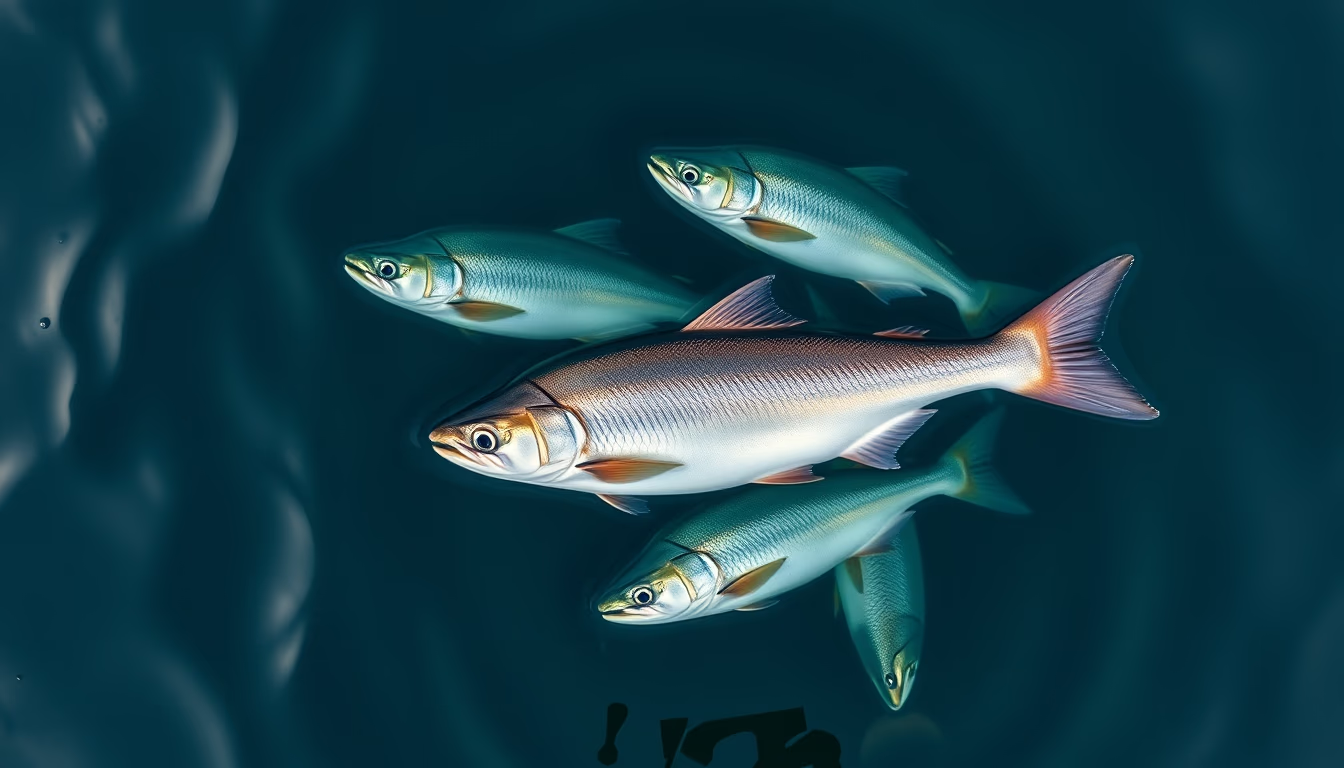
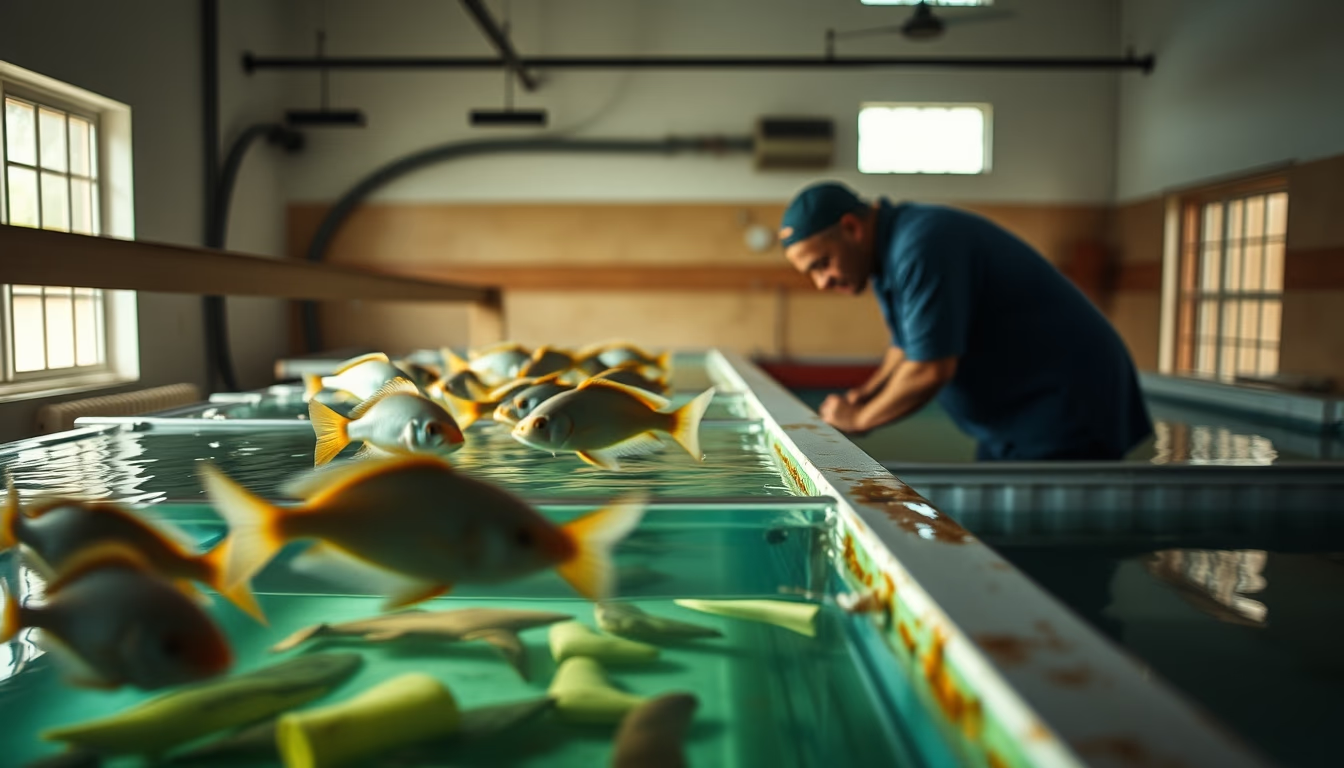
Offshore salmon farming enables open-ocean aquaculture, reducing environmental impacts and improving fish quality.
About this subject
Offshore salmon farming involves raising salmon in open-ocean cages, a step beyond traditional coastal aquaculture. These farms operate in deeper, more energetic waters, which helps disperse waste and reduce environmental impacts like eutrophication. Lower stocking densities and stronger currents also improve fish health, leading to higher survival rates and better flesh quality.
Technologically, offshore farms use submersible or semi-submersible cages made of high-strength steel and netting. The world's largest such farm, Ocean Farm 1, off Norway, measures 110 meters in diameter and holds up to 1.5 million salmon. Atlantic salmon (Salmo salar) dominates global production, with Norway, Chile, and Scotland as top producers. Offshore setups significantly reduce sea lice infestations because the parasites have difficulty completing their life cycle in deep, fast-flowing water. Escapes to wild populations are also minimized due to robust containment systems.
Despite these advantages, offshore salmon farming faces high capital costs: a single cage system can exceed $50 million. Specialized feed barges and maintenance vessels are required, and extreme weather poses operational risks. Nonetheless, companies like SalMar and Cermaq are scaling up, encouraged by rising demand for sustainable protein. The sector produced about 5% of farmed salmon in 2023, but is projected to grow 15% annually.
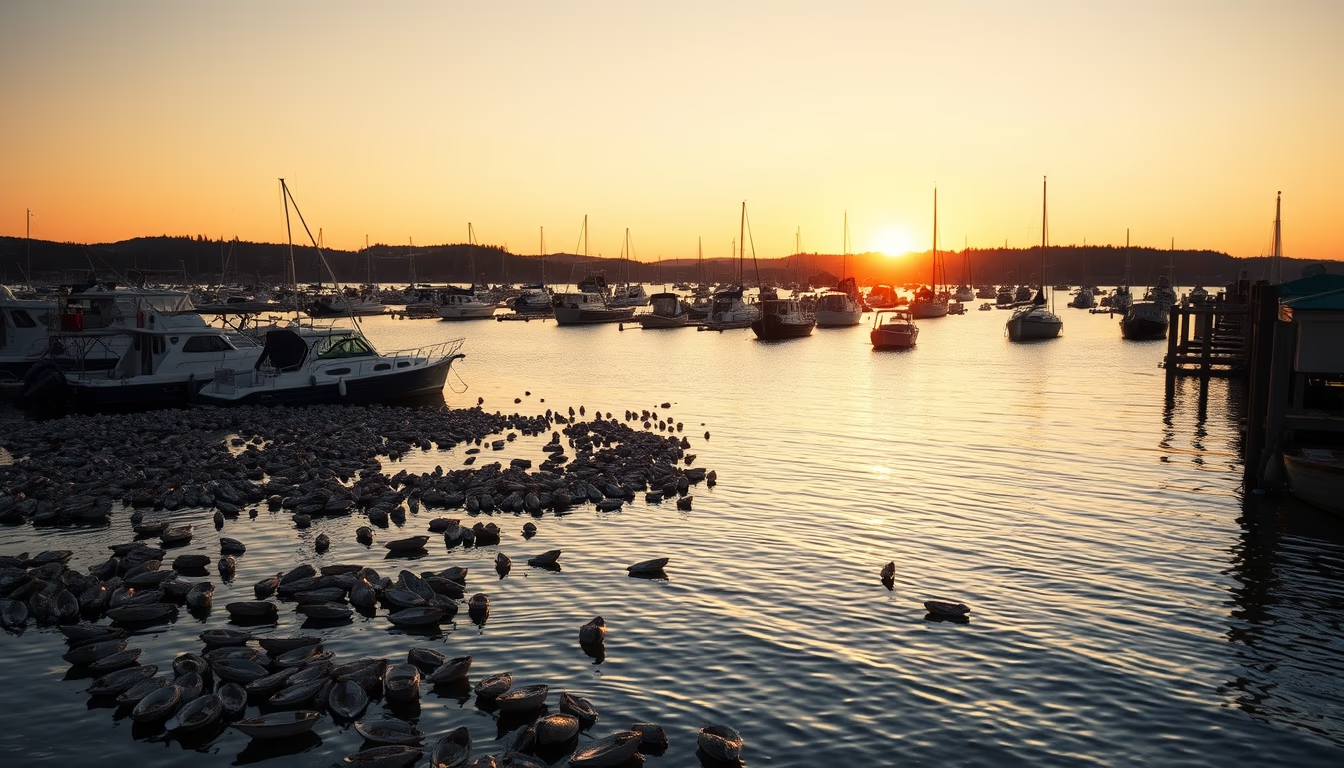
In regions like Brazil, offshore aquaculture remains experimental, though pilot projects for cobia and sea bass are underway. Regulatory frameworks and environmental licensing are critical for expansion. The isometric flat-lay image visually represents the layout of an offshore salmon farm, showing cages, feed storage, and anchor points in a clear, educational manner.
Frequently Asked Questions
What are the main advantages of offshore salmon farming?
Reduced coastal environmental impact, lower sea lice infestation, improved fish quality due to constant water flow, and minimized escape risks to wild populations.
Which countries lead in offshore salmon production?
Norway, Chile, and Scotland are top producers. Norway's Ocean Farm 1, with a capacity of 1.5 million fish, is a landmark project.
Can Brazil develop offshore salmon farming?
Brazil's warm waters are not suitable for salmon, but native species like cobia and sea bass are candidates. Pilot projects are underway off the southeastern coast.
Direct URL
https://pub-c7d6a6ea828543ac903a74a341ccb2e1.r2.dev/imagens/salmon-farm-offshore-isometric-flat-lay-fresh16.avifHow to credit
Include a visible link back to UtilizAí. Copy one of the snippets below:
<a href="https://xn--utiliza-eza.com/en/midia/imagens/salmon-farm-offshore-isometric-flat-lay-fresh16">Salmon farm offshore</a> by <a href="https://xn--utiliza-eza.com">UtilizAí</a>, licensed under <a href="https://creativecommons.org/licenses/by/4.0/">CC BY 4.0</a>.
[Salmon farm offshore](https://xn--utiliza-eza.com/en/midia/imagens/salmon-farm-offshore-isometric-flat-lay-fresh16) by [UtilizAí](https://xn--utiliza-eza.com), CC BY 4.0
License: CC-BY-4.0