Salmon farm offshore
1344×768 · AVIF · CC BY 4.0
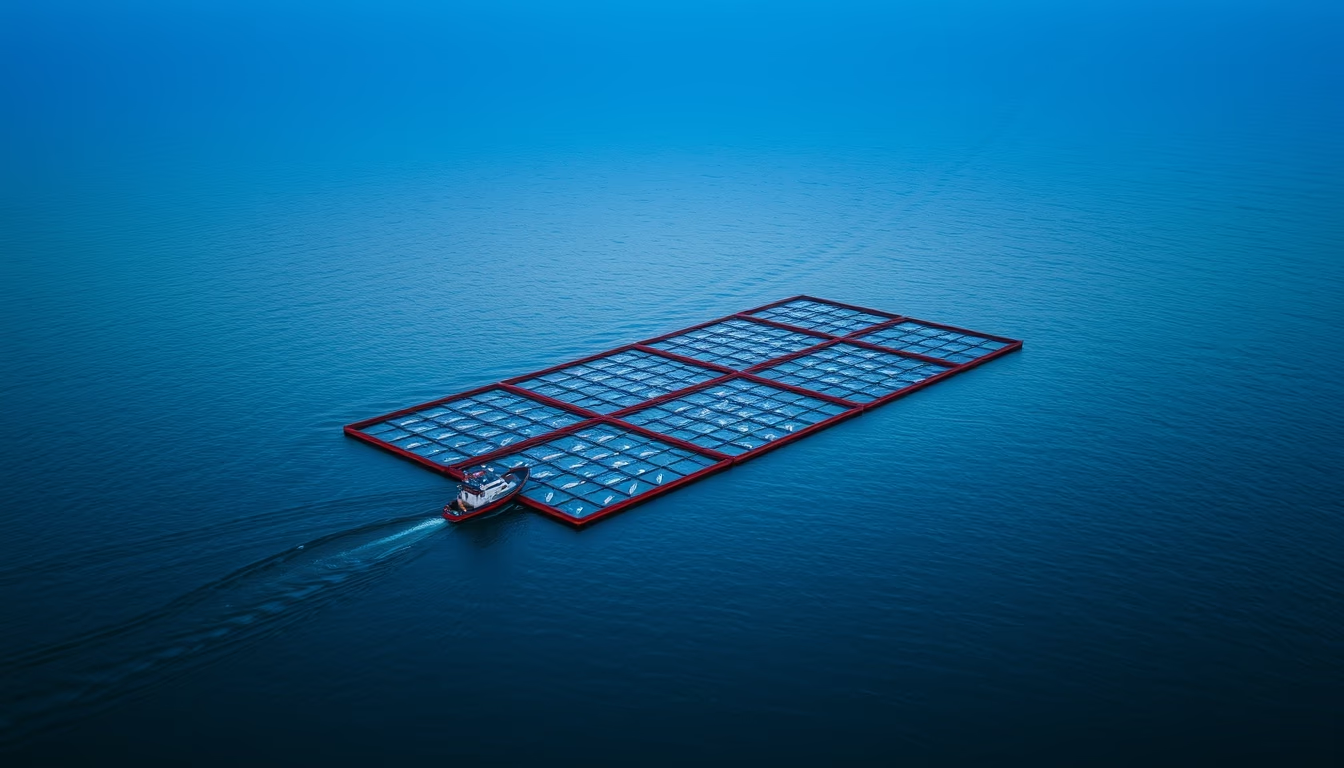
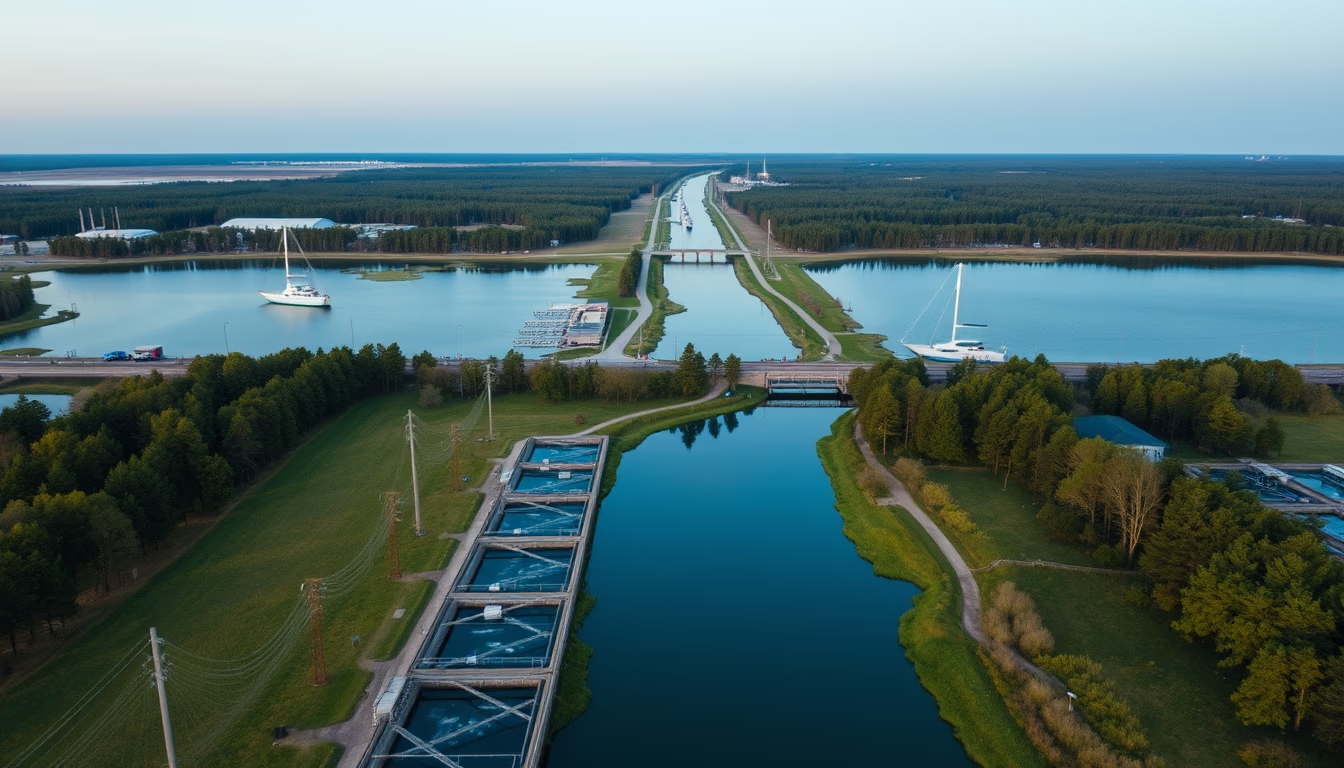
Offshore salmon farming uses submersible or floating cage systems to produce salmon in deeper, more exposed open ocean waters.
About this subject
Offshore salmon farming represents an evolution of traditional aquaculture, installing cages in the open ocean kilometers from the coast. Countries like Norway, Chile and Canada lead this type of production, with farms reaching depths over 100 meters. Norway, the world's largest salmon producer, has heavily invested in offshore technologies to expand production capacity, as coastal areas are saturated and subject to user conflicts.
These farms operate under harsher conditions, with strong waves and intense currents, requiring robust structures and sophisticated anchoring systems. Cages can be submersible to avoid surface storms or floating with semi-rigid designs. Feeding is automated via barges or underwater pipelines, and harvesting is done with specialized vessels.
A major advantage of offshore farming is greater dilution of waste and reduced incidence of sea lice, a pest affecting coastal salmon farming. However, challenges include higher operational costs, maintenance logistics, and the risk of fish escapes into the natural ecosystem. Environmental regulations, such as in Norway, mandate constant monitoring of water quality and parasite control.
Innovations like closed cages and recirculating systems are being tested to mitigate impacts. Global offshore production is expected to grow, with projections that by 2030 it will account for 20% of salmon production. Companies like SalMar and Marine Harvest already operate pioneering projects, such as the Ocean Farm 1, which produces 1.5 million fish in a single structure.
Frequently Asked Questions
What distinguishes offshore salmon farming from coastal farming?
Offshore farming uses cages in open ocean, far from the coast, exposed to strong waves and currents, while coastal farming operates in sheltered nearshore areas. Offshore offers greater waste dilution and fewer parasitic diseases, but has higher costs and larger weather risks.
What are the main environmental challenges of offshore salmon farming?
Challenges include potential fish escapes that compete with native species, accumulation of waste on the seabed, and use of medicines to control parasites. Regulations require monitoring and mitigation of these impacts.
How are salmon fed in offshore farms?
Feeding is done through automated systems that dispense feed from anchored barges or via underwater pipelines connecting silos to the cage. The feed consists mainly of fishmeal, vegetable oils and proteins, adjusted by underwater cameras to avoid waste.
Direct URL
https://pub-c7d6a6ea828543ac903a74a341ccb2e1.r2.dev/imagens/salmon-farm-offshore-aerial-drone-shot-fresh3.avifHow to credit
Include a visible link back to UtilizAí. Copy one of the snippets below:
<a href="https://xn--utiliza-eza.com/en/midia/imagens/salmon-farm-offshore-aerial-drone-shot-fresh3">Salmon farm offshore</a> by <a href="https://xn--utiliza-eza.com">UtilizAí</a>, licensed under <a href="https://creativecommons.org/licenses/by/4.0/">CC BY 4.0</a>.
[Salmon farm offshore](https://xn--utiliza-eza.com/en/midia/imagens/salmon-farm-offshore-aerial-drone-shot-fresh3) by [UtilizAí](https://xn--utiliza-eza.com), CC BY 4.0
License: CC-BY-4.0