Salar de uyuni reflection
1344×768 · AVIF · CC BY 4.0
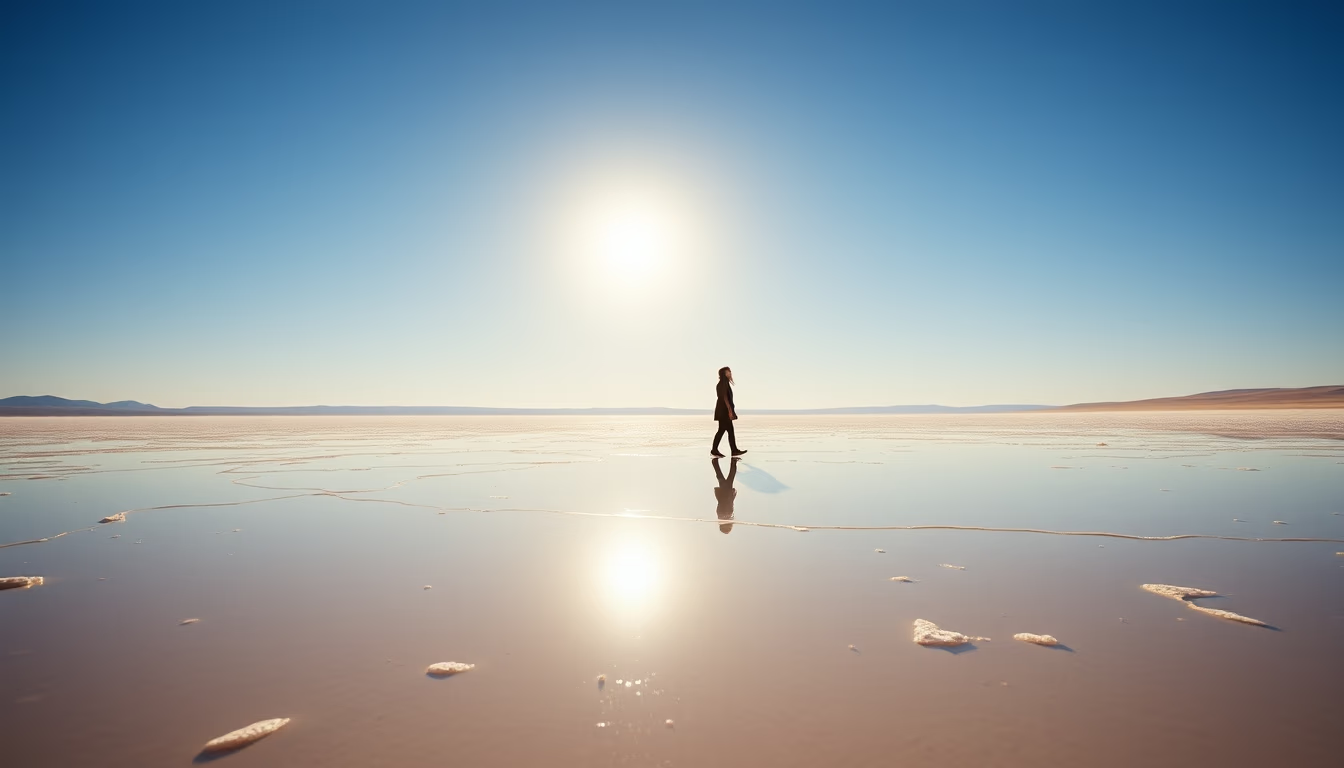
Salar de Uyuni in Bolivia is the world's largest salt flat, renowned for its mirror effect during the rainy season.
About this subject
Salar de Uyuni is located in southwestern Bolivia, in the Daniel Campos Province of Potosí Department, at an altitude of about 3,650 meters above sea level. Covering approximately 10,582 square kilometers, it is the largest continuous salt flat on Earth. Its formation dates back thousands of years to the drying of a prehistoric lake called Lake Minchin, leaving behind a thick crust of salt and other minerals such as lithium, potassium, and magnesium. The salt flat is estimated to hold more than half of the world's lithium reserves, a key resource for batteries in electronic devices and electric vehicles.
During the rainy season from December to April, a thin layer of water covers the surface, turning the salt flat into a vast natural mirror that perfectly reflects the sky. This phenomenon attracts tourists and photographers from around the globe, seeking to capture surreal images of clouds and skies mirrored on the ground. The salt flat also features Fish Island (Isla del Pescado), a hill covered with giant cacti that can reach over 10 meters in height, offering a striking contrast to the white, flat landscape.
Beyond tourism, lithium and salt extraction are important economic activities in the region. However, lithium mining raises environmental concerns due to high water consumption and impacts on the fragile altiplano ecosystems. The Bolivian government seeks to balance economic development with preservation of this natural heritage, which also serves as a habitat for Andean flamingos and other migratory birds. The landscape of Salar de Uyuni is so iconic that it has been used as a filming location for movies such as Star Wars: The Last Jedi.
Frequently Asked Questions
When is the best time to visit Salar de Uyuni to see the mirror effect?
The best time is during the rainy season, from January to March, when there is enough water to create the mirror but not so much that access is blocked. December and April can also offer good conditions, though they are more unpredictable.
Where exactly is Salar de Uyuni located?
It is in southwestern Bolivia, in Daniel Campos Province, Potosí Department, near the town of Uyuni. It is accessible by road from La Paz (about 10 hours) or by flight to Uyuni Airport.
What are the main tourist attractions at Salar de Uyuni?
Besides the mirror effect, highlights include Fish Island with its giant cacti, the train cemetery in Uyuni, colorful lagoons nearby (such as Laguna Colorada), and the geysers of the Siloli Desert. Multi-day jeep tours are common to explore the area.
Direct URL
https://pub-c7d6a6ea828543ac903a74a341ccb2e1.r2.dev/imagens/salar-de-uyuni-reflection-lo-fi-disposable-camera-p4.avifHow to credit
Include a visible link back to UtilizAí. Copy one of the snippets below:
<a href="https://xn--utiliza-eza.com/en/midia/imagens/salar-de-uyuni-reflection-lo-fi-disposable-camera-p4">Salar de uyuni reflection</a> by <a href="https://xn--utiliza-eza.com">UtilizAí</a>, licensed under <a href="https://creativecommons.org/licenses/by/4.0/">CC BY 4.0</a>.
[Salar de uyuni reflection](https://xn--utiliza-eza.com/en/midia/imagens/salar-de-uyuni-reflection-lo-fi-disposable-camera-p4) by [UtilizAí](https://xn--utiliza-eza.com), CC BY 4.0
License: CC-BY-4.0