Salar de uyuni reflection
1344×768 · AVIF · CC BY 4.0
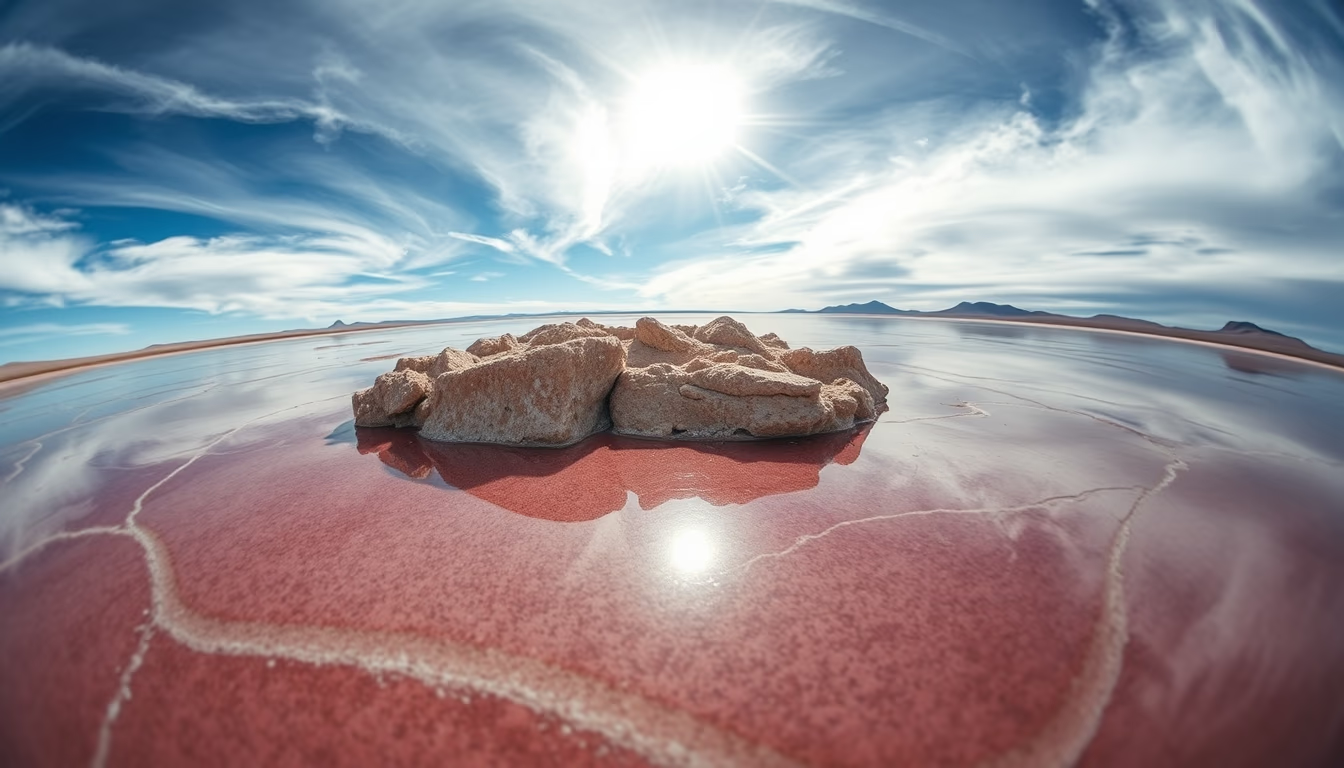
Salar de Uyuni in Bolivia is the world's largest salt flat, renowned for its mirror effect during the rainy season, creating otherworldly landscapes.
About this subject
Salar de Uyuni is located in southwestern Bolivia, in the Daniel Campos Province of Potosí Department, at an altitude of about 3,656 meters above sea level. Covering approximately 10,582 square kilometers, it is the world's largest salt flat, formed from the evaporation of prehistoric lakes thousands of years ago. Its flat, highly saline surface becomes a giant mirror during the rainy season (December to April), when a thin layer of water perfectly reflects the sky, attracting tourists and photographers from around the globe.
Beyond its visual appeal, Salar de Uyuni holds economic and scientific significance. It contains about 70% of the world's lithium reserves, essential for electric vehicle batteries and electronics. Lithium extraction generates environmental and political debates due to its impact on the fragile ecosystem. Salt is also harvested by local communities using traditional methods, producing table salt and other products.
The area features islands covered with giant cacti, such as Incahuasi Island, which can reach over 10 meters in height. These islands are remnants of ancient coral reefs from when the region was covered by an inland sea. The climate is arid and cold, with temperatures ranging from -20°C at night to 20°C during the day. Wildlife includes flamingos, vicuñas, and Andean foxes, all adapted to extreme conditions.
Visitors can enjoy unique experiences like staying in hotels made entirely of salt blocks and visiting the Train Cemetery, where old locomotives rust in the open air. The best time to see the mirror effect is between January and March, but travelers should be cautious of flooded roads and low temperatures.
Frequently Asked Questions
What is the best time to visit Salar de Uyuni to see the mirror effect?
The best time is during the rainy season, from January to March, when a thin layer of water covers the surface and creates the perfect sky reflection. However, road conditions can be muddy and flooded.
Why is Salar de Uyuni important for the battery industry?
Salar de Uyuni holds about 70% of the world's lithium reserves, a key mineral for electric vehicle batteries and electronics, making it crucial for the global energy transition.
Are there salt hotels in Salar de Uyuni?
Yes, there are hotels built entirely from salt blocks harvested from the flat, such as the Hotel de Sal Luna Salada. They offer a unique experience with salt beds, tables, and walls.
Direct URL
https://pub-c7d6a6ea828543ac903a74a341ccb2e1.r2.dev/imagens/salar-de-uyuni-reflection-fish-eye-wide-angle-p8.avifHow to credit
Include a visible link back to UtilizAí. Copy one of the snippets below:
<a href="https://xn--utiliza-eza.com/en/midia/imagens/salar-de-uyuni-reflection-fish-eye-wide-angle-p8">Salar de uyuni reflection</a> by <a href="https://xn--utiliza-eza.com">UtilizAí</a>, licensed under <a href="https://creativecommons.org/licenses/by/4.0/">CC BY 4.0</a>.
[Salar de uyuni reflection](https://xn--utiliza-eza.com/en/midia/imagens/salar-de-uyuni-reflection-fish-eye-wide-angle-p8) by [UtilizAí](https://xn--utiliza-eza.com), CC BY 4.0
License: CC-BY-4.0