Runes viking stone
1344×768 · AVIF · CC BY 4.0
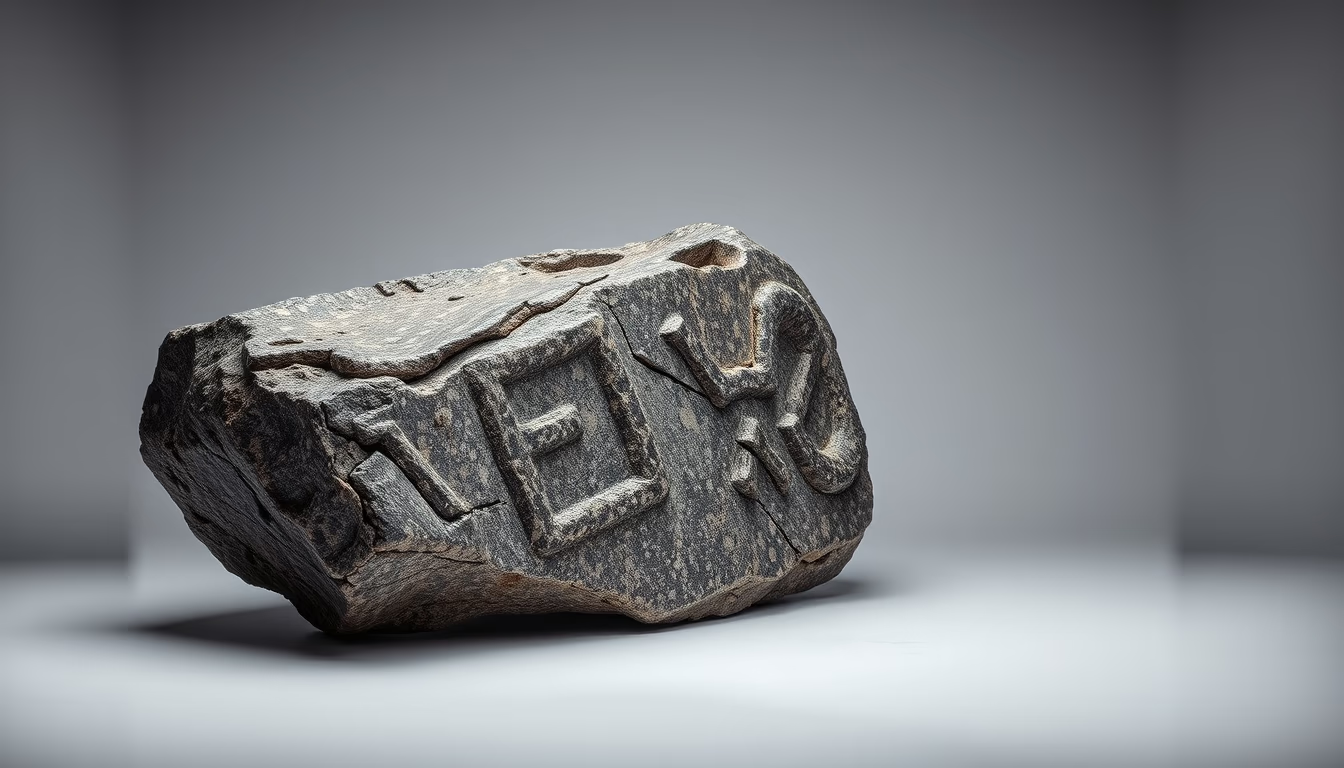
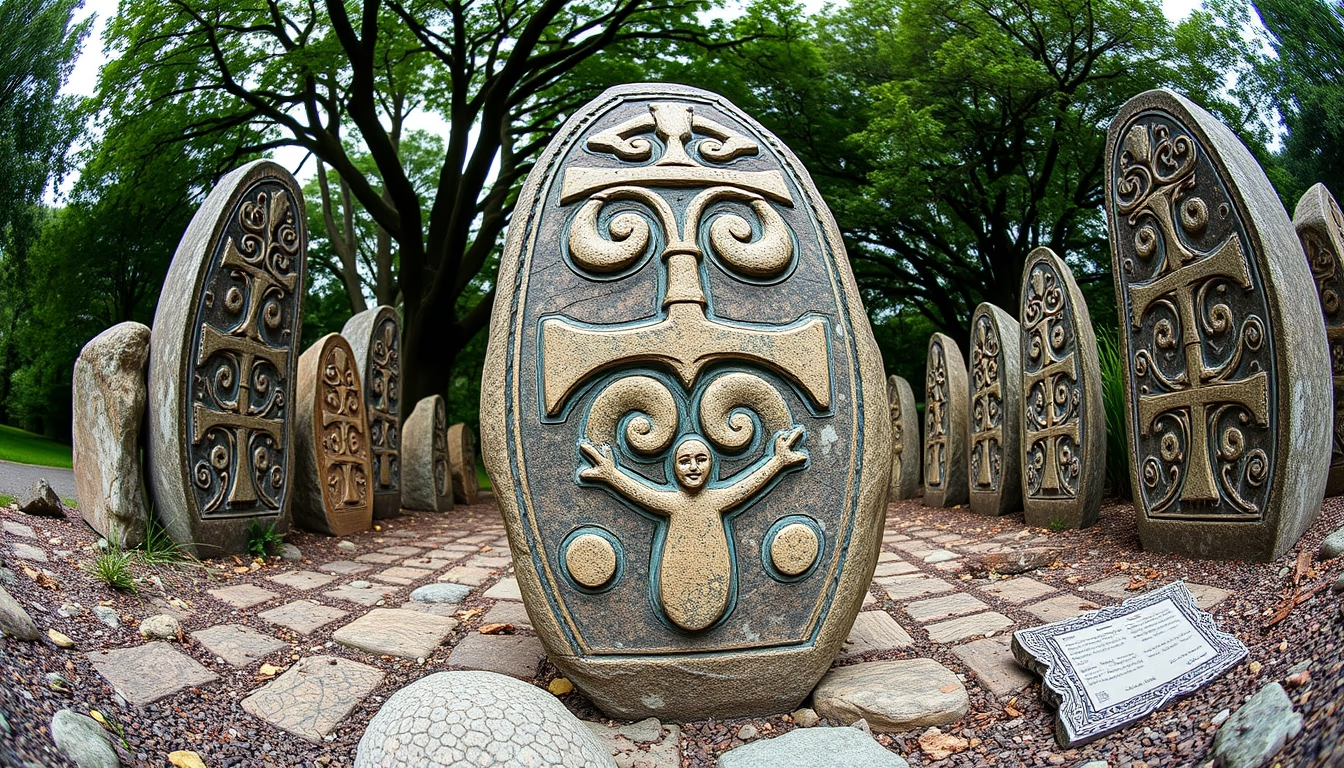
Viking runestones are stone monuments carved with runic inscriptions, erected mainly in Scandinavia between the 4th and 12th centuries.
About this subject
Viking runestones are historical markers carved with runes, symbols of the ancient Germanic alphabet known as the Futhark. Most of these monuments were erected during the Viking Age (roughly 800, 1050 AD), especially in Sweden, which holds the largest concentration, but also in Denmark, Norway, and areas under Norse influence such as the British Isles. They served as memorials for deceased people, records of important events, declarations of ownership, or conversions to Christianity. Inscriptions often included the name of the honored person, the one who raised the stone, and religious formulas.
One of the most famous is the Jelling Stone in Denmark, raised by King Harald Bluetooth around 965 AD, celebrating his conquest of Denmark and Norway and his conversion of the Danes to Christianity. Another notable example is the Rök Runestone in Sweden, with the longest known runic inscription, dating to the 9th century, blending mythology, genealogy, and possible references to battles. Runes were carved by specialists called runographers, and the stones were often painted in bright colors, though only traces remain today.
The runic alphabet evolved from the Elder Futhark (24 letters) to the Younger Futhark (16 letters) during the Viking Age, adapting to the Old Norse language. The inscriptions provide valuable insights into Norse society, including personal names, family relationships, trade, and beliefs. Although many monuments have been lost or damaged, thousands survive, especially in the rural landscapes of Sweden. They are considered cultural heritage and attract scholars, tourists, and enthusiasts of Norse history.
Frequently Asked Questions
What was the purpose of Viking runestones?
Most runestones were erected as memorials for deceased people, often relatives or allies. Some also celebrated heroic deeds, recorded inheritances, marked boundaries, or proclaimed conversion to Christianity. They are important historical sources about the Viking Age.
Where can I find Viking runestones today?
The largest concentration is in Sweden, especially in the regions of Uppland and Södermanland, with thousands of examples. There are also stones in Denmark, Norway, and fewer in England (such as the Isle of Man) and other Norse-influenced areas. Many are outdoors, in parks or near churches.
How do runes differ from other ancient scripts?
Runes are angular characters, adapted for carving on wood or stone, unlike more curved alphabets such as Latin. The Younger Futhark used in the Viking Age had 16 letters, while the Elder Futhark had 24. Each rune also carried symbolic meanings and names (e.g., Fehu for 'cattle' or 'wealth').
Direct URL
https://pub-c7d6a6ea828543ac903a74a341ccb2e1.r2.dev/imagens/runes-viking-stone-studio-editorial-portrait-fresh4.avifHow to credit
Include a visible link back to UtilizAí. Copy one of the snippets below:
<a href="https://xn--utiliza-eza.com/en/midia/imagens/runes-viking-stone-studio-editorial-portrait-fresh4">Runes viking stone</a> by <a href="https://xn--utiliza-eza.com">UtilizAí</a>, licensed under <a href="https://creativecommons.org/licenses/by/4.0/">CC BY 4.0</a>.
[Runes viking stone](https://xn--utiliza-eza.com/en/midia/imagens/runes-viking-stone-studio-editorial-portrait-fresh4) by [UtilizAí](https://xn--utiliza-eza.com), CC BY 4.0
License: CC-BY-4.0