Rowing boat lake morning
1344×768 · AVIF · CC BY 4.0
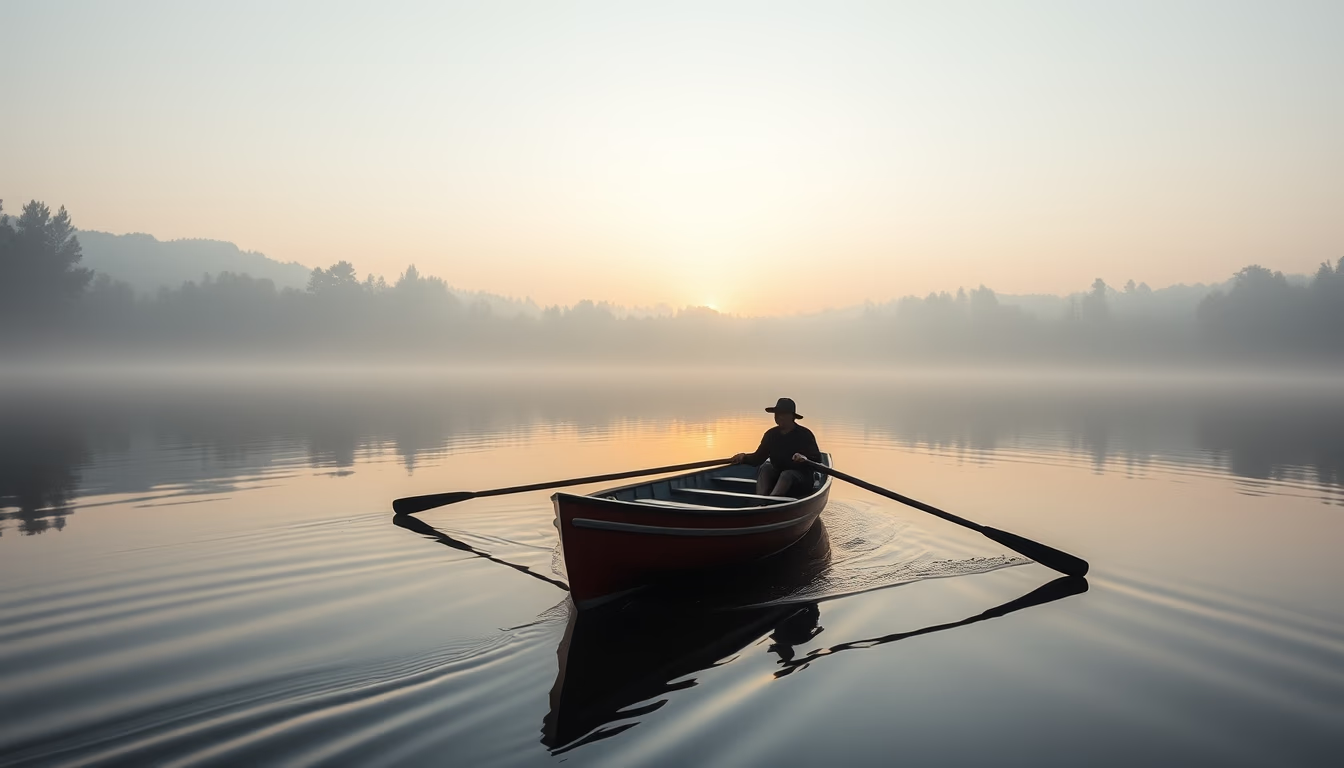
Morning rowing on a calm lake: sporting tradition and connection with nature at dawn.
About this subject
Rowing is one of the oldest Olympic sports, featured since the 1896 Games in Athens. Practicing early on lakes provides ideal conditions: calm waters, low wind, and mild temperatures, which favor technique and precision. Racing boats, such as single sculls or eights, are designed to be lightweight and hydrodynamic, demanding synchronization and strength from rowers.
Natural and artificial lakes worldwide serve as training and competition venues. In Brazil, Lagoa Rodrigo de Freitas in Rio de Janeiro and Lago Paranoá in Brasília are key rowing sites. Morning practice is not just about logistics: studies show that aerobic exercise in the morning improves mood and metabolism throughout the day. For rowers, the lake’s stillness at dawn offers mental focus and connection with the environment.
Interestingly, rowing is one of the few sports where athletes move backward along the course, requiring trust in the crew and knowledge of the route. The standard Olympic distance is 2,000 meters, covered in about 5 to 7 minutes in high-level races. On smaller lakes, endurance and technique drills are common, with routes varying according to local geography. The presence of waterfowl and morning mist makes the experience even more unique.
Frequently Asked Questions
What is the difference between competitive and recreational rowing?
Competitive rowing uses long, narrow boats (skiffs, doubles, quads, eights) with oars fixed to outriggers, aiming for maximum speed. Recreational rowing can be done in more stable, wider boats such as kayaks or dinghies, prioritizing leisure and nature.
Why do rowers train early in the morning?
Training at dawn avoids strong winds and waves common later in the day, along with milder temperatures and less boat traffic. The lake's stillness also enhances focus and technique.
Which muscles are most engaged in rowing?
Rowing primarily works the legs (quadriceps and hamstrings), back (lats and trapezius), and arms (biceps and forearms). About 60% of the power comes from the legs, followed by the torso and arms.
Direct URL
https://pub-c7d6a6ea828543ac903a74a341ccb2e1.r2.dev/imagens/rowing-boat-lake-morning-documentary-photography-p5.avifHow to credit
Include a visible link back to UtilizAí. Copy one of the snippets below:
<a href="https://xn--utiliza-eza.com/en/midia/imagens/rowing-boat-lake-morning-documentary-photography-p5">Rowing boat lake morning</a> by <a href="https://xn--utiliza-eza.com">UtilizAí</a>, licensed under <a href="https://creativecommons.org/licenses/by/4.0/">CC BY 4.0</a>.
[Rowing boat lake morning](https://xn--utiliza-eza.com/en/midia/imagens/rowing-boat-lake-morning-documentary-photography-p5) by [UtilizAí](https://xn--utiliza-eza.com), CC BY 4.0
License: CC-BY-4.0