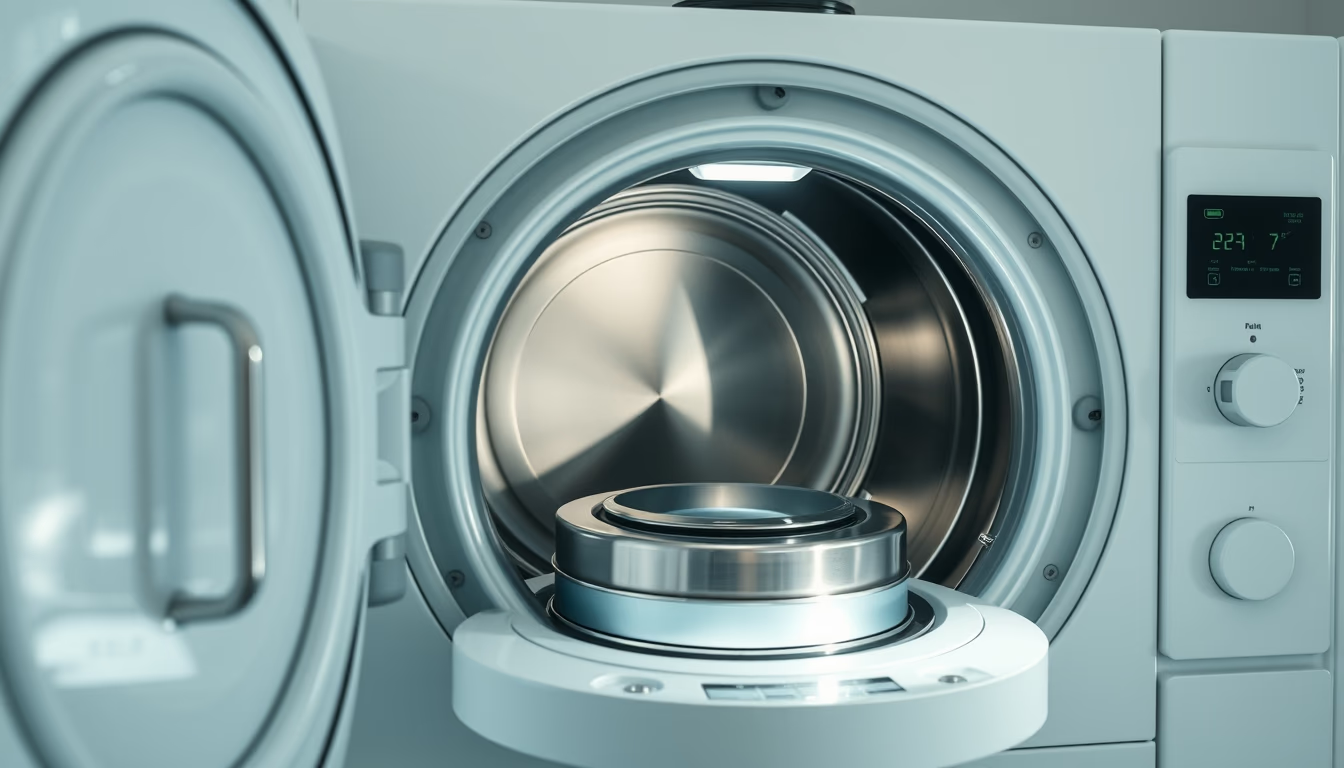
Rotovap evaporator
1344×768 · AVIF · CC BY 4.0
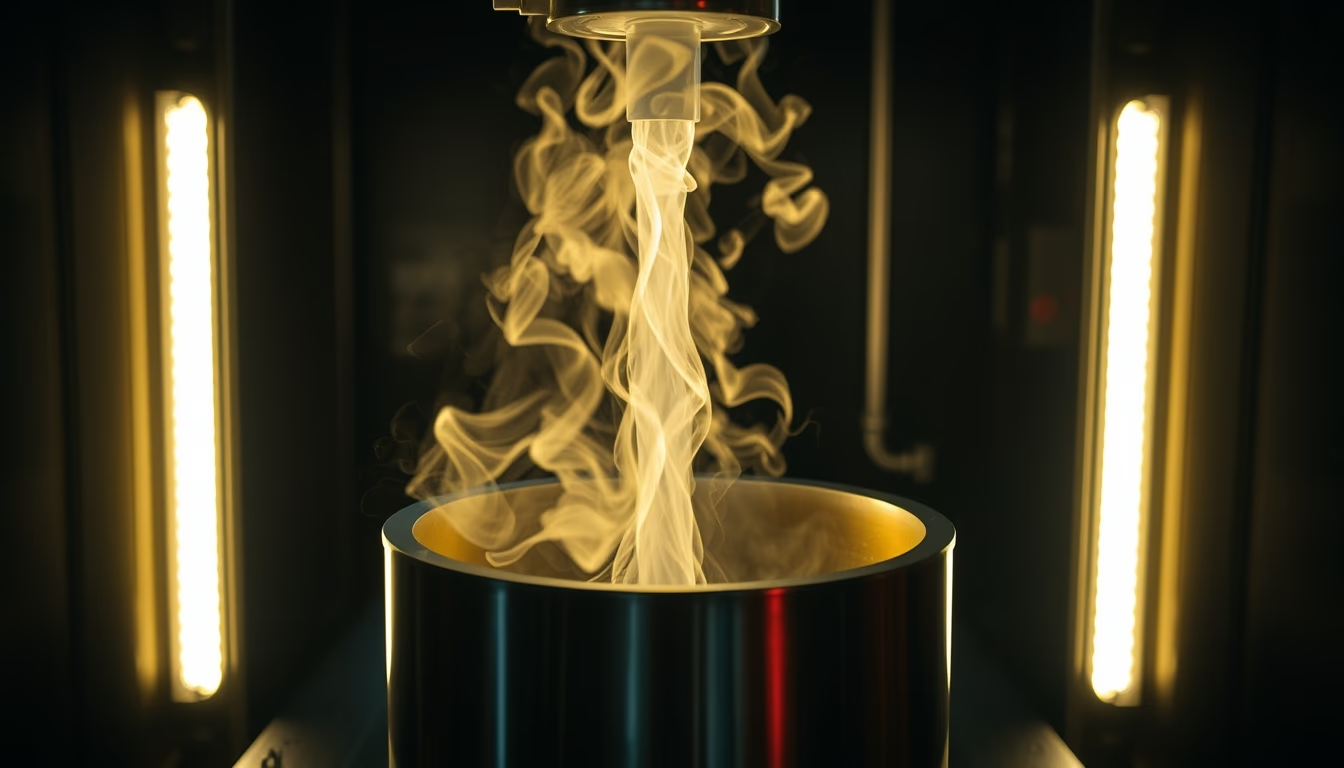
The rotary evaporator, or rotovap, is a lab instrument used to remove solvents by evaporation under reduced pressure, essential in organic synthesis and chemistry.
About this subject
The rotary evaporator, commonly called rotovap, is a crucial piece of equipment in chemistry laboratories, especially in organic synthesis. Its primary function is the efficient removal of solvents from liquid samples through evaporation under vacuum, combined with rotation of the flask to increase surface area and accelerate the process. Invented by Lyman C. Craig in 1950 and later refined by companies like Büchi, the rotovap has become ubiquitous in research labs and industry.
The working principle involves heating the water bath, rotating the flask containing the sample, and applying vacuum to lower the solvent's boiling point. The vapor is condensed in a cooled condenser and collected in a separate flask, allowing solvent recovery and sample concentration. This gentle method avoids degradation of heat-sensitive compounds, ideal for thermolabile substances.
In practice, the rotovap is used to dry extracts after liquid-liquid extractions, concentrate reaction products, remove solvents for crystallization or purification, and recover solvents for reuse. Its versatility makes it essential in pharmaceuticals, food, cosmetics, and petrochemicals. Operation under vacuum enables evaporation at low temperatures, preserving compound integrity.
Interestingly, flask rotation not only increases evaporation area but also prevents bumping and foaming through centrifugal force. Modern models feature digital controls for temperature, rotation, and vacuum, plus safety mechanisms like automatic flask lift. Proper maintenance, such as lubricating seals and cleaning condensers, ensures long equipment life.
Frequently Asked Questions
What is the difference between a rotovap and a simple evaporator?
A rotovap combines flask rotation, controlled heating, and vacuum, whereas a simple evaporator only heats the sample. Rotation increases the evaporation surface area and reduces processing time, preventing localized overheating.
Which solvents can be removed with a rotovap?
Nearly any volatile solvent, such as water, ethanol, methanol, acetone, hexane, dichloromethane, and ether. The choice depends on bath temperature and applied vacuum level.
How to prevent foaming of the sample during rotation?
Flask rotation itself helps control foaming. If it occurs, reduce rotation speed, add an antifoaming agent, or gradually increase the vacuum.
Direct URL
https://pub-c7d6a6ea828543ac903a74a341ccb2e1.r2.dev/imagens/rotovap-evaporator-rembrandt-lighting-dramatic-shadows-fresh8.avifHow to credit
Include a visible link back to UtilizAí. Copy one of the snippets below:
<a href="https://xn--utiliza-eza.com/en/midia/imagens/rotovap-evaporator-rembrandt-lighting-dramatic-shadows-fresh8">Rotovap evaporator</a> by <a href="https://xn--utiliza-eza.com">UtilizAí</a>, licensed under <a href="https://creativecommons.org/licenses/by/4.0/">CC BY 4.0</a>.
[Rotovap evaporator](https://xn--utiliza-eza.com/en/midia/imagens/rotovap-evaporator-rembrandt-lighting-dramatic-shadows-fresh8) by [UtilizAí](https://xn--utiliza-eza.com), CC BY 4.0
License: CC-BY-4.0