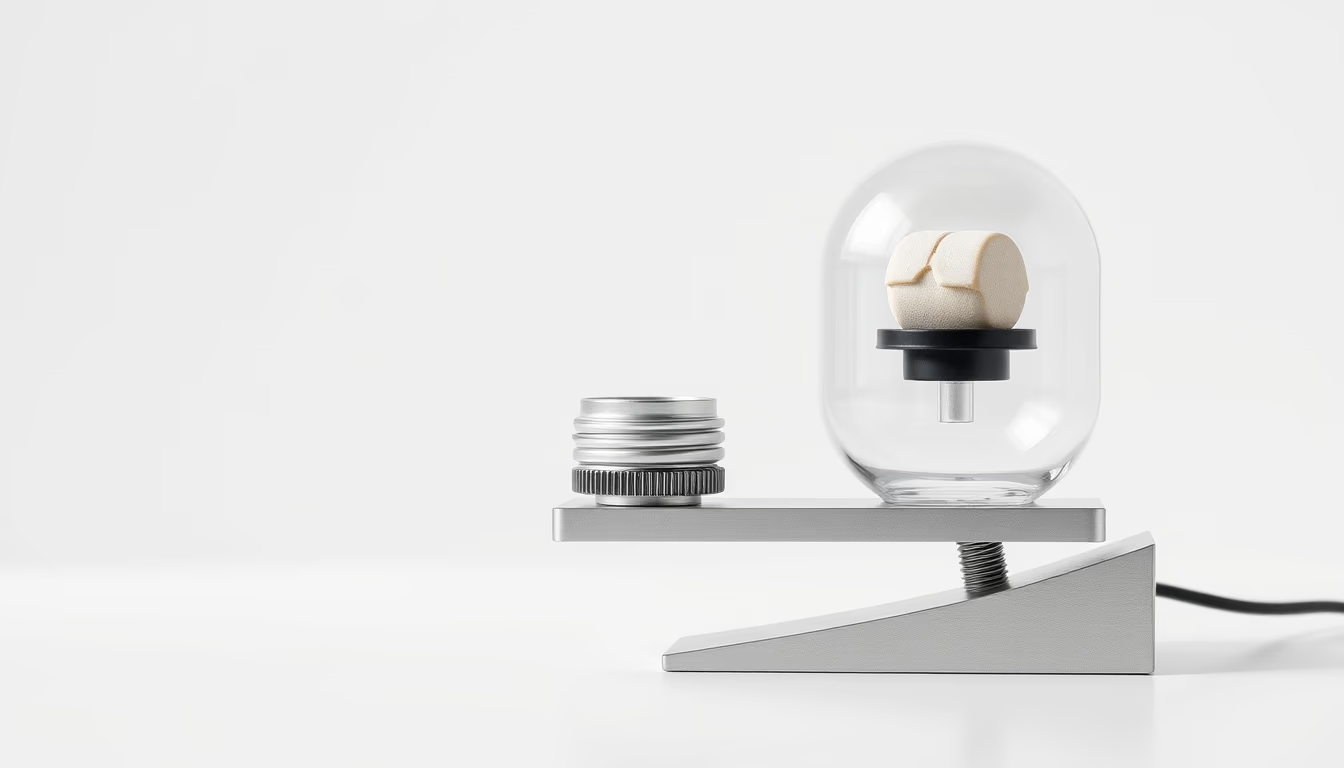
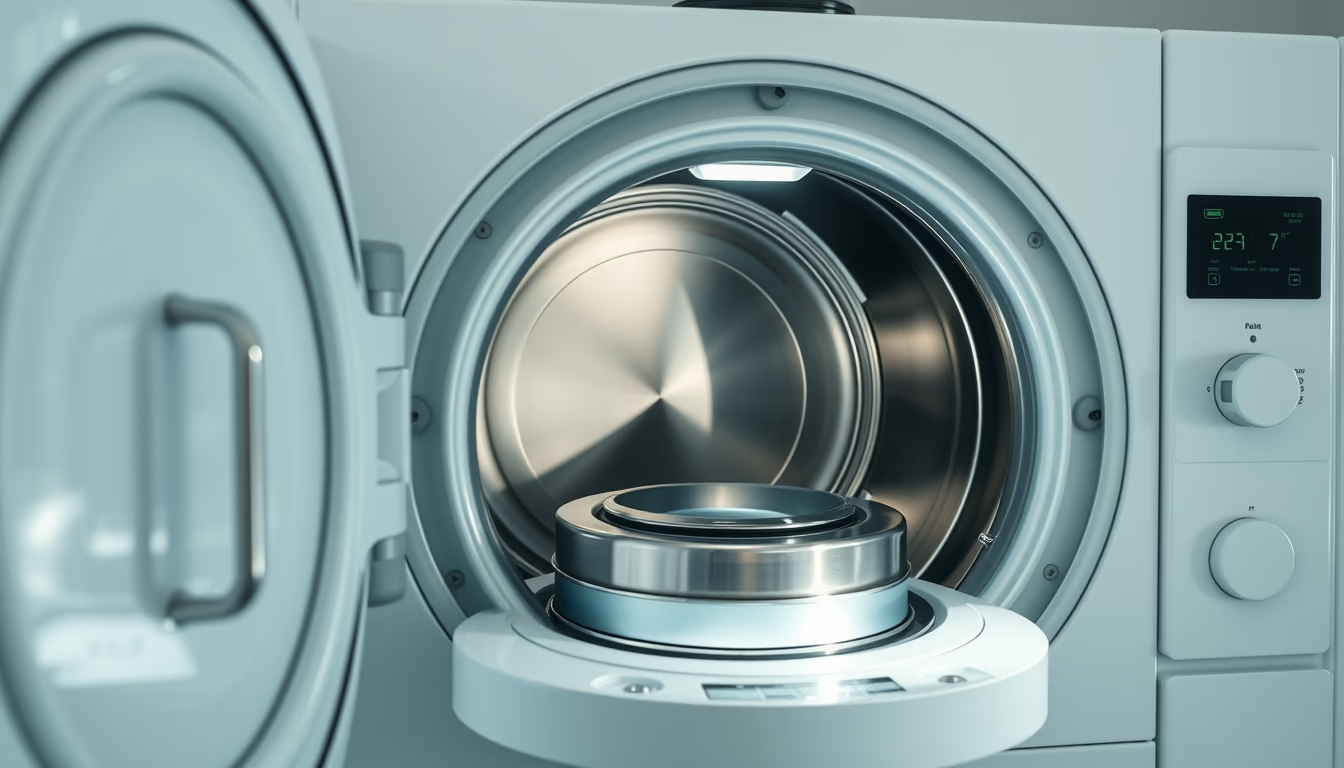
Rotovap evaporator
1344×768 · AVIF · CC BY 4.0

Rotary evaporator (rotovap): essential lab equipment for gentle solvent evaporation under reduced pressure.
About this subject
The rotary evaporator, commonly called rotovap, is a laboratory instrument designed to remove solvents from samples by evaporation under reduced pressure. Developed by L.C. Craig in 1950 and refined by Walter Büchi, the equipment combines controlled heating via a water bath, rotation of the flask to increase surface area, and vacuum to lower the solvent's boiling point. This allows organic solvents such as ethanol, hexane, and dichloromethane to be evaporated efficiently and safely without degrading heat-sensitive compounds. It is widely used in organic chemistry, pharmaceuticals, and concentration of natural extracts. The rotation of the flask is crucial: it creates a thin film of liquid on the inner wall, maximizing heat transfer and preventing overheating. The solvent vapor is then condensed by a glass condenser, often cooled with dry ice or a cryogenic circulator, and collected in a receiving flask. In laboratories worldwide, the rotovap is standard for organic synthesis and natural product isolation. Key brands include Büchi, Heidolph, and IKA. Proper maintenance involves using vacuum grease on joints and regularly checking seals to maintain the reduced pressure.
Frequently Asked Questions
What is the main advantage of a rotary evaporator over simple evaporation?
The main advantage is the combination of vacuum and rotation, allowing fast and gentle evaporation at low temperatures, protecting heat-sensitive compounds and reducing the risk of decomposition.
How should the water bath temperature be set for a rotovap?
Set it 10-20°C below the solvent's boiling point at ambient pressure; under vacuum, mild temperatures (30-60°C) suffice for common solvents without degrading the sample.
What to do if the rotovap does not reach the desired vacuum?
Check seals at joints, vacuum grease application, condition of hoses and the vacuum pump's seal. Also ensure collection flasks are properly fitted and the system has no leaks.
Direct URL
https://pub-c7d6a6ea828543ac903a74a341ccb2e1.r2.dev/imagens/rotovap-evaporator-long-exposure-fresh4.avifHow to credit
Include a visible link back to UtilizAí. Copy one of the snippets below:
<a href="https://xn--utiliza-eza.com/en/midia/imagens/rotovap-evaporator-long-exposure-fresh4">Rotovap evaporator</a> by <a href="https://xn--utiliza-eza.com">UtilizAí</a>, licensed under <a href="https://creativecommons.org/licenses/by/4.0/">CC BY 4.0</a>.
[Rotovap evaporator](https://xn--utiliza-eza.com/en/midia/imagens/rotovap-evaporator-long-exposure-fresh4) by [UtilizAí](https://xn--utiliza-eza.com), CC BY 4.0
License: CC-BY-4.0