Rotovap evaporator
1344×768 · AVIF · CC BY 4.0
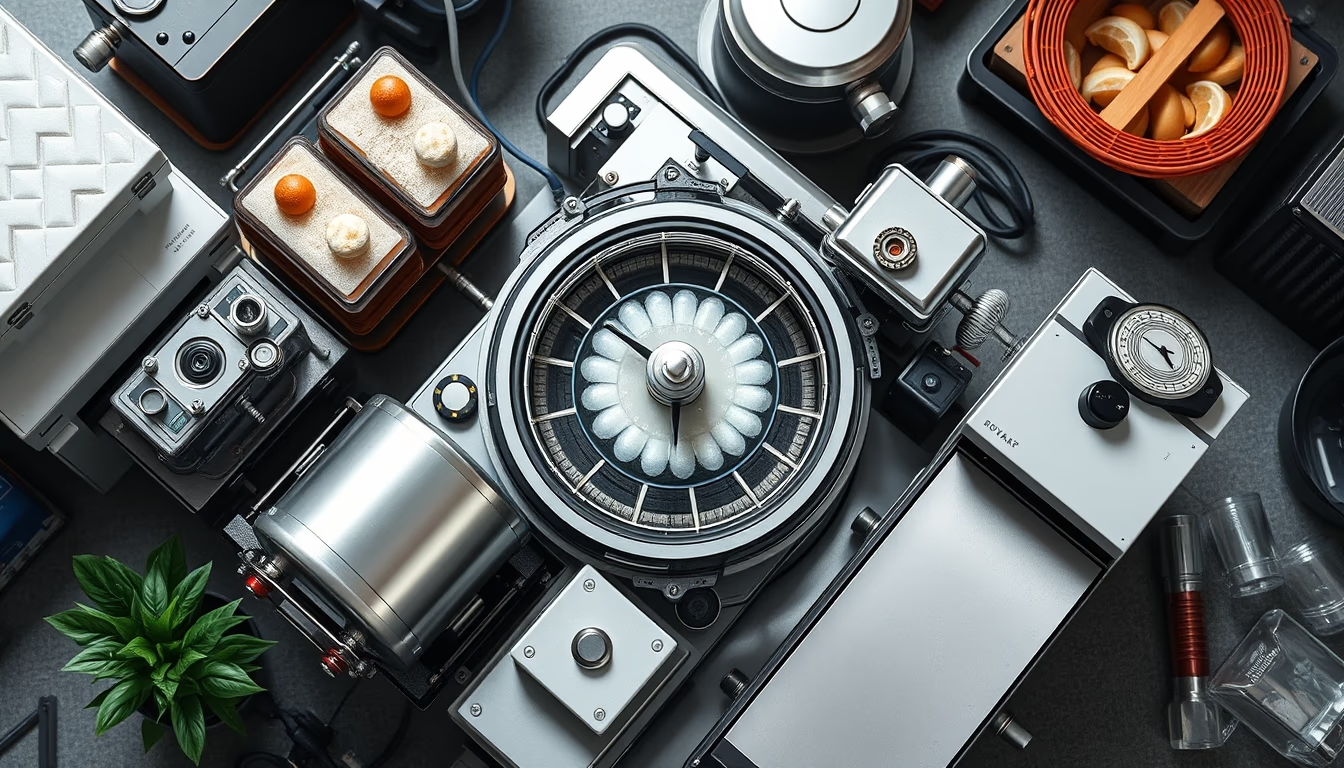
The rotary evaporator, or rotovap, is an essential laboratory instrument for gentle solvent removal by evaporation under reduced pressure.
About this subject
The rotary evaporator, commonly called rotovap, is a laboratory instrument designed for efficient and controlled solvent removal from samples. Invented by Lyman C. Craig in the 1950s, the apparatus revolutionized concentration and purification processes in organic chemistry. Its operation relies on three principles: rotation of the flask to increase the liquid surface area, controlled heating via a water bath, and reduced internal pressure using a vacuum pump. This combination allows solvents to evaporate at temperatures below their normal boiling points, preventing thermal degradation of sensitive compounds.
Main components include a rotary motor that spins the glass flask containing the sample, a condenser cooled by water or dry ice to liquefy solvent vapors, and a collection flask for the distillate. Rotation speed, bath temperature, and vacuum level are adjustable per process needs. Rotary evaporators are widely used in chemical synthesis, natural product extraction, pharmaceutical industry, and biotechnology, essential for concentrating extracts, recovering solvents, and drying samples.
A technical curiosity is that vacuum enables water to evaporate at about 40°C, whereas at atmospheric pressure it would require 100°C. This is critical for heat-sensitive compounds like vitamins or fragrances. Modern models incorporate digital controllers for enhanced precision and repeatability. Safety is also relevant: operators must wear appropriate protection against glass shatters and chemical vapors. Regular maintenance, such as motor lubrication and condenser cleaning, extends equipment lifespan.
Frequently Asked Questions
What is the difference between a rotovap and a simple evaporator?
A rotovap uses rotation and vacuum to evaporate solvents at lower temperatures, protecting sensitive compounds, while a simple evaporator relies on heat and atmospheric pressure alone.
What types of solvents can be removed with a rotovap?
Nearly any volatile solvent, such as ethanol, acetone, hexane, chloroform, or water. The choice depends on boiling point and compatibility with the equipment materials.
How can 'bumping' be prevented during evaporation?
Bumping is violent boiling that can cause sample loss. Prevent it by using gentle rotation, gradual vacuum, and adding a surface tension reducer like boiling stones or capillary tubes.
Direct URL
https://pub-c7d6a6ea828543ac903a74a341ccb2e1.r2.dev/imagens/rotovap-evaporator-isometric-flat-lay-fresh5.avifHow to credit
Include a visible link back to UtilizAí. Copy one of the snippets below:
<a href="https://xn--utiliza-eza.com/en/midia/imagens/rotovap-evaporator-isometric-flat-lay-fresh5">Rotovap evaporator</a> by <a href="https://xn--utiliza-eza.com">UtilizAí</a>, licensed under <a href="https://creativecommons.org/licenses/by/4.0/">CC BY 4.0</a>.
[Rotovap evaporator](https://xn--utiliza-eza.com/en/midia/imagens/rotovap-evaporator-isometric-flat-lay-fresh5) by [UtilizAí](https://xn--utiliza-eza.com), CC BY 4.0
License: CC-BY-4.0