Rotovap evaporator
1344×768 · AVIF · CC BY 4.0
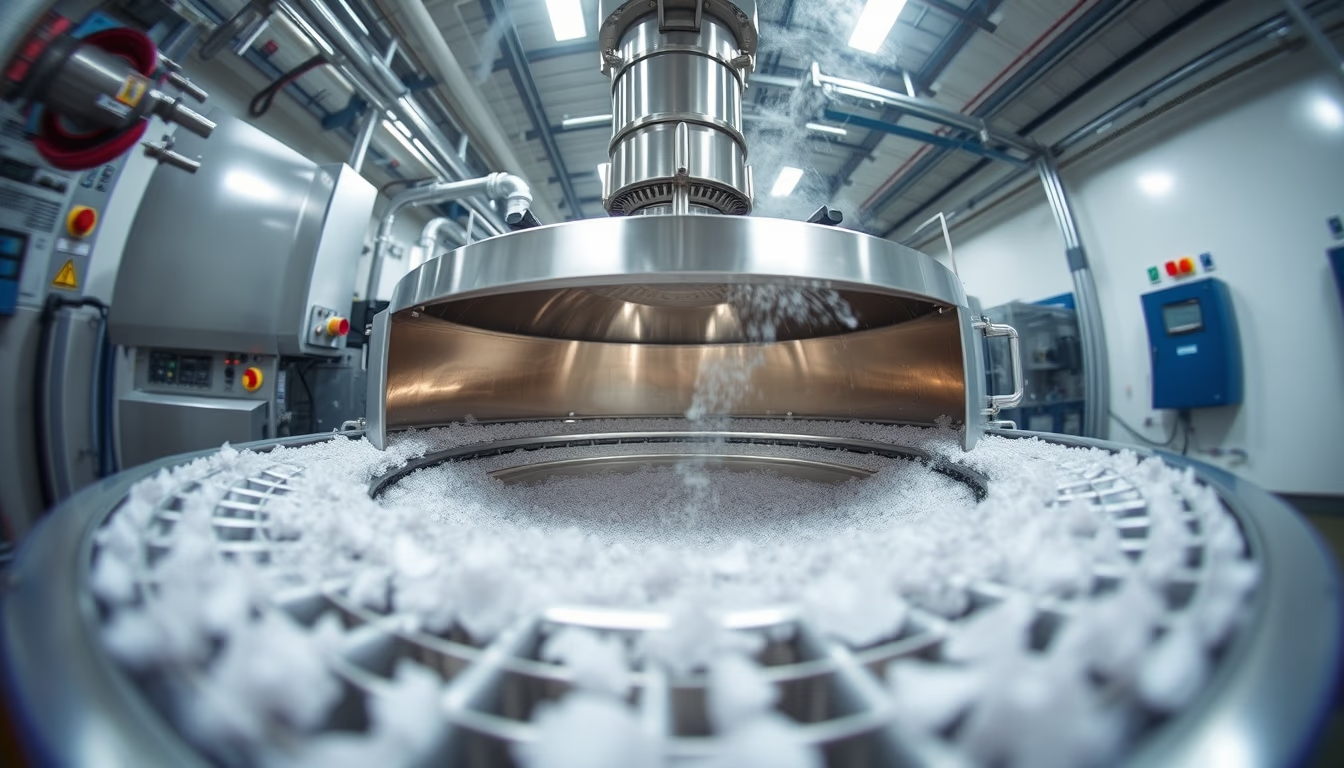
The rotary evaporator (rotovap) is an essential laboratory instrument for gentle solvent removal under reduced pressure, widely used in chemistry and biochemistry.
About this subject
The rotary evaporator, commonly called rotovap, is a laboratory instrument designed to efficiently and controllably remove solvents from samples. It operates by combining reduced pressure (vacuum) with rotation of the flask containing the sample, which increases the liquid's surface area and accelerates evaporation. Rotation also prevents overheating and sudden bumping, ensuring safety.
The instrument was developed by chemist Lyman C. Craig in the 1950s, but large-scale commercialization was driven by the Swiss company Büchi, which made the rotovap a standard in laboratories worldwide. Typical components include a motor for rotation, a heating bath (usually water), a condenser (cold) and a vacuum system. The evaporated solvent is condensed and collected in a separate flask, allowing reuse or safe disposal.
The rotovap is indispensable in organic synthesis, natural product purification, extract concentration and sample preparation for analysis. It is also used in food science laboratories to concentrate flavors and in the pharmaceutical industry to remove residual solvents. Operational care includes avoiding excessive temperatures that could degrade the compound of interest and using clamps or clips to secure the rotating flask.
A technical curiosity: the name 'rotovap' is a contraction of 'rotary evaporator' and was popularized by the Büchi brand, now used generically. The efficiency depends on the vacuum pressure (the lower, the lower the boiling point of the solvent) and the rotation speed. Common processed solvents include water, ethanol, acetone, dichloromethane and hexane, each requiring specific temperature and vacuum adjustments.
Frequently Asked Questions
How does a rotary evaporator work?
A rotary evaporator works by applying vacuum to reduce the pressure on the solvent, lowering its boiling point. Simultaneously, the flask containing the sample rotates, spreading the liquid into a thin film, increasing the evaporation area. The vapor is then condensed in a cooled condenser and collected in a separate flask.
What are the main components of a rotovap?
The main components are: a rotating motor (to spin the flask), a heating bath (to provide controlled heat), a condenser (cooled by water or ice), a solvent collection flask, a vacuum system (vacuum pump), and an evaporation flask containing the sample.
What safety precautions should be taken when using a rotovap?
Essential precautions include using explosion-proof protection (such as safety clips), not exceeding the maximum recommended temperature for the sample, avoiding excessive vacuum that could break the flask, and ensuring the condenser is properly cooled. Additionally, care must be taken with flammable or toxic solvents.
Direct URL
https://pub-c7d6a6ea828543ac903a74a341ccb2e1.r2.dev/imagens/rotovap-evaporator-fish-eye-wide-angle-fresh6.avifHow to credit
Include a visible link back to UtilizAí. Copy one of the snippets below:
<a href="https://xn--utiliza-eza.com/en/midia/imagens/rotovap-evaporator-fish-eye-wide-angle-fresh6">Rotovap evaporator</a> by <a href="https://xn--utiliza-eza.com">UtilizAí</a>, licensed under <a href="https://creativecommons.org/licenses/by/4.0/">CC BY 4.0</a>.
[Rotovap evaporator](https://xn--utiliza-eza.com/en/midia/imagens/rotovap-evaporator-fish-eye-wide-angle-fresh6) by [UtilizAí](https://xn--utiliza-eza.com), CC BY 4.0
License: CC-BY-4.0