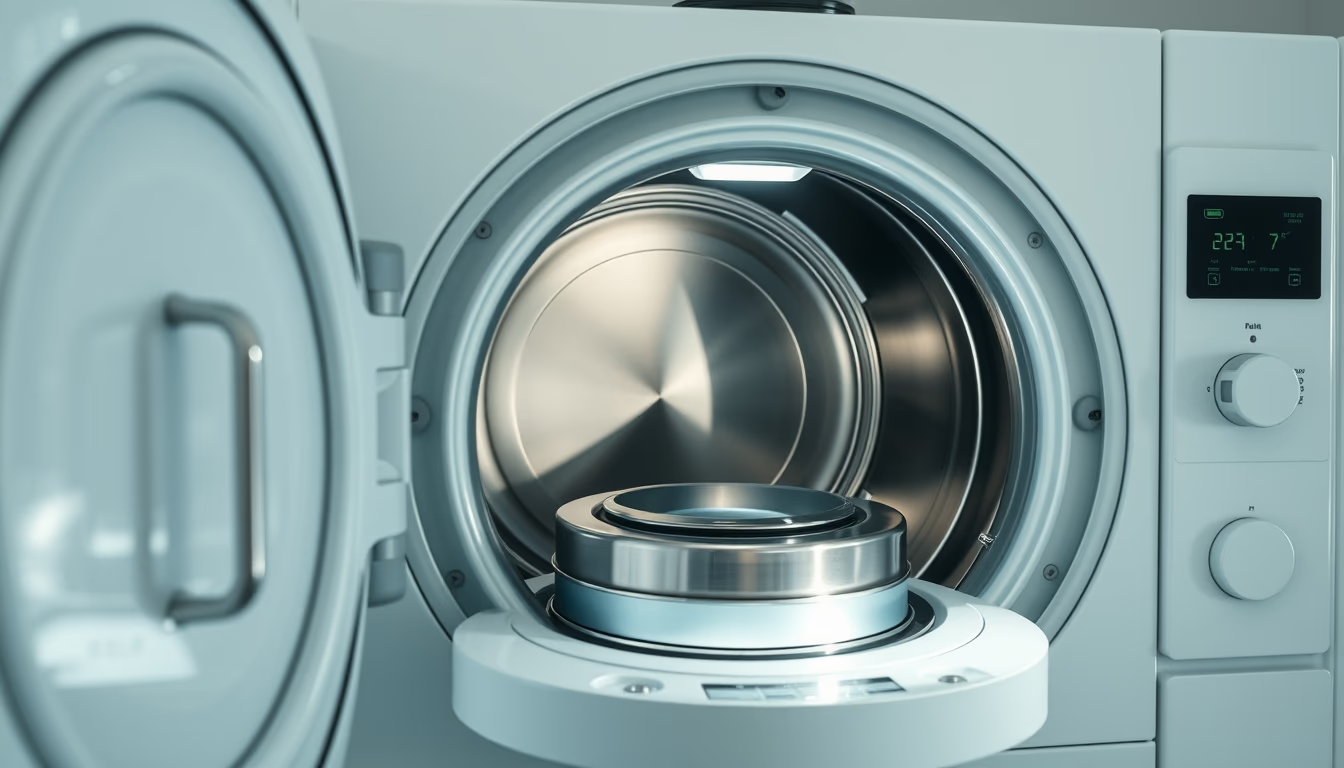
Rotovap evaporator
1344×768 · AVIF · CC BY 4.0
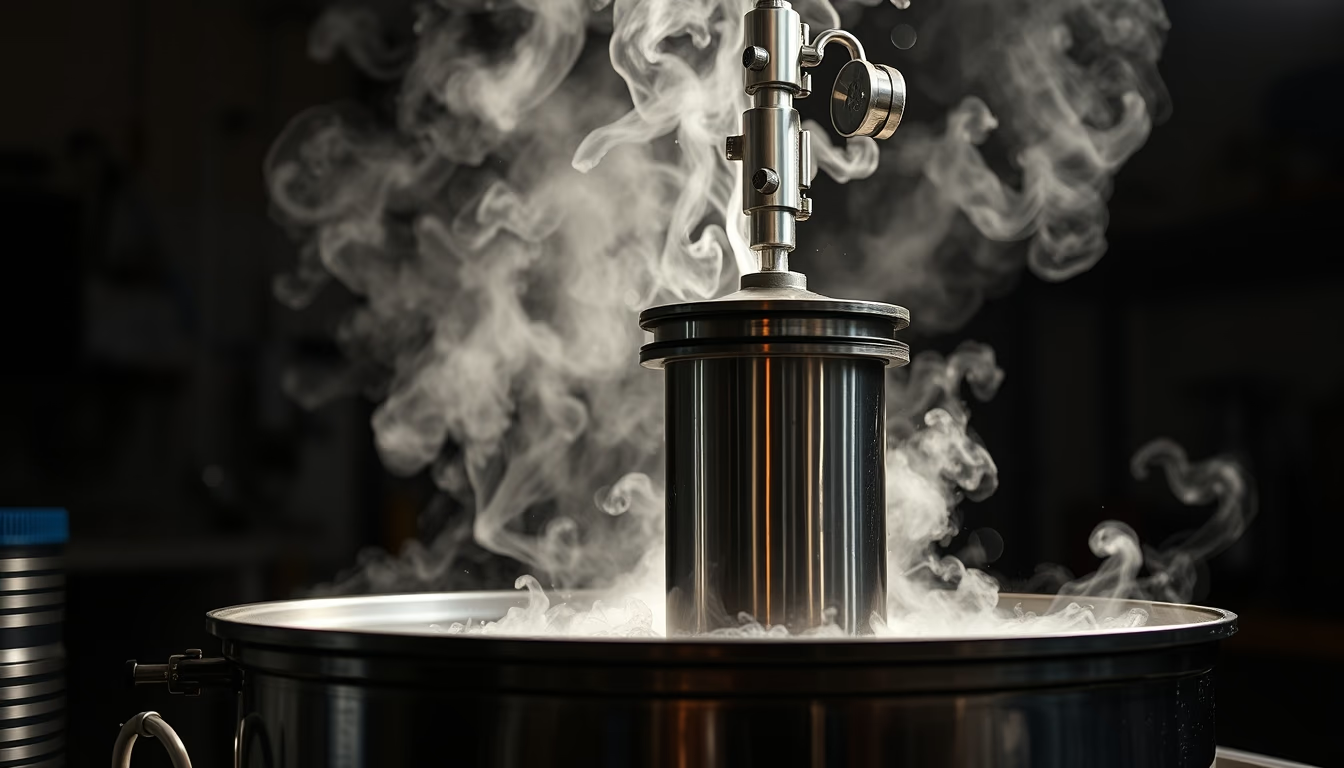
The rotary evaporator (rotovap) is a key lab device for solvent removal under reduced pressure, widely used in chemistry and pharmaceuticals.
About this subject
The rotary evaporator, commonly called rotovap, was invented by Lyman C. Craig in the 1950s and first commercialized by Büchi in 1957. This device efficiently removes solvents from liquid samples by rotating the flask to increase surface area, applying controlled heat, and using a vacuum to lower the boiling point of the solvent. This combination speeds up concentration or isolation of compounds while preserving heat-sensitive substances. Typically, the sample flask is partly submerged in a heated water or oil bath and rotated at an adjustable speed. The solvent vapor is condensed in a cooled condenser and collected in a separate flask. Rotovaps are essential in organic synthesis, natural product extraction, pharmaceutical and food industries for concentrating extracts, purifying compounds, or removing solvents after reactions. They handle volumes from milliliters to liters, and modern models feature digital controls for temperature, rotation, and automated vacuum systems. Safety precautions include using personal protective equipment, as flammable or toxic solvents are common, and ensuring airtight seals to maintain vacuum. An interesting fact is that the thin film created by rotation dramatically increases evaporation efficiency, making rotovaps much faster than static evaporation methods.
Frequently Asked Questions
What is a rotovap used for?
A rotovap is used to remove solvents from liquid samples quickly and gently, employing rotation, heating, and vacuum. It concentrates solutions, purifies compounds, or recovers solvents.
How is a rotovap different from a simple evaporator?
A rotovap combines flask rotation, controlled heating, and vacuum, increasing evaporation surface area and lowering solvent boiling point. This makes it much faster and suitable for heat-sensitive substances, unlike static evaporation.
What safety precautions are needed when using a rotovap?
Always wear PPE such as gloves and goggles, check seals for vacuum integrity, set bath temperature appropriately (never above the solvent's boiling point under vacuum), and avoid overfilling the flask to prevent accidents.
Direct URL
https://pub-c7d6a6ea828543ac903a74a341ccb2e1.r2.dev/imagens/rotovap-evaporator-fine-art-photography-fresh15.avifHow to credit
Include a visible link back to UtilizAí. Copy one of the snippets below:
<a href="https://xn--utiliza-eza.com/en/midia/imagens/rotovap-evaporator-fine-art-photography-fresh15">Rotovap evaporator</a> by <a href="https://xn--utiliza-eza.com">UtilizAí</a>, licensed under <a href="https://creativecommons.org/licenses/by/4.0/">CC BY 4.0</a>.
[Rotovap evaporator](https://xn--utiliza-eza.com/en/midia/imagens/rotovap-evaporator-fine-art-photography-fresh15) by [UtilizAí](https://xn--utiliza-eza.com), CC BY 4.0
License: CC-BY-4.0