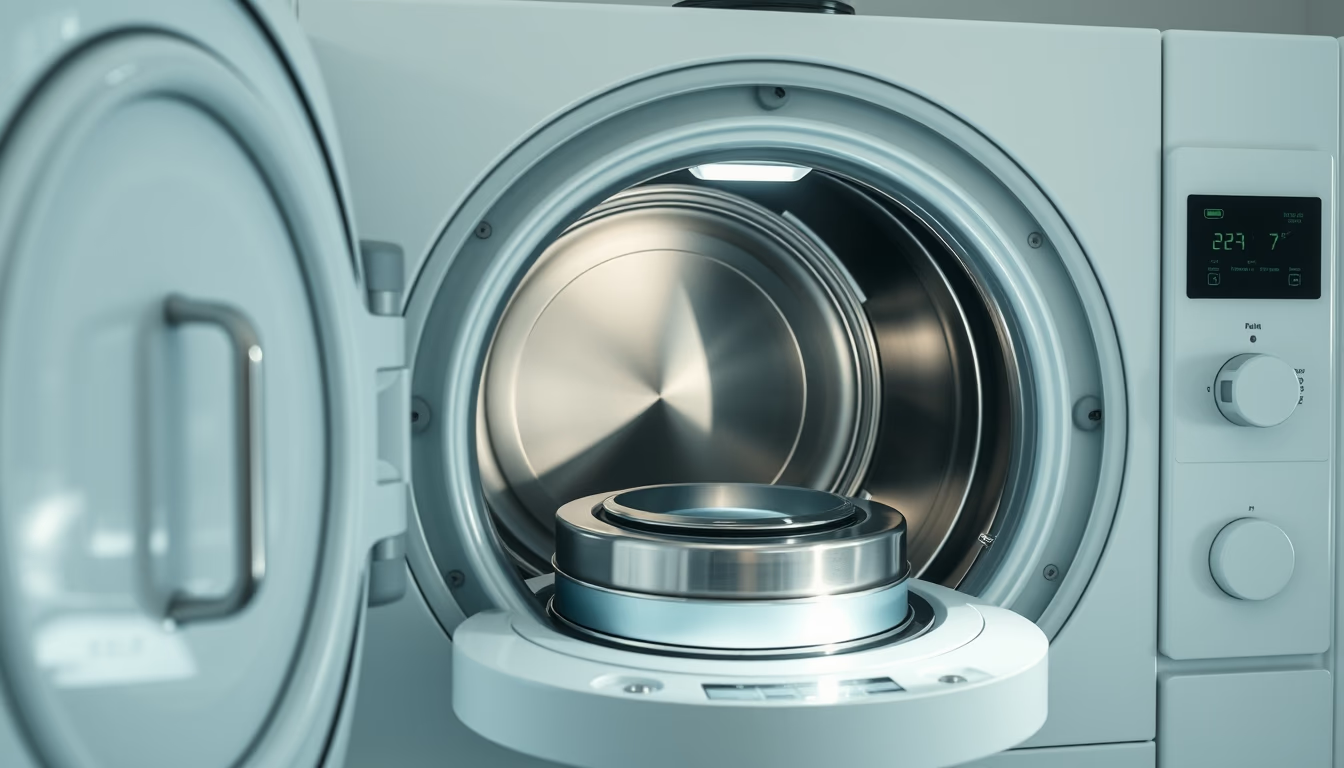
Centrifuge tubes spinning
1344×768 · AVIF · CC BY 4.0

Laboratory centrifuges spin tubes at high speed to separate components of biological or chemical samples by density.
About this subject
Centrifuges are essential equipment in molecular biology, biochemistry, and clinical diagnostic laboratories. They apply centrifugal force to sediment suspended particles in liquids, separating solid and liquid phases based on density. This process is fundamental for isolating cells, proteins, DNA, and other biomolecules.
Centrifuge tubes are typically made of polypropylene or polystyrene, with capacities ranging from microliters to hundreds of milliliters. During rotation, centrifugal acceleration (expressed in g or revolutions per minute) forces denser particles to the bottom of the tube, forming a pellet. The supernatant remains in the upper part.
Different types of centrifuges serve specific applications. Microcentrifuges are used for small volumes (up to 2 ml) in quick routines, while refrigerated centrifuges maintain stable temperatures for sensitive samples. Ultracentrifuges can reach speeds above 100,000 rpm, allowing separation of viruses, organelles, or macromolecules. The choice of rotor (fixed angle, swing bucket, or vertical) affects separation efficiency.
Safety is crucial: tubes must be balanced in pairs to avoid vibrations that could damage the equipment. Additionally, safety lids and locks are mandatory to contain spills. Centrifugation is a fast and reliable technique widely used in clinical analysis (blood collection, urine), scientific research, and pharmaceutical industries.
Frequently Asked Questions
How does centrifugal separation work?
The centrifuge spins tubes at high speed, generating a centrifugal force that pushes denser particles to the bottom of the tube (pellet), while the less dense liquid remains on top (supernatant).
What are the most common types of centrifuge tubes?
Polypropylene (PP) tubes are resistant to high speeds and chemicals, while polystyrene (PS) tubes are transparent but less resistant. Glass tubes may be used for organic solvents but are fragile.
Why must tubes be balanced in pairs?
Balancing prevents vibrations during rotation, which can damage the rotor and motor of the centrifuge, as well as cause excessive noise and risk of tube breakage.
Direct URL
https://pub-c7d6a6ea828543ac903a74a341ccb2e1.r2.dev/imagens/centrifuge-tubes-spinning-aerial-drone-shot-fresh18.avifHow to credit
Include a visible link back to UtilizAí. Copy one of the snippets below:
<a href="https://xn--utiliza-eza.com/en/midia/imagens/centrifuge-tubes-spinning-aerial-drone-shot-fresh18">Centrifuge tubes spinning</a> by <a href="https://xn--utiliza-eza.com">UtilizAí</a>, licensed under <a href="https://creativecommons.org/licenses/by/4.0/">CC BY 4.0</a>.
[Centrifuge tubes spinning](https://xn--utiliza-eza.com/en/midia/imagens/centrifuge-tubes-spinning-aerial-drone-shot-fresh18) by [UtilizAí](https://xn--utiliza-eza.com), CC BY 4.0
License: CC-BY-4.0