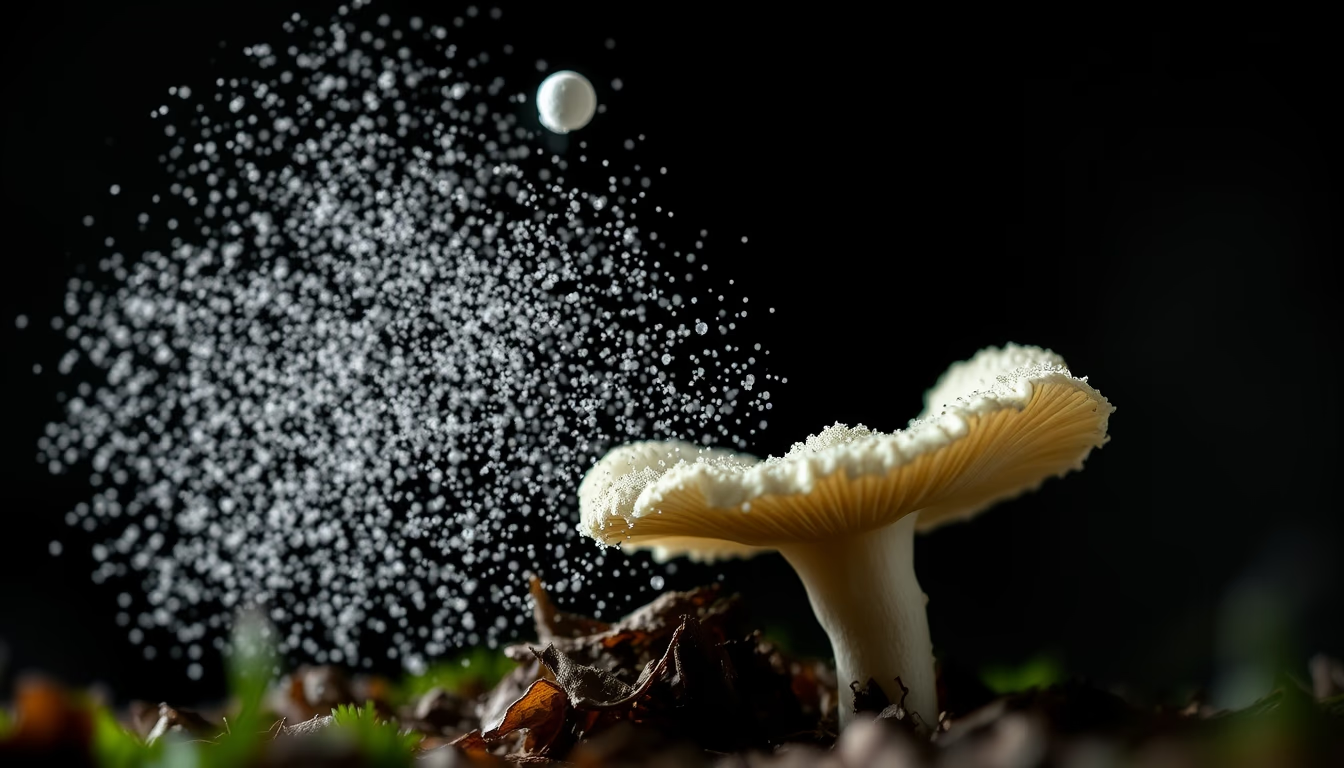
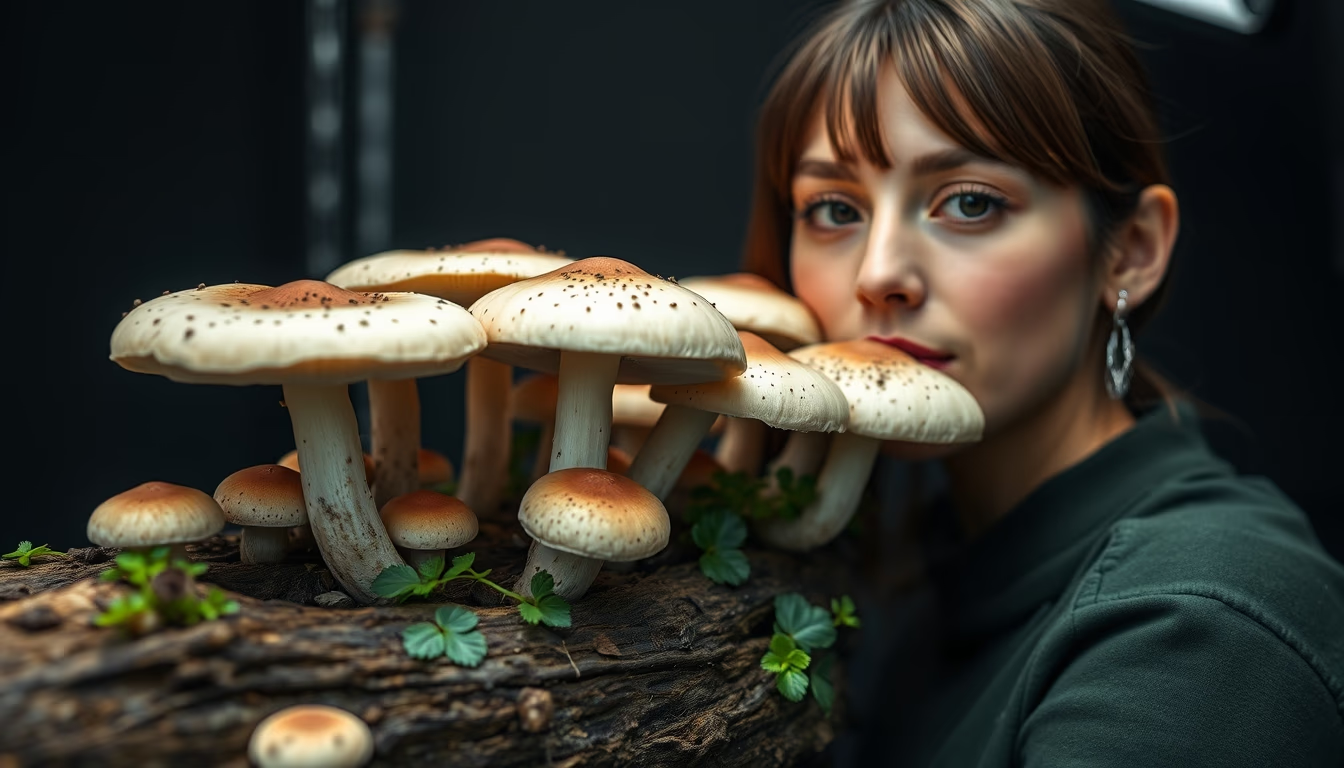
Puffball spore release
1344×768 · AVIF · CC BY 4.0
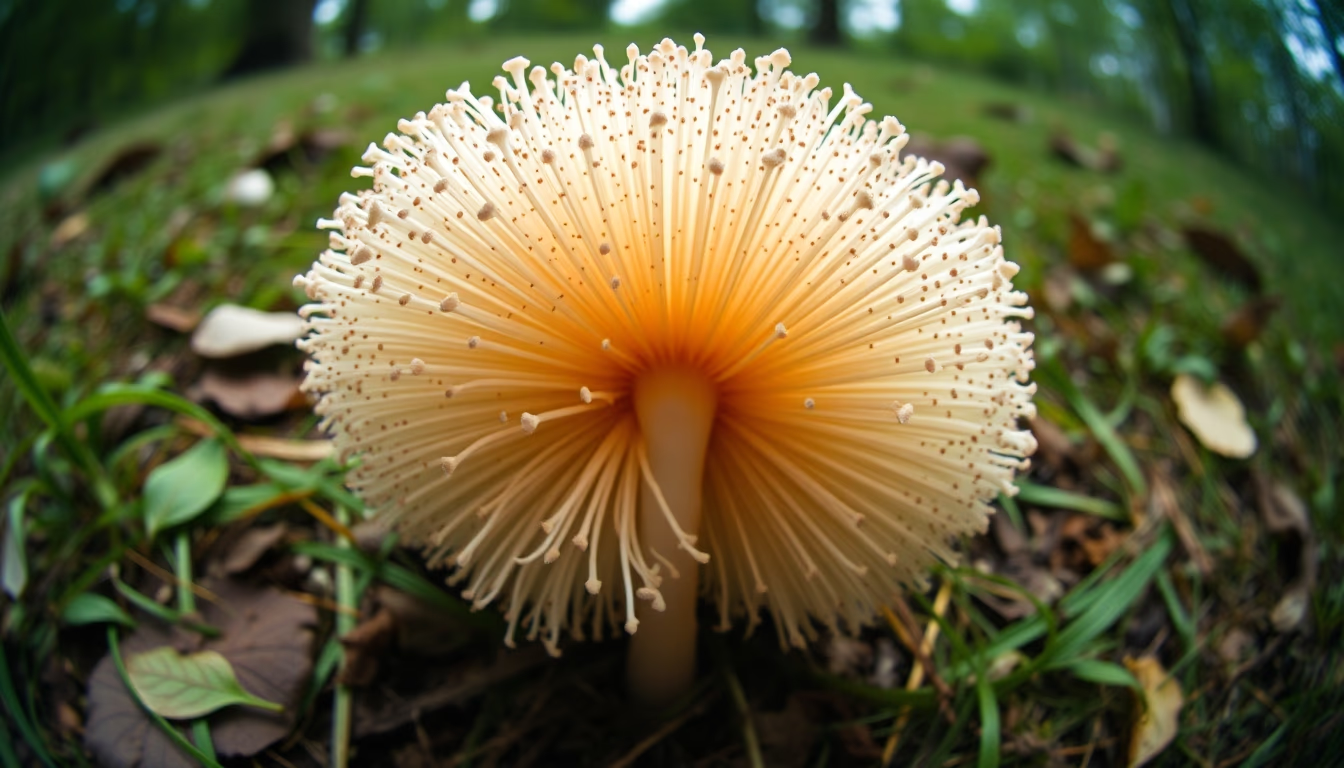
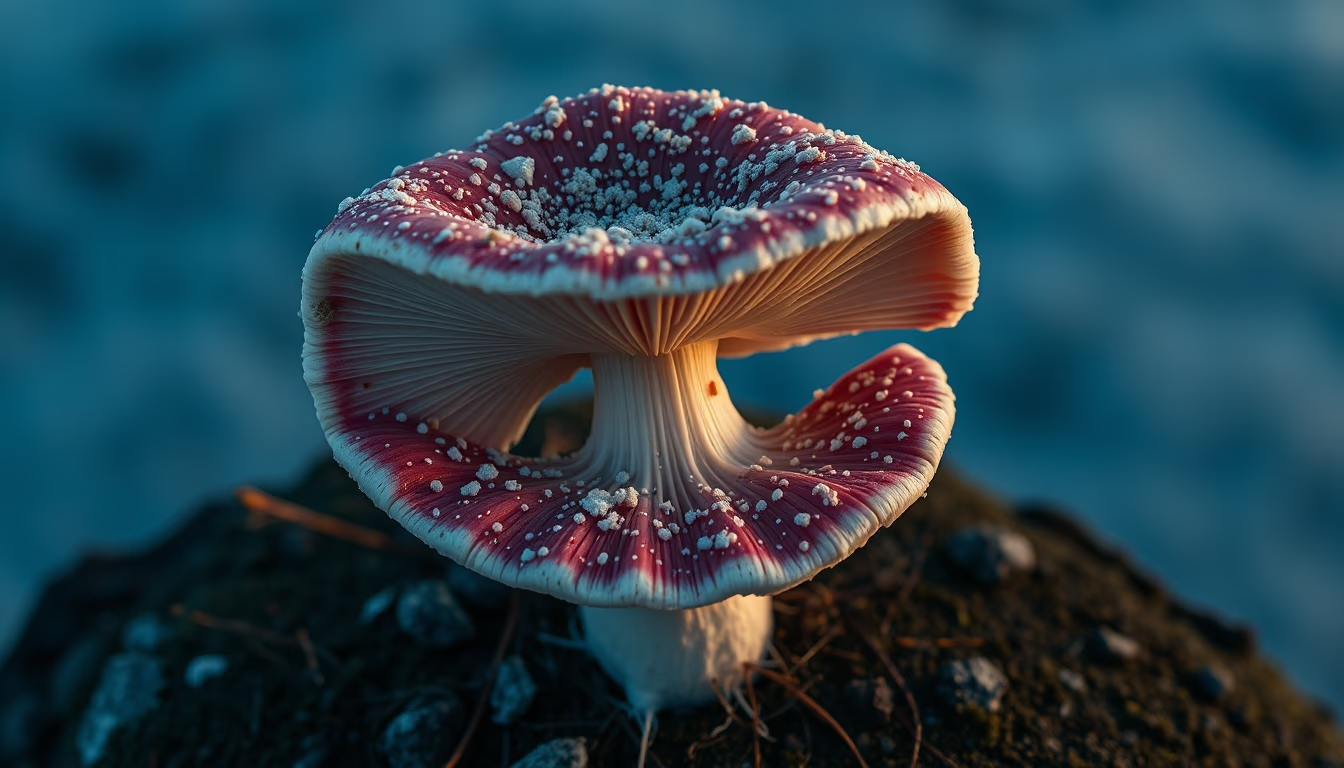
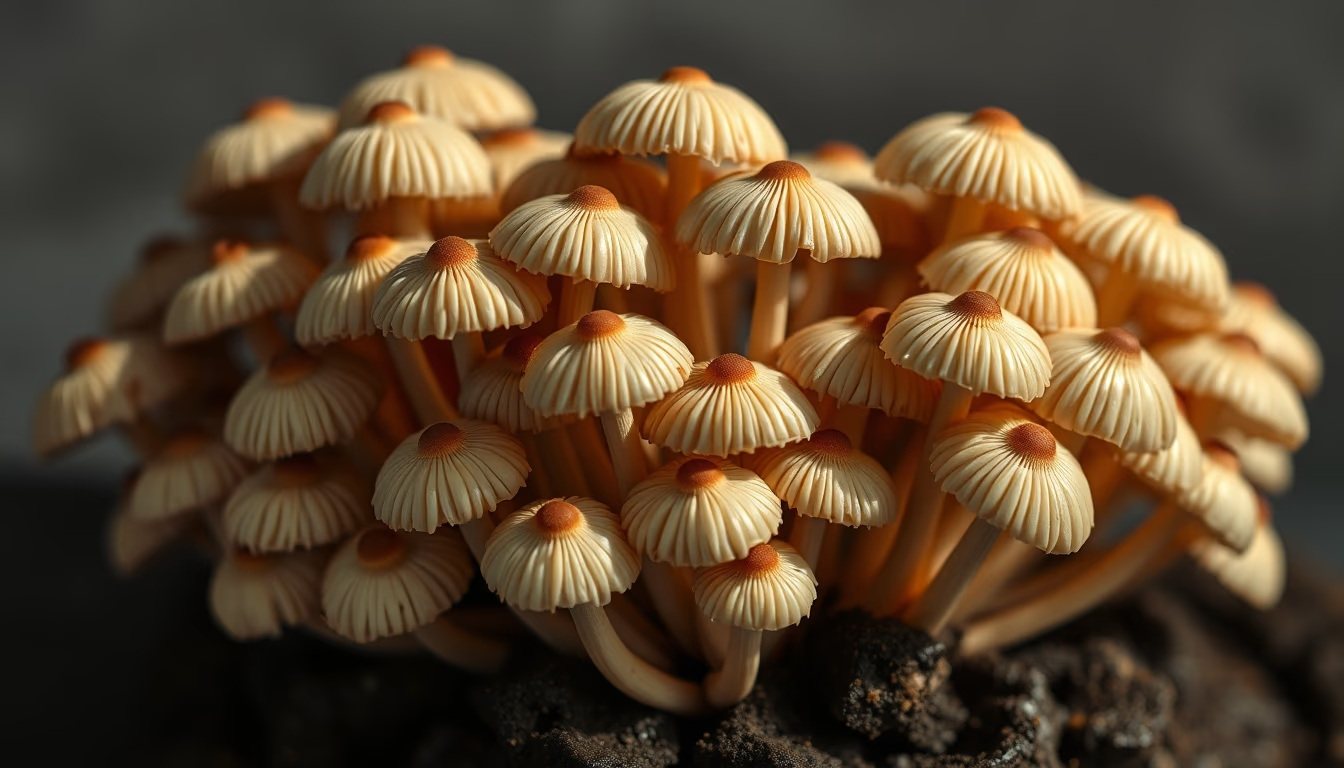
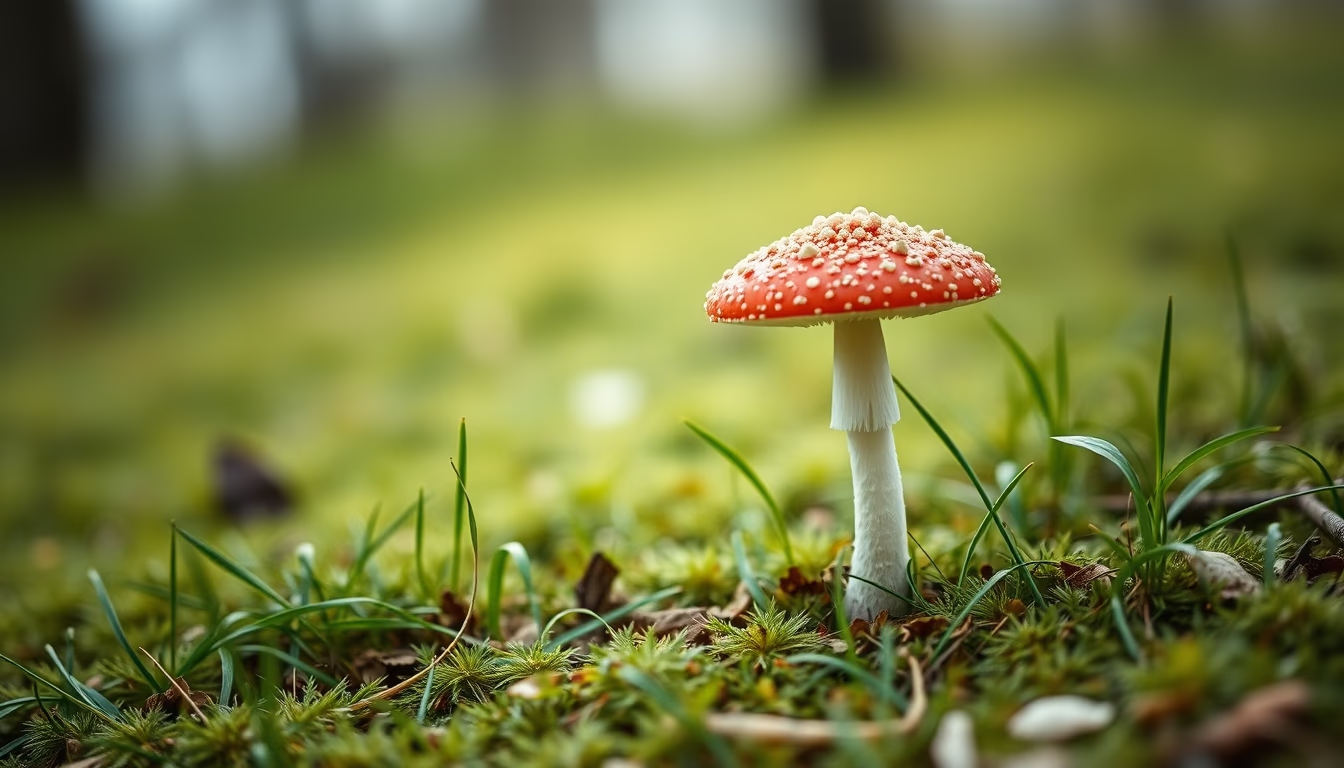
Puffballs are fungi that release millions of spores in a cloud when mature, an impressive and efficient dispersal mechanism.
About this subject
Puffballs are fungi belonging to various genera, such as Lycoperdon, Calvatia, and Bovista. Unlike typical mushrooms, they lack an open cap with gills. Instead, their fruiting body is a closed, spherical or pear-shaped mass called a gleba, which contains the spores. When the puffball matures, the outer layer breaks or forms an opening, exposing the gleba. Any impact, from a raindrop, an animal, or wind, causes the spores to be released in a smoke-like cloud. This spore burst is a natural spectacle and essential for the fungus's reproduction.
Each puffball can contain billions of spores. For instance, a giant puffball (Calvatia gigantea) can produce up to 7 trillion spores. This colossal number compensates for the low probability of each spore germinating and forming new mycelium. The spores are lightweight and can be carried by wind over long distances, colonizing new habitats. The release mechanism is triggered by hygroscopic movements, moisture causes the hyphae to move, ejecting the spores.
Puffballs play an important ecological role as decomposers of organic matter, mainly in forest soils and grasslands. Some species are edible when young, before the gleba becomes powdery, and are enjoyed in cuisines around the world, such as the common puffball (Lycoperdon perlatum). However, caution is required to avoid confusion with toxic species like young Amanitas. In popular culture, puffballs are associated with childhood fun: stepping on them to see the “smoke” puff out. This trait has also inspired names like “smoking mushroom” or “devil's snuff-box”.
Puffball spore dispersal is an example of adaptive evolution. While typical mushrooms rely on insects or air currents to spread spores from gills, puffballs concentrate all energy into producing a huge number of spores and an explosive release mechanism. This is particularly efficient in open environments where wind can widely scatter the spores. Studies show that the spore cloud can reach speeds of up to 1 meter per second, an adaptation to maximize dispersal.
Frequently Asked Questions
What is a puffball?
A puffball is a type of fungus that releases its spores in a cloud when mature. Unlike typical mushrooms, its fruiting body is closed and the spores are contained within a structure called the gleba.
How many spores can a puffball release?
Species like the giant puffball (Calvatia gigantea) can contain up to 7 trillion spores, released in a single burst.
Are puffballs edible?
Yes, some species are edible when young, before the gleba becomes powdery. Examples include Lycoperdon perlatum and Calvatia gigantea, but proper identification is crucial to avoid toxic lookalikes.
Direct URL
https://pub-c7d6a6ea828543ac903a74a341ccb2e1.r2.dev/imagens/puffball-spore-release-fish-eye-wide-angle-p3.avifHow to credit
Include a visible link back to UtilizAí. Copy one of the snippets below:
<a href="https://xn--utiliza-eza.com/en/midia/imagens/puffball-spore-release-fish-eye-wide-angle-p3">Puffball spore release</a> by <a href="https://xn--utiliza-eza.com">UtilizAí</a>, licensed under <a href="https://creativecommons.org/licenses/by/4.0/">CC BY 4.0</a>.
[Puffball spore release](https://xn--utiliza-eza.com/en/midia/imagens/puffball-spore-release-fish-eye-wide-angle-p3) by [UtilizAí](https://xn--utiliza-eza.com), CC BY 4.0
License: CC-BY-4.0