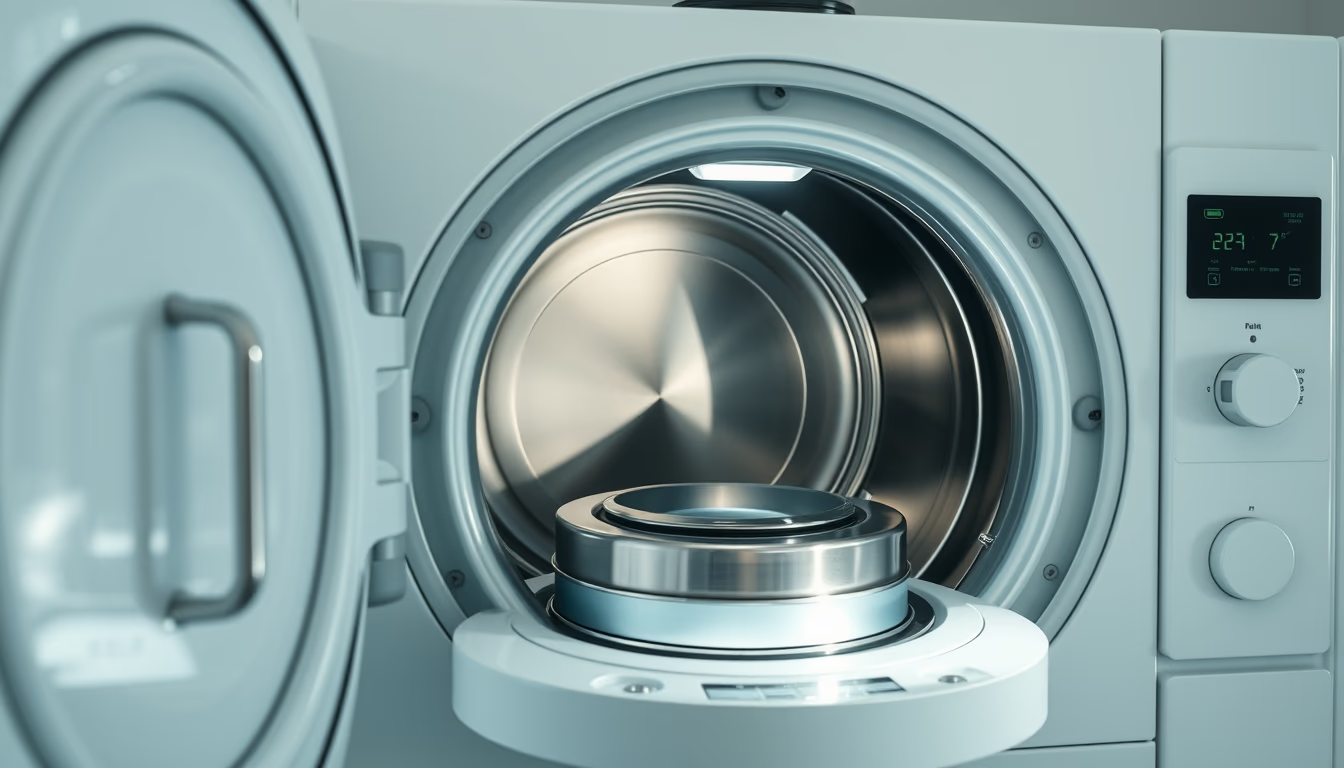
Pipette tips rack
1344×768 · AVIF · CC BY 4.0

Pipette tip rack: organization and precision in labs, preventing cross-contamination in experiments.
About this subject
The pipette tip rack is an essential accessory in molecular biology, chemistry, and diagnostics laboratories. It allows organized storage of disposable tips, ensuring they remain sterile and ready for use. Most racks are made of polypropylene, a chemical-resistant and autoclavable material. Common models have 96 or 384 wells, compatible with multichannel pipettes, facilitating handling of large sample volumes in microplates.
The primary function of the rack is to prevent tip contamination before use. In labs working with PCR, cell culture, or DNA/RNA manipulation, any contamination can invalidate results. Therefore, racks are often sold pre-sterilized by gamma radiation or ethylene oxide. Additionally, many have hinged lids to protect tips when not in use.
In the context of laboratory automation, tip racks are compatible with robotic pipetting systems. Companies like Eppendorf, Thermo Fisher, and Gilson offer standardized racks that fit specific holders. Recently, racks with barcodes or RFID have emerged for batch and expiry tracking, enhancing traceability in regulated laboratories.
Interestingly, rack dimensions follow the ANSI/SLAS microplate standard (127.76 mm x 85.48 mm), allowing use in various devices. Choosing the right rack depends on workload and sterility needs. High-throughput labs often opt for refillable racks, which reduce plastic waste but require careful cleaning.
Frequently Asked Questions
Can pipette tip racks be reused after autoclaving?
Yes, if made of polypropylene and heat-resistant. Autoclaving at 121°C for 15-20 minutes sterilizes the rack, but always check manufacturer guidelines to avoid warping.
What is the difference between 96-well and 384-well racks?
A 96-well rack holds an 8x12 array of tips, ideal for 8- or 12-channel pipettes. A 384-well rack (16x24) is used with 16- or 24-channel pipettes, common in high-throughput experiments like compound screening.
Why are pipette tip racks standardized under ANSI/SLAS norms?
Standardization ensures compatibility across different manufacturers and automated equipment, such as pipetting stations and microplate readers. This simplifies workflow integration and reduces the need for adapters.
Direct URL
https://pub-c7d6a6ea828543ac903a74a341ccb2e1.r2.dev/imagens/pipette-tips-rack-film-grain-authentic-fresh3.avifHow to credit
Include a visible link back to UtilizAí. Copy one of the snippets below:
<a href="https://xn--utiliza-eza.com/en/midia/imagens/pipette-tips-rack-film-grain-authentic-fresh3">Pipette tips rack</a> by <a href="https://xn--utiliza-eza.com">UtilizAí</a>, licensed under <a href="https://creativecommons.org/licenses/by/4.0/">CC BY 4.0</a>.
[Pipette tips rack](https://xn--utiliza-eza.com/en/midia/imagens/pipette-tips-rack-film-grain-authentic-fresh3) by [UtilizAí](https://xn--utiliza-eza.com), CC BY 4.0
License: CC-BY-4.0