Pioneer steamboat mississippi
1344×768 · AVIF · CC BY 4.0
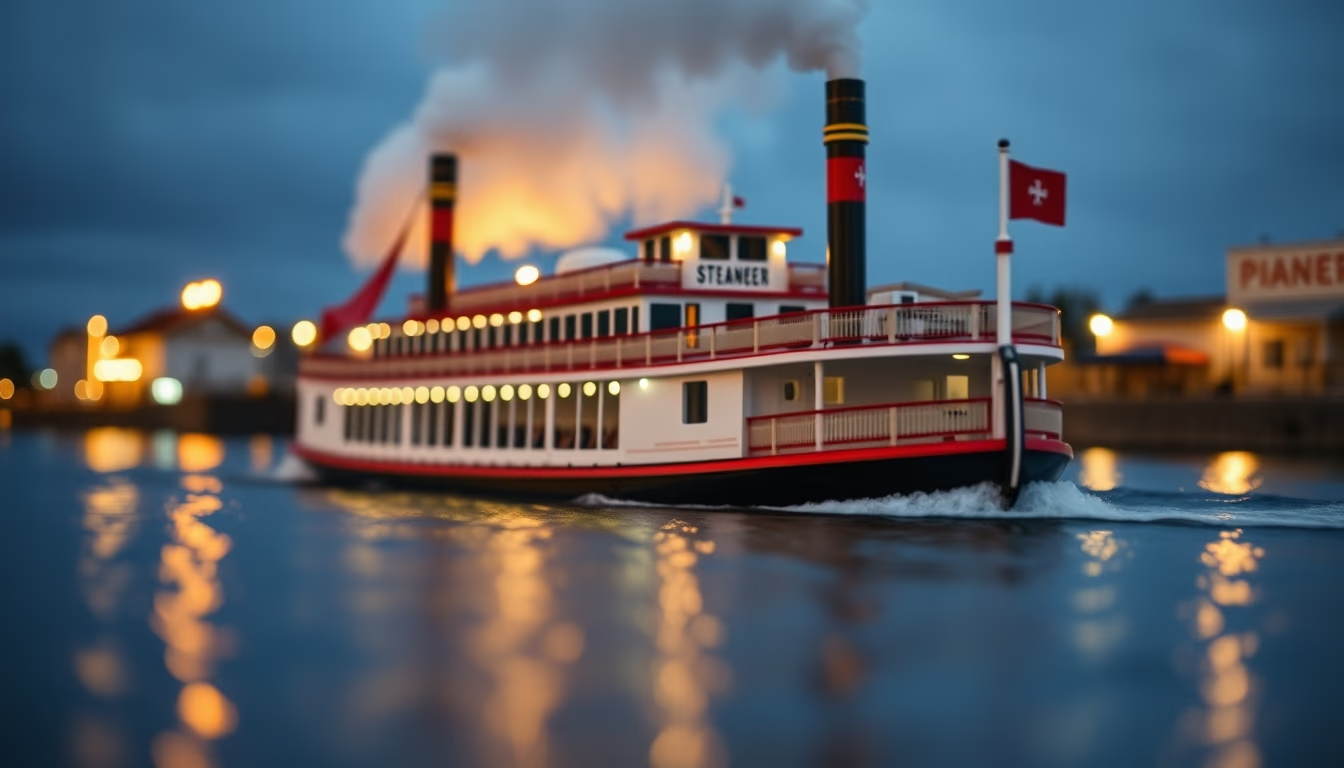
The first steamboats on the Mississippi River revolutionized transportation and the economy of the United States in the 19th century.
About this subject
In the early 19th century, the Mississippi River was the main transportation artery of the United States, but it relied on sailboats and rowboats, which were slow and limited. The introduction of the steamboat, especially pioneer models like the New Orleans (1811) and the later Pioneer, radically changed this scenario. These vessels could travel upstream against the current, reducing travel time from months to days. The Pioneer was one of the first steamboats to operate on the lower Mississippi, serving as a model for shallow-draft hull design, essential for navigating the river's shallow stretches.
Steamboat technology allowed efficient transport of cotton, sugar, and other goods from the South to the North, fueling the plantation economy and connecting cities like New Orleans, Memphis, and St. Louis. By 1850, more than 700 steamboats plied the Mississippi, becoming symbols of the golden age of American rivers. However, operations were dangerous: boilers frequently exploded, and wrecks from grounding or collisions were common. The Sultana, for example, exploded in 1865, killing over 1,800 people.
Culturally, steamboats inspired literature and music, such as the works of Mark Twain, who worked as a steamboat pilot before becoming a writer. His books Life on the Mississippi and Adventures of Huckleberry Finn capture river life and the importance of steamers. The pioneer boats, with their side paddle wheels and twin smokestacks, became iconic images still recognizable today, representing innovation and territorial expansion.
Interestingly, the term "pioneer" may refer to a specific boat, the Pioneer, which operated on the Mississippi in the 1830s, being one of the first to use a high-pressure engine. This design was crucial for increasing power without increasing weight, enabling longer and faster trips. Today, replicas and preserved steamboats like the Delta Queen keep this nautical heritage alive.
Frequently Asked Questions
What was the first steamboat to sail on the Mississippi River?
The New Orleans was the first steamboat to sail on the Mississippi in 1811, traveling from Pittsburgh to New Orleans. It demonstrated the viability of steam power in river navigation.
Why were steamboats important to the US economy?
They enabled fast transportation of goods like cotton and sugar, connecting the agricultural South to Northern markets, reducing costs and travel time, and boosting trade and territorial expansion.
How did steamboats influence American culture?
They inspired works by Mark Twain and became icons of the river's golden age. Steamboat trips also fostered social gatherings and music, contributing to river culture.
Direct URL
https://pub-c7d6a6ea828543ac903a74a341ccb2e1.r2.dev/imagens/pioneer-steamboat-mississippi-tilt-shift-miniature-p7.avifHow to credit
Include a visible link back to UtilizAí. Copy one of the snippets below:
<a href="https://xn--utiliza-eza.com/en/midia/imagens/pioneer-steamboat-mississippi-tilt-shift-miniature-p7">Pioneer steamboat mississippi</a> by <a href="https://xn--utiliza-eza.com">UtilizAí</a>, licensed under <a href="https://creativecommons.org/licenses/by/4.0/">CC BY 4.0</a>.
[Pioneer steamboat mississippi](https://xn--utiliza-eza.com/en/midia/imagens/pioneer-steamboat-mississippi-tilt-shift-miniature-p7) by [UtilizAí](https://xn--utiliza-eza.com), CC BY 4.0
License: CC-BY-4.0