Pioneer steamboat mississippi
1344×768 · AVIF · CC BY 4.0
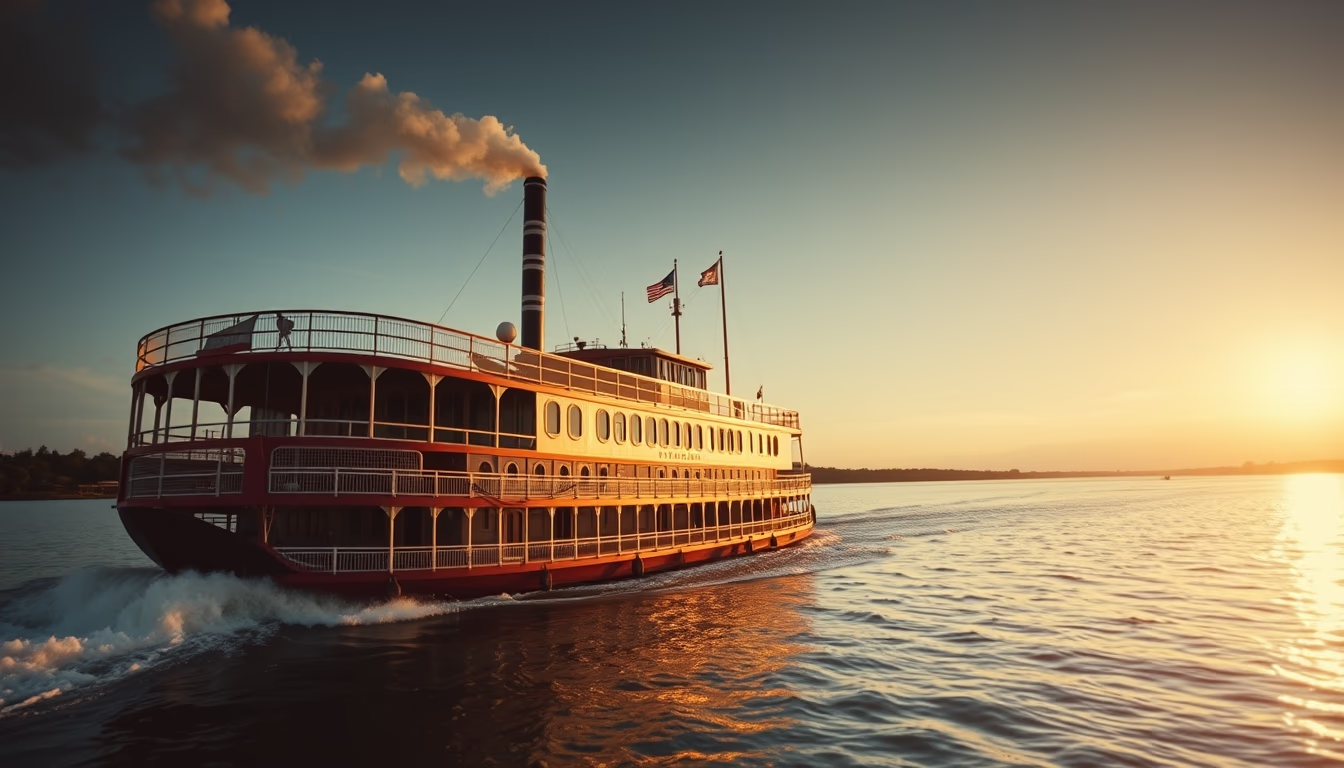
The steamboat Pioneer was one of the first to navigate the Mississippi River, revolutionizing transportation and commerce in 19th century United States.
About this subject
Steamboats like the Pioneer transformed the economy and society along the Mississippi River in the 19th century. Before them, river transport relied on flatboats and keelboats propelled by oars or sails, slow and limited against the current. The Pioneer, built in 1815, was one of the first to use a high-pressure steam engine, inspired by the designs of Robert Fulton and Oliver Evans. This advancement enabled regular trips between New Orleans and inland cities such as St. Louis and Cincinnati, reducing travel time from months to weeks.
The innovation of the steamboat extended beyond technology. It created a unique river culture, with passengers from all social classes coexisting in cramped quarters. The boats also carried cotton, sugar, coffee, and other goods that fueled the economic growth of the American South and Midwest. However, the steamboat era was not without danger. Boiler explosions, fires, and sinkings were common due to lack of regulation and use of substandard materials.
The Pioneer specifically represents a period of experimentation and optimism. Although it was not the first steamboat on the Mississippi (the New Orleans preceded it in 1811), the Pioneer stood out for its pioneering voyages and for inspiring competitors. Over time, competition led to larger, faster, and more luxurious boats, culminating in the floating palaces of the late 19th century, such as the grand Mississippi. The Pioneer's legacy remains in historical records and the accounts of travelers of the era, who described the thrill of seeing black smoke and paddle wheels churning against the current.
Today, the image of a steamboat like the Pioneer evokes an era of exploration and innovation. The Mississippi River, once America's main highway, still carries the echo of these vessels that changed the course of the country. For history and technology enthusiasts, studying these early steamboats reveals how ingenious solutions overcame geographical and cultural challenges.
Frequently Asked Questions
What was the significance of the steamboat Pioneer on the Mississippi River?
The Pioneer was one of the first steamboats to navigate the Mississippi regularly, demonstrating the feasibility of steam-powered long-distance travel against the current, which boosted commerce and settlement of the American interior.
How did a steamboat like the Pioneer work?
The Pioneer used a high-pressure steam engine that powered side paddle wheels. Steam was generated in boilers fueled by wood, which was abundant along the riverbanks. The paddle wheels pushed against the water, propelling the boat.
Were steamboats safe?
No, especially early on. Boiler explosions and fires were common due to lack of regulation and substandard materials. This changed only with stricter laws and mandatory inspections in the late 19th century.
Direct URL
https://pub-c7d6a6ea828543ac903a74a341ccb2e1.r2.dev/imagens/pioneer-steamboat-mississippi-cinematic-wide-shot-p9.avifHow to credit
Include a visible link back to UtilizAí. Copy one of the snippets below:
<a href="https://xn--utiliza-eza.com/en/midia/imagens/pioneer-steamboat-mississippi-cinematic-wide-shot-p9">Pioneer steamboat mississippi</a> by <a href="https://xn--utiliza-eza.com">UtilizAí</a>, licensed under <a href="https://creativecommons.org/licenses/by/4.0/">CC BY 4.0</a>.
[Pioneer steamboat mississippi](https://xn--utiliza-eza.com/en/midia/imagens/pioneer-steamboat-mississippi-cinematic-wide-shot-p9) by [UtilizAí](https://xn--utiliza-eza.com), CC BY 4.0
License: CC-BY-4.0