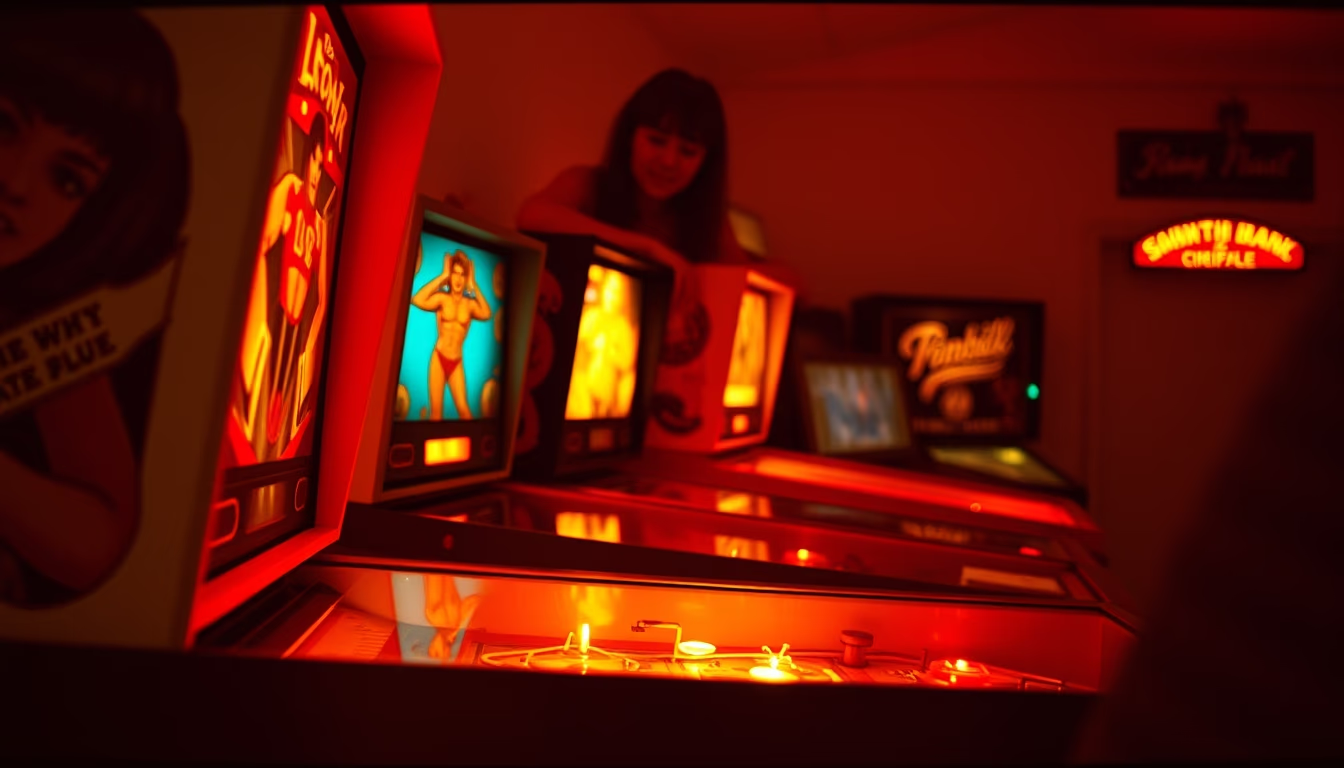
Pinball machine 1970s
1344×768 · AVIF · CC BY 4.0
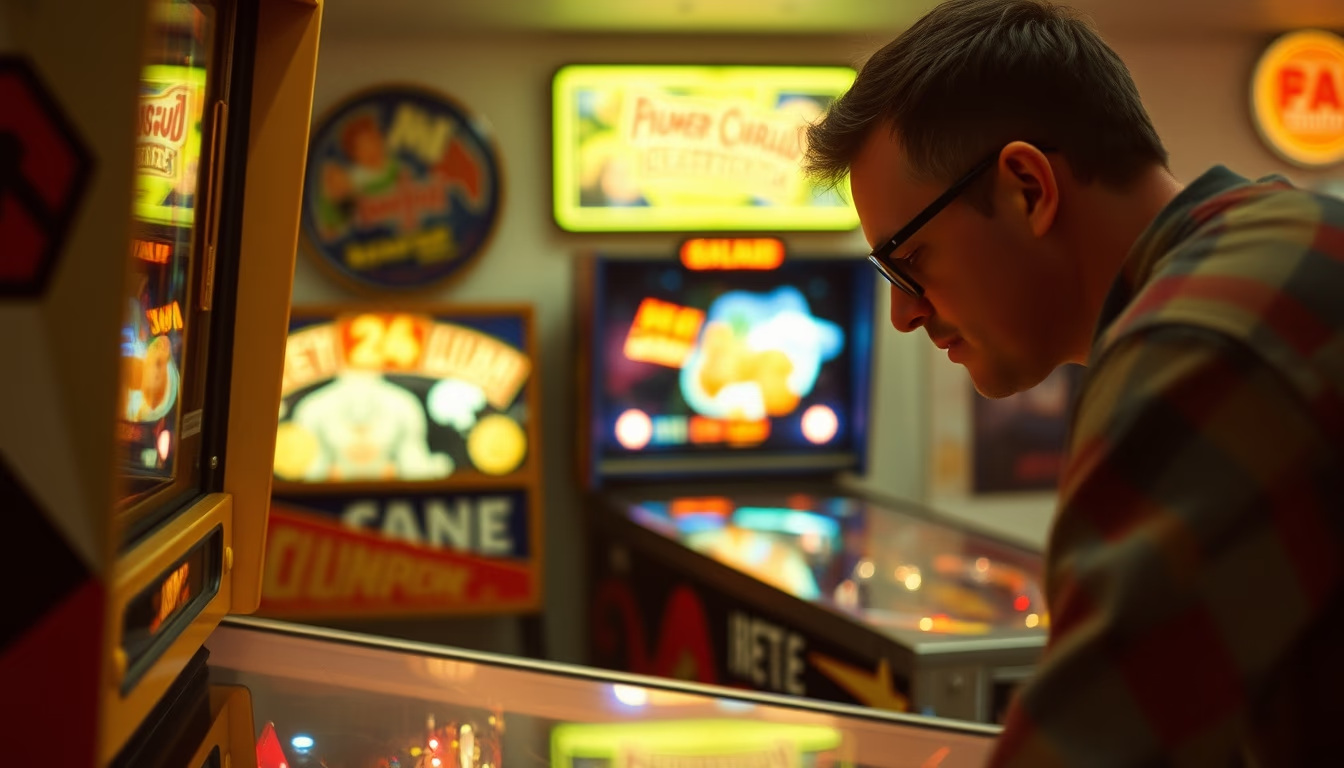
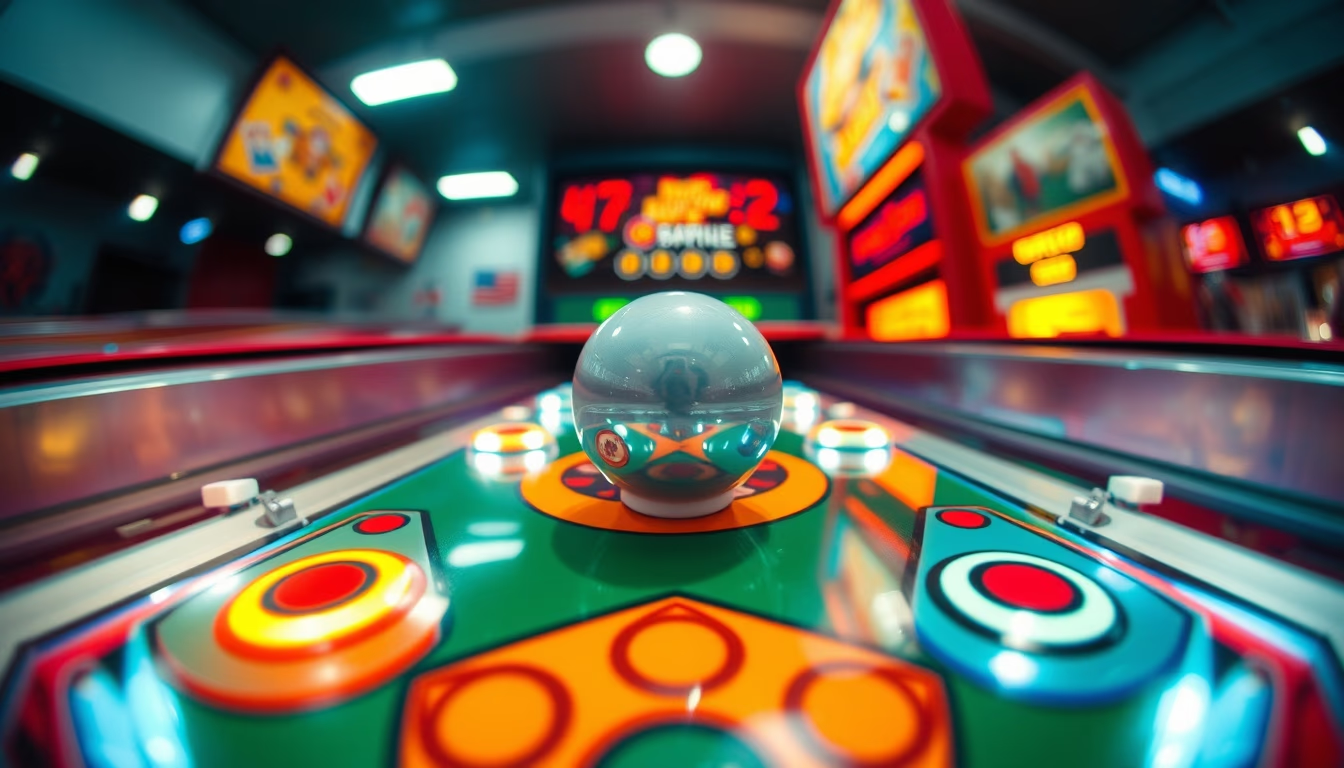
Pinball machines of the 1970s marked the shift from electromechanical to electronic systems, featuring psychedelic artwork and innovative rules.
About this subject
Pinball experienced its golden age in the 1970s, as manufacturers competed to create visually stunning and mechanically sophisticated games. The decade saw the transition from electromechanical (EM) to solid-state systems, with the introduction of circuit boards and digital displays. Companies like Bally, Gottlieb, and Williams led the market, producing machines with themes ranging from sports to science fiction.
A milestone was Bally's "Fireball" (1972), which used the first digital sound processing unit and psychedelic artwork typical of the era. Gottlieb released "Bugs Bunny" (1971) with innovative lighting, while Williams debuted "Space Odyssey" (1976), already employing solid-state logic. Cabinets were decorated with airbrushed paintings, vibrant colors, and fluorescent elements, often created by artists like Paul Faris and Gordon Morison.
Pinball culture in the 1970s was closely tied to arcades and bars, where machines served as social hubs. The game required physical skill to manipulate flippers and nudge the table, and each machine had unique rules, such as special targets and kickers. Mechanics included rolling bumpers and sequentially lighting targets for bonus scores. Its popularity inspired the film "Tommy" (1975), featuring The Who, and the song "Pinball Wizard."
Interestingly, pinball was banned in some US cities until the mid-1970s, considered a game of chance. In Brazil, machines like "Futebol" (1971) from Indústria de Brinquedos Trol were common. Today, original 1970s machines are collector's items, with prices exceeding $5,000 depending on condition and rarity. The film grain aesthetic of vintage photographs captures the nostalgic atmosphere of these arcade halls.
Frequently Asked Questions
What was the first fully electronic pinball machine?
The first fully electronic pinball machine was Micro's 'Spirit of 76' in 1975, though Bally had used electronic components in 'Fireball' (1972).
Why was pinball banned in some cities?
Pinball was considered a game of chance for decades, especially in the 1940s and 1950s, but some cities maintained the ban until the mid-1970s. Legalization came with the recognition that it was a game of skill.
How much does a 1970s pinball machine cost today?
Well-maintained machines can cost between $2,000 and $10,000, depending on rarity and condition. Famous models like 'Fireball' or 'Space Invaders' are most valuable.
Direct URL
https://pub-c7d6a6ea828543ac903a74a341ccb2e1.r2.dev/imagens/pinball-machine-1970s-film-grain-authentic-fresh17.avifHow to credit
Include a visible link back to UtilizAí. Copy one of the snippets below:
<a href="https://xn--utiliza-eza.com/en/midia/imagens/pinball-machine-1970s-film-grain-authentic-fresh17">Pinball machine 1970s</a> by <a href="https://xn--utiliza-eza.com">UtilizAí</a>, licensed under <a href="https://creativecommons.org/licenses/by/4.0/">CC BY 4.0</a>.
[Pinball machine 1970s](https://xn--utiliza-eza.com/en/midia/imagens/pinball-machine-1970s-film-grain-authentic-fresh17) by [UtilizAí](https://xn--utiliza-eza.com), CC BY 4.0
License: CC-BY-4.0