Pearl oyster harvest
1344×768 · AVIF · CC BY 4.0
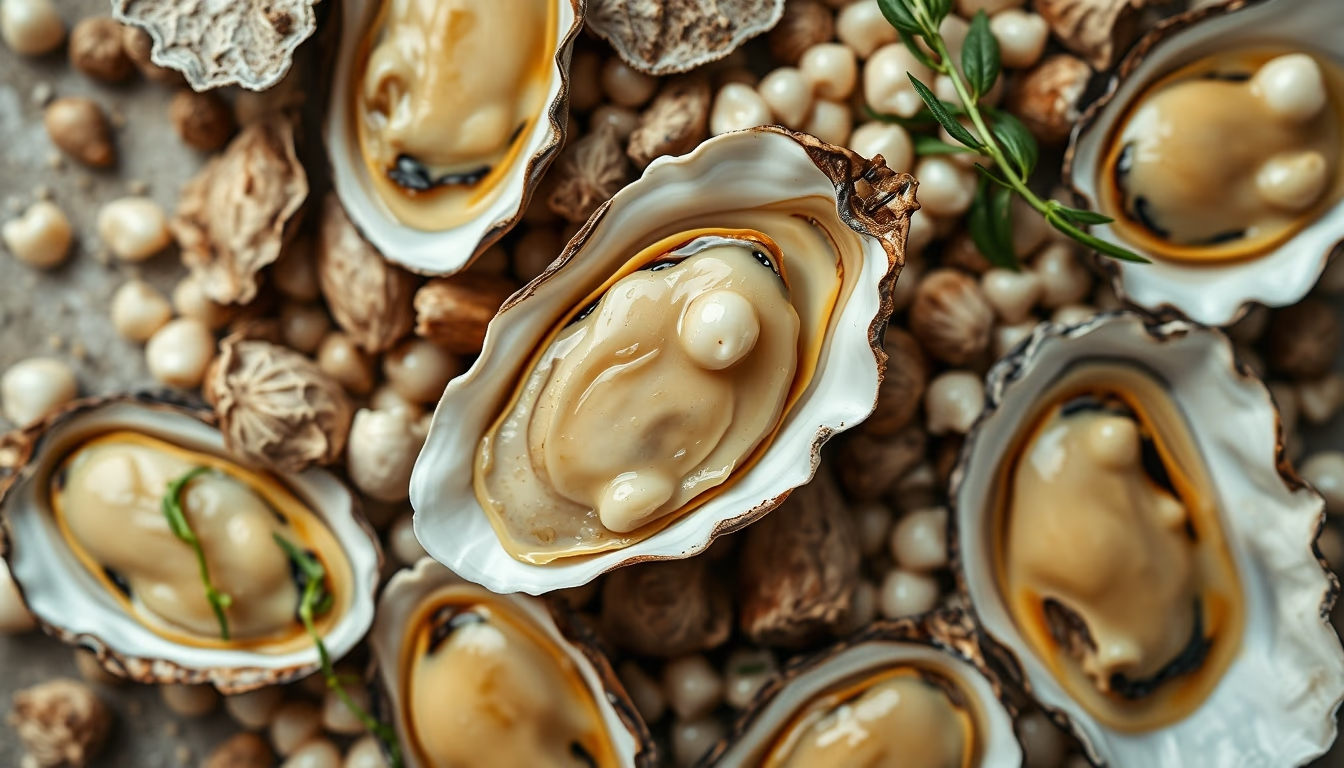
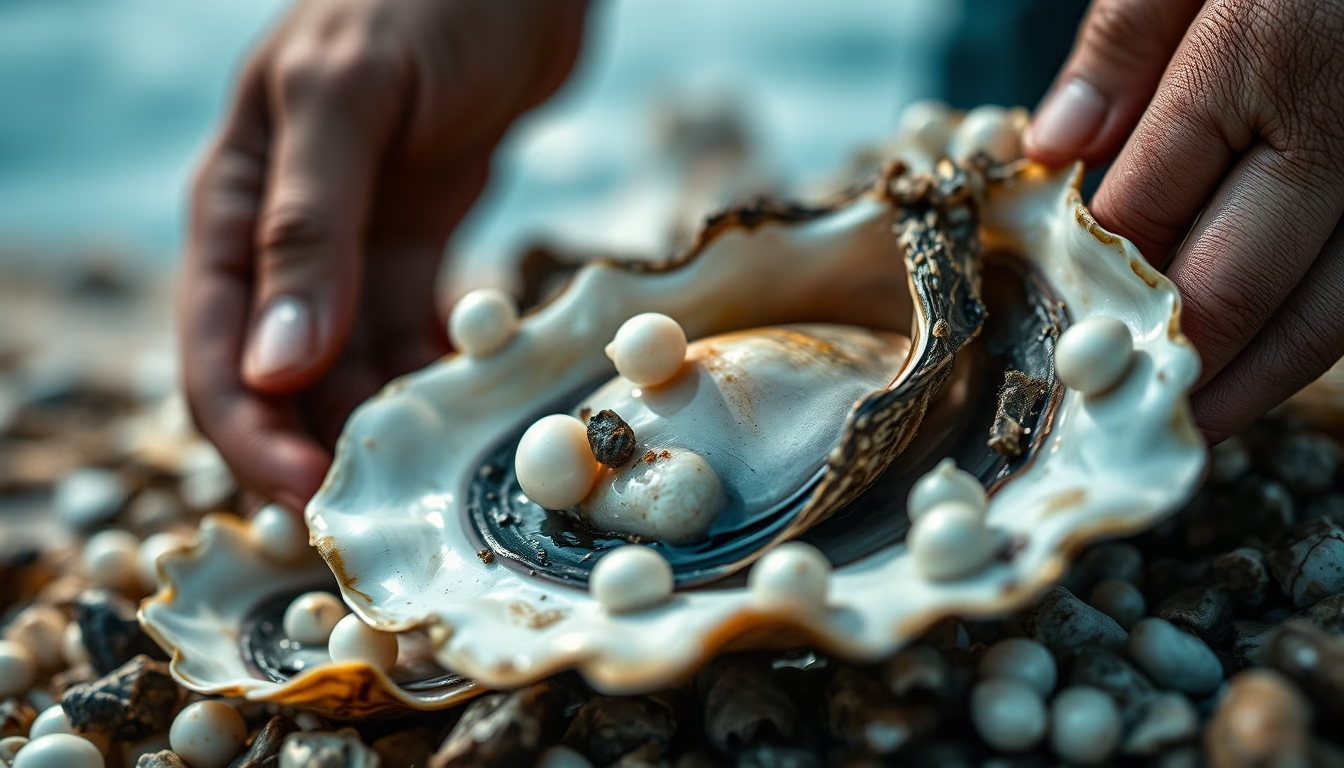
Pearl oyster harvest is a critical step in cultured pearl production, blending centuries-old techniques with modern innovations.
About this subject
Pearl oyster harvest, also known as the collection of pearl-producing oysters, takes place in marine farms worldwide, with key regions including Japan, French Polynesia, Australia, and Indonesia. These oysters belong to the genera Pinctada and Pteria, with Pinctada margaritifera (black-lipped oyster) being the most prized for Tahitian black pearls. The harvest usually occurs after a cultivation cycle of 18 to 36 months, when pearls reach the desired size and quality.
During harvest, workers dive or use specialized boats to retrieve the oysters from their aquatic environment, which can range from shallow coastal waters to deeper oceanic areas. Each oyster is carefully opened using specific tools, such as curved knives or spatulas, to avoid damaging the pearl inside. Extraction is a delicate process requiring skill, as the pearl's quality can be compromised by cuts or excessive pressure.
The economic and cultural significance of pearl oyster harvest is immense. In Tahiti, black pearl production represents one of the country's main revenue sources, generating millions of dollars annually. Moreover, sustainable farming practices contribute to marine ecosystem preservation, as oysters filter water and provide habitat for other species. Cultivation techniques, such as surgical nucleation (inserting a mother-of-pearl bead into the oyster), were perfected during the 20th century, enabling large-scale production of high-quality pearls.
Interesting verified facts: an oyster may take 2 to 4 years to produce a single pearl, and only about 5% of cultivated oysters yield gem-quality pearls. Japan pioneered cultured pearl production with Kokichi Mikimoto in 1893, and the country remains a benchmark for Akoya pearls. Sustainable harvest is regulated by certifications like the Responsible Jewellery Council, ensuring methods do not harm natural oyster stocks.
Frequently Asked Questions
How long does it take to harvest a pearl from an oyster?
The cultivation cycle for a cultured pearl varies from 18 to 36 months, depending on the oyster species and environmental conditions. Saltwater pearls like Akoya typically take 8 to 16 months, while Tahitian pearls may take up to 24 months.
What is the difference between natural and cultured pearls?
Natural pearls form spontaneously in the wild without human intervention, while cultured pearls are induced by inserting a mother-of-pearl bead into the oyster's mantle. The vast majority of pearls sold today are cultured.
Is pearl oyster harvest sustainable?
Yes, when done responsibly. Oyster farms can improve water quality and local biodiversity. Certifications like the Responsible Jewellery Council (RJC) ensure ethical and environmental practices.
Direct URL
https://pub-c7d6a6ea828543ac903a74a341ccb2e1.r2.dev/imagens/pearl-oyster-harvest-isometric-flat-lay-fresh10.avifHow to credit
Include a visible link back to UtilizAí. Copy one of the snippets below:
<a href="https://xn--utiliza-eza.com/en/midia/imagens/pearl-oyster-harvest-isometric-flat-lay-fresh10">Pearl oyster harvest</a> by <a href="https://xn--utiliza-eza.com">UtilizAí</a>, licensed under <a href="https://creativecommons.org/licenses/by/4.0/">CC BY 4.0</a>.
[Pearl oyster harvest](https://xn--utiliza-eza.com/en/midia/imagens/pearl-oyster-harvest-isometric-flat-lay-fresh10) by [UtilizAí](https://xn--utiliza-eza.com), CC BY 4.0
License: CC-BY-4.0