Oyster farm bay
1344×768 · AVIF · CC BY 4.0
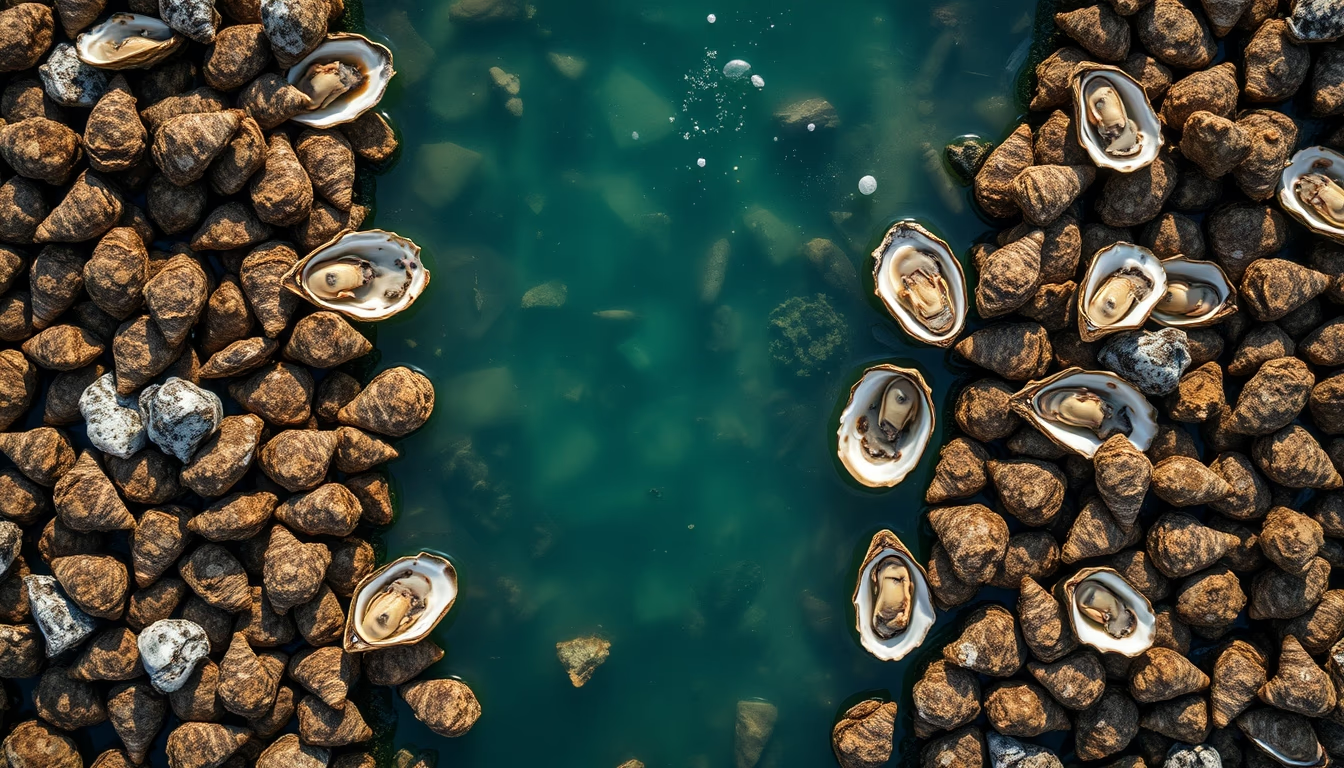
Oyster farm bay depicts oyster cultivation in coastal bays, a sustainable aquaculture practice blending tradition and innovation.
About this subject
Oyster farming in bays is an ancient aquaculture practice, with records dating back to ancient Rome and Japan. Today, it is essential for sustainable seafood production, as oysters naturally filter water, improving ecosystem health. Bays like the Chesapeake in the U.S. or Santos in Brazil are known for their oyster parks, where floating structures or bottom cages hold oysters at various growth stages.
The choice of bay is critical: calm waters rich in plankton and with proper salinity ensure healthy oyster development. In Brazil, oyster farming thrives in Santa Catarina, especially in the southern bay of Florianópolis, which accounts for much of national production. Techniques range from suspended tables to long-line systems, each adapted to local conditions.
Beyond economic value, oysters play a key ecological role: a single oyster can filter up to 190 liters of water per day, controlling excess nutrients and reducing turbidity. This makes oyster farms allies in conserving bays threatened by pollution and eutrophication. Certification for sustainable practices, such as from the Marine Stewardship Council, has gained traction in the industry.
Interestingly, oysters also serve as indicators of climate change: increasing ocean acidity hinders formation of their calcareous shells. Hence, genetic research seeks more resilient strains. The depiction of an oyster farm bay evokes not just food production but a carefully managed ecosystem where humans and nature cooperate.
Frequently Asked Questions
How does oyster farming work in a bay?
Farming uses structures like floating tables or bottom cages, where oysters grow for 12 to 24 months. The bay provides natural food (plankton) and constant water renewal.
What are the environmental benefits of oyster farms?
Oysters filter large volumes of water, removing particles and nitrogen, improving clarity and reducing eutrophication. They also create habitats for other species.
Where are the main oyster farming centers in Brazil?
Santa Catarina, especially Florianópolis and Laguna, is the largest national producer. Other states like São Paulo and Rio de Janeiro also have farms in coastal bays.
Direct URL
https://pub-c7d6a6ea828543ac903a74a341ccb2e1.r2.dev/imagens/oyster-farm-bay-isometric-flat-lay-fresh13.avifHow to credit
Include a visible link back to UtilizAí. Copy one of the snippets below:
<a href="https://xn--utiliza-eza.com/en/midia/imagens/oyster-farm-bay-isometric-flat-lay-fresh13">Oyster farm bay</a> by <a href="https://xn--utiliza-eza.com">UtilizAí</a>, licensed under <a href="https://creativecommons.org/licenses/by/4.0/">CC BY 4.0</a>.
[Oyster farm bay](https://xn--utiliza-eza.com/en/midia/imagens/oyster-farm-bay-isometric-flat-lay-fresh13) by [UtilizAí](https://xn--utiliza-eza.com), CC BY 4.0
License: CC-BY-4.0