Oyster farm bay
1344×768 · AVIF · CC BY 4.0
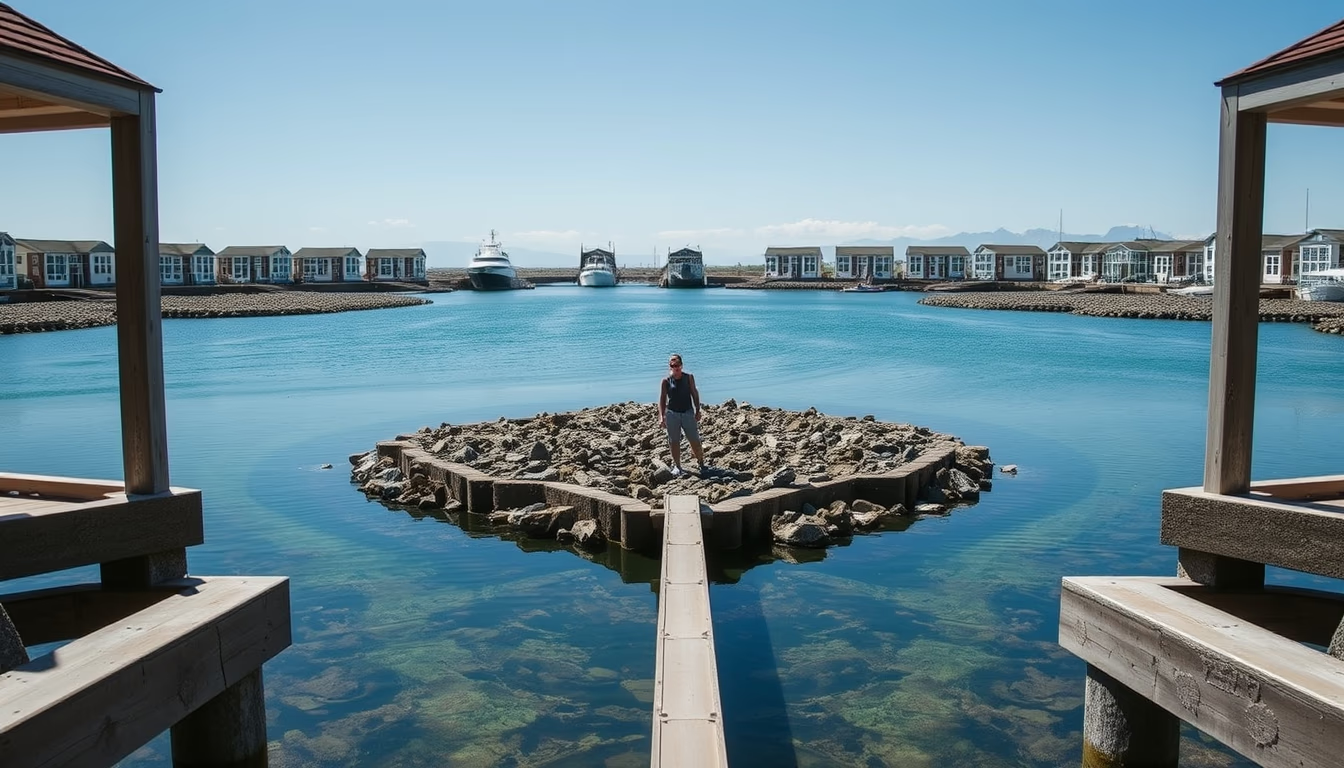
Oyster farm bay: sustainable oyster cultivation in coastal bays, blending tradition and aquaculture innovation.
About this subject
Oyster farming in bays is a millennia-old practice that has gained global economic and ecological importance. Oysters are bivalve filter feeders, and their cultivation in natural bay environments harnesses marine currents to supply food and oxygen, reducing feed and energy costs. This method, known as suspended or bottom culture, uses structures such as tables, lanterns, or long-lines to keep oysters submerged in areas of high primary productivity.
Bays offer ideal conditions: calm waters protected from strong waves, with stable salinity and temperature. Traditional oyster regions include Chesapeake Bay (USA), the Bay of Arcachon (France), and the Bay of Guanabara (Brazil). Besides gastronomic value, oysters are considered ecosystem engineers: each oyster filters up to 50 liters of water daily, removing sediments and excess nutrients, improving water clarity and preventing harmful algal blooms.
Sustainability in oyster farming depends on good management, such as controlling population density and monitoring water quality. Excess organic waste can lead to eutrophication, but well-managed operations are among the most eco-friendly aquaculture forms. In Brazil, oyster farming is regulated by the Ministry of Fisheries and Aquaculture and has grown in states like Santa Catarina and Rio de Janeiro, with cooperatives exporting to European markets. The image of a bay with cultivation structures reflects the intersection of coastal engineering, marine biology, and food tradition.
Frequently Asked Questions
How are oysters cultivated in bays?
Cultivation can be suspended (using lanterns or long-lines) or bottom culture (directly on the seabed). Oysters are kept in bay areas with good water circulation and feed by filtering natural plankton.
What are the environmental benefits of oyster farming?
Oysters filter large volumes of water, improving clarity and quality. They also create reefs that serve as habitat for other organisms, boosting local biodiversity.
Where are the main oyster-producing regions in Brazil?
Santa Catarina is the largest producer, especially in Florianópolis and Palhoça. Rio de Janeiro also stands out, with farms in Guanabara Bay and the Costa Verde region.
Direct URL
https://pub-c7d6a6ea828543ac903a74a341ccb2e1.r2.dev/imagens/oyster-farm-bay-architectural-photography-fresh8.avifHow to credit
Include a visible link back to UtilizAí. Copy one of the snippets below:
<a href="https://xn--utiliza-eza.com/en/midia/imagens/oyster-farm-bay-architectural-photography-fresh8">Oyster farm bay</a> by <a href="https://xn--utiliza-eza.com">UtilizAí</a>, licensed under <a href="https://creativecommons.org/licenses/by/4.0/">CC BY 4.0</a>.
[Oyster farm bay](https://xn--utiliza-eza.com/en/midia/imagens/oyster-farm-bay-architectural-photography-fresh8) by [UtilizAí](https://xn--utiliza-eza.com), CC BY 4.0
License: CC-BY-4.0