Oil tanker massive
1344×768 · AVIF · CC BY 4.0
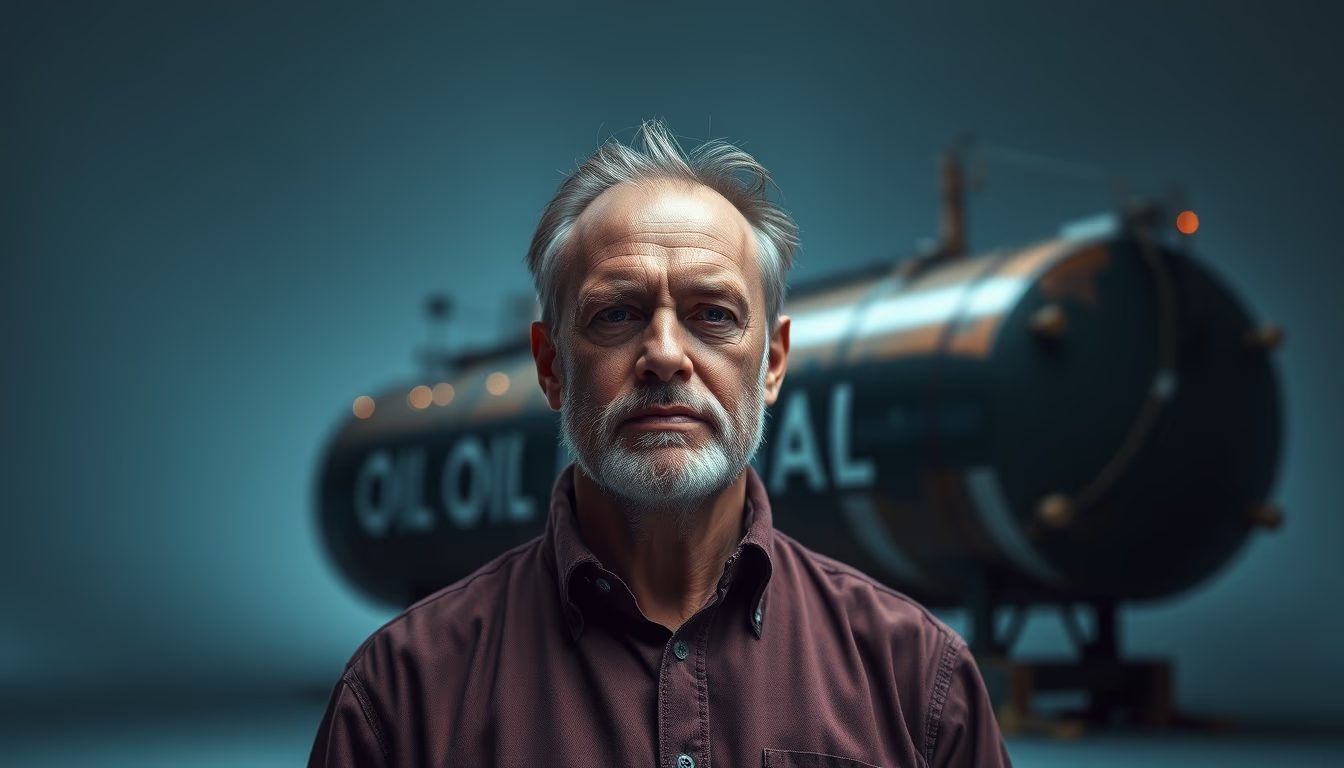
Oil tankers are large vessels designed to transport crude oil and petroleum products, essential for the global economy and subject to environmental debates.
About this subject
Oil tankers are specialized vessels designed to transport crude oil and petroleum products. They range from small coastal tankers to Ultra Large Crude Carriers (ULCCs), which can exceed 400 meters in length and carry over 2 million barrels of oil. Most active tankers today are Very Large Crude Carriers (VLCCs), with capacities between 200,000 and 320,000 deadweight tonnage (DWT).
Construction follows strict International Maritime Organization (IMO) regulations, including mandatory double hulls since 1993 to prevent spills. Historical accidents like Exxon Valdez (1989) and Prestige (2002) led to stricter rules, including the phase-out of single-hull tankers. In Brazil, oil tankers dock at ports such as Santos, Açu, and Suape, handling much of Petrobras's production. Logistics involve specialized terminals and offshore transshipment operations.
Besides crude oil, these vessels carry refined products like gasoline, diesel, and jet fuel. Maintenance includes tank cleaning with hydrojetting systems and oily waste treatment. Demand for tankers fluctuates with the oil market; in 2020, oversupply led to ships being used as floating storage. The global fleet exceeds 7,000 vessels, with over 60% owned by Greek, Japanese, and Chinese operators.
Frequently Asked Questions
What is the capacity of a VLCC oil tanker?
A VLCC (Very Large Crude Carrier) has a deadweight tonnage between 200,000 and 320,000 DWT, capable of carrying approximately 2 million barrels of oil.
What are the largest oil tanker accidents?
Major accidents include Exxon Valdez (1989, Alaska) with 37,000 tons spilled, and Prestige (2002, Spain) with 63,000 tons. The largest by volume was the MT Haven (1991, Italy), estimated at 144,000 tons.
How are oil tanker tanks cleaned?
Cleaning involves hydrojetting with water or solvents, followed by removal of oily residues. The process is regulated by the IMO to prevent illegal discharges at sea.
Direct URL
https://pub-c7d6a6ea828543ac903a74a341ccb2e1.r2.dev/imagens/oil-tanker-massive-studio-editorial-portrait-p2.avifHow to credit
Include a visible link back to UtilizAí. Copy one of the snippets below:
<a href="https://xn--utiliza-eza.com/en/midia/imagens/oil-tanker-massive-studio-editorial-portrait-p2">Oil tanker massive</a> by <a href="https://xn--utiliza-eza.com">UtilizAí</a>, licensed under <a href="https://creativecommons.org/licenses/by/4.0/">CC BY 4.0</a>.
[Oil tanker massive](https://xn--utiliza-eza.com/en/midia/imagens/oil-tanker-massive-studio-editorial-portrait-p2) by [UtilizAí](https://xn--utiliza-eza.com), CC BY 4.0
License: CC-BY-4.0