Oil tanker massive
1344×768 · AVIF · CC BY 4.0
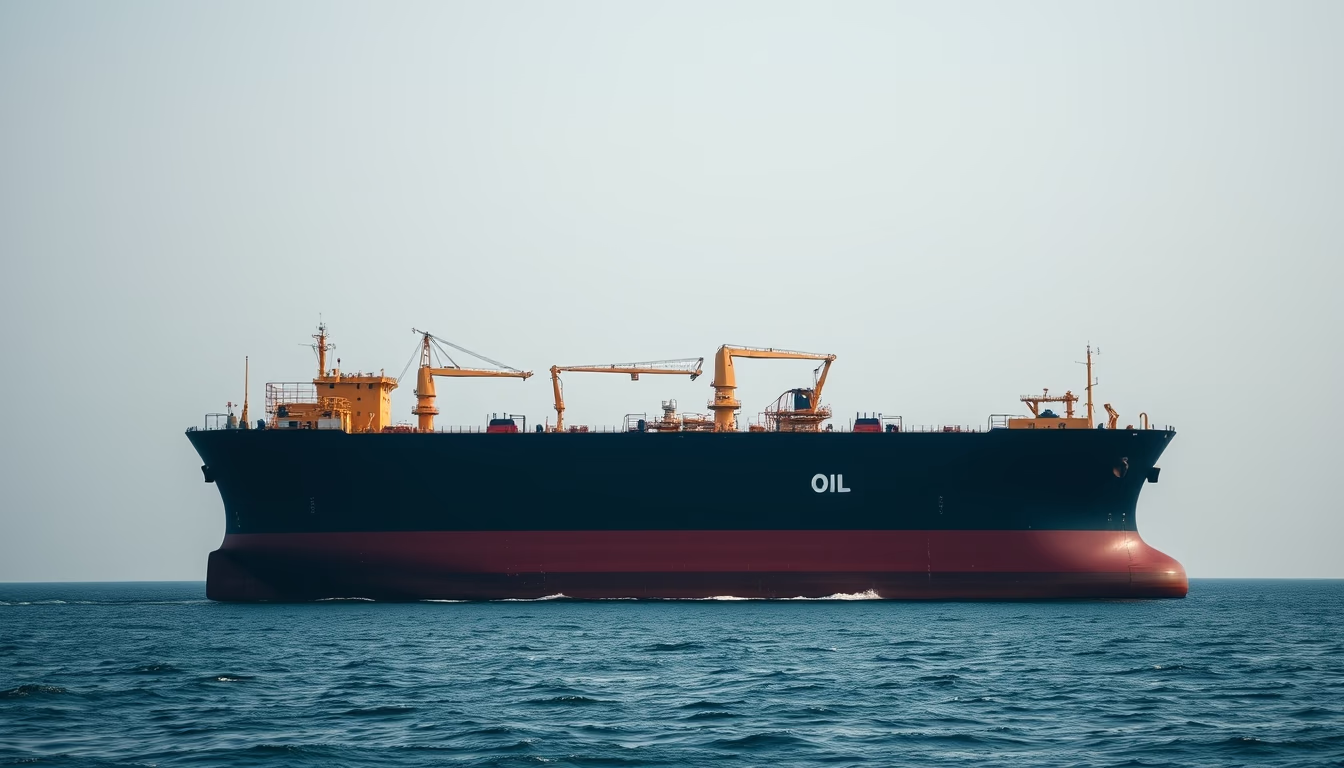
Massive oil tankers are crucial for global oil transport, carrying millions of barrels and connecting producers to consumers across oceans.
About this subject
Massive oil tankers, classified as VLCC (Very Large Crude Carriers) and ULCC (Ultra Large Crude Carriers), rank among the largest vessels ever built, designed for efficient long-distance crude oil transport. The largest ever, Seawise Giant, measured 458 meters in length and carried up to 4.1 million barrels, or 564,000 deadweight tons. These ships are vital to the global economy, handling roughly two-thirds of internationally traded oil.
In Brazil, tankers dock at terminals like Santos Port and Angra dos Reis, key hubs for exports and imports. The global fleet includes hundreds of such vessels, plying strategic routes such as the Strait of Hormuz, Suez Canal, and Malacca Strait. Modern construction emphasizes fuel efficiency and safety, with double hulls mandatory since 1993 to mitigate spill risks.
Despite their importance, tankers pose environmental threats. Accidents like the Exxon Valdez (1989) and Prestige (2002) caused massive ecological damage, prompting stricter regulations. Today, advanced navigation systems and crew training aim to prevent disasters, though operation in congested waters remains challenging. Interestingly, a tanker's lifespan is about 25 years, after which many are dismantled in Asian shipbreaking yards.
Frequently Asked Questions
What is the largest oil tanker ever built?
The largest oil tanker was the Seawise Giant, measuring 458 meters in length and capable of carrying 4.1 million barrels of oil. It was built in 1979 and decommissioned in 2010.
How are oil tankers classified by size?
Oil tankers are classified by deadweight tonnage: VLCC (Very Large Crude Carriers) carry 200,000 to 300,000 tons, and ULCC (Ultra Large Crude Carriers) exceed 300,000 tons.
What are the main environmental risks of oil tankers?
The main risk is oil spills, which can cause severe ecological damage. Double hulls and regulations like MARPOL reduce accidents, but spills still occur.
Direct URL
https://pub-c7d6a6ea828543ac903a74a341ccb2e1.r2.dev/imagens/oil-tanker-massive-minimalist-composition-p5.avifHow to credit
Include a visible link back to UtilizAí. Copy one of the snippets below:
<a href="https://xn--utiliza-eza.com/en/midia/imagens/oil-tanker-massive-minimalist-composition-p5">Oil tanker massive</a> by <a href="https://xn--utiliza-eza.com">UtilizAí</a>, licensed under <a href="https://creativecommons.org/licenses/by/4.0/">CC BY 4.0</a>.
[Oil tanker massive](https://xn--utiliza-eza.com/en/midia/imagens/oil-tanker-massive-minimalist-composition-p5) by [UtilizAí](https://xn--utiliza-eza.com), CC BY 4.0
License: CC-BY-4.0