Oil tanker massive
1344×768 · AVIF · CC BY 4.0
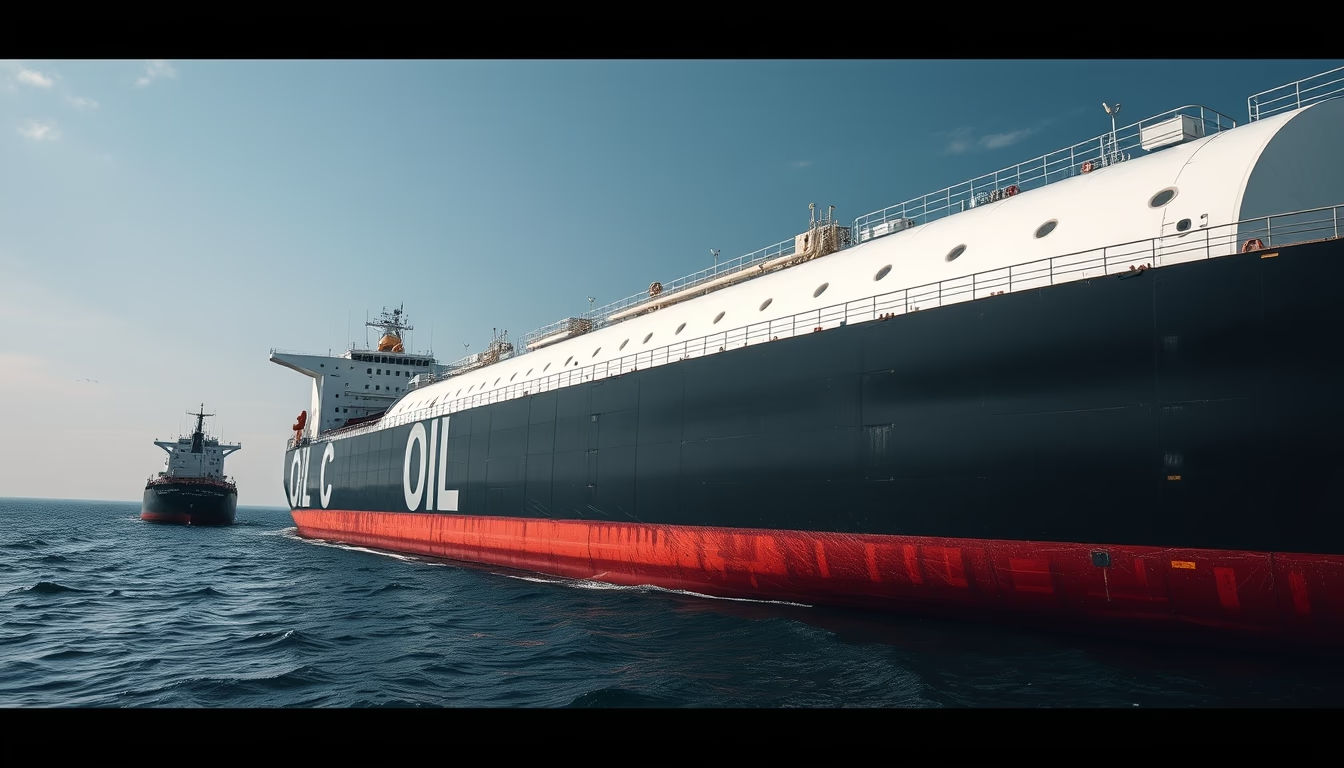
Large oil tankers, such as VLCCs and ULCCs, are ships designed to transport millions of barrels of crude oil across oceans.
About this subject
Oil tankers are specialized tank ships for transporting crude oil and its derivatives. Among them, VLCCs (Very Large Crude Carriers) and ULCCs (Ultra Large Crude Carriers) rank among the largest mobile structures ever built by humans. A typical VLCC measures about 330 meters in length, has a draft exceeding 20 meters, and can carry 2 million barrels of oil, equivalent to 320,000 metric tons. These ocean giants primarily operate on routes connecting the Middle East, the world's top oil producer, to consumer centers in Asia, Europe, and North America.
The construction of large-scale oil tankers began in the mid-20th century, driven by rising energy demand and the need to reduce logistics costs. The closure of the Suez Canal in 1967 during the Six-Day War forced ships to circumnavigate Africa, accelerating the development of larger, more efficient vessels. Today, the global tanker fleet accounts for about 30% of total maritime shipping by tonnage, moving approximately 1.9 billion tons of oil annually.
Despite their economic importance, oil tankers pose significant environmental risks. Accidents such as the Exxon Valdez (1989) and Prestige (2002) resulted in catastrophic spills, contaminating coastal ecosystems and causing billions in damages. To mitigate these risks, international regulations like MARPOL have required double hulls on all new vessels since the 1990s. Additionally, modern navigation systems, including GPS and advanced radar, have enhanced operational safety.
Technological innovations are also improving tanker energy efficiency. Low-speed engines and electric propulsion systems reduce fuel consumption and CO2 emissions. Some newer ships incorporate heat recovery technologies and hull optimization to minimize drag. Meanwhile, the sector faces the challenge of adapting to decarbonization goals. Alternative fuels such as LNG and ammonia are being tested, though their large-scale viability still requires significant investment in port infrastructure.
Frequently Asked Questions
What is the maximum capacity of a ULCC oil tanker?
ULCCs (Ultra Large Crude Carriers) can carry up to 4 million barrels of oil, about 550,000 metric tons. These ships can reach 400 meters in length and have a draft of 24 meters, limiting access to deep-water ports.
How do oil tankers prevent oil spills?
The main measure is the double hull, mandatory since 1993. The double hull creates a barrier between the oil and the sea, significantly reducing the risk of spillage in collisions or groundings. Additionally, inert gas systems and level sensors help prevent explosions and overflows.
What is the most common route for large oil tankers?
The busiest route connects the Middle East to Asia, especially for China, India, and Japan. Another major route goes from the Persian Gulf around the Cape of Good Hope, heading to Europe and the US East Coast.
Direct URL
https://pub-c7d6a6ea828543ac903a74a341ccb2e1.r2.dev/imagens/oil-tanker-massive-magazine-editorial-p7.avifHow to credit
Include a visible link back to UtilizAí. Copy one of the snippets below:
<a href="https://xn--utiliza-eza.com/en/midia/imagens/oil-tanker-massive-magazine-editorial-p7">Oil tanker massive</a> by <a href="https://xn--utiliza-eza.com">UtilizAí</a>, licensed under <a href="https://creativecommons.org/licenses/by/4.0/">CC BY 4.0</a>.
[Oil tanker massive](https://xn--utiliza-eza.com/en/midia/imagens/oil-tanker-massive-magazine-editorial-p7) by [UtilizAí](https://xn--utiliza-eza.com), CC BY 4.0
License: CC-BY-4.0