Oil tanker massive
1344×768 · AVIF · CC BY 4.0
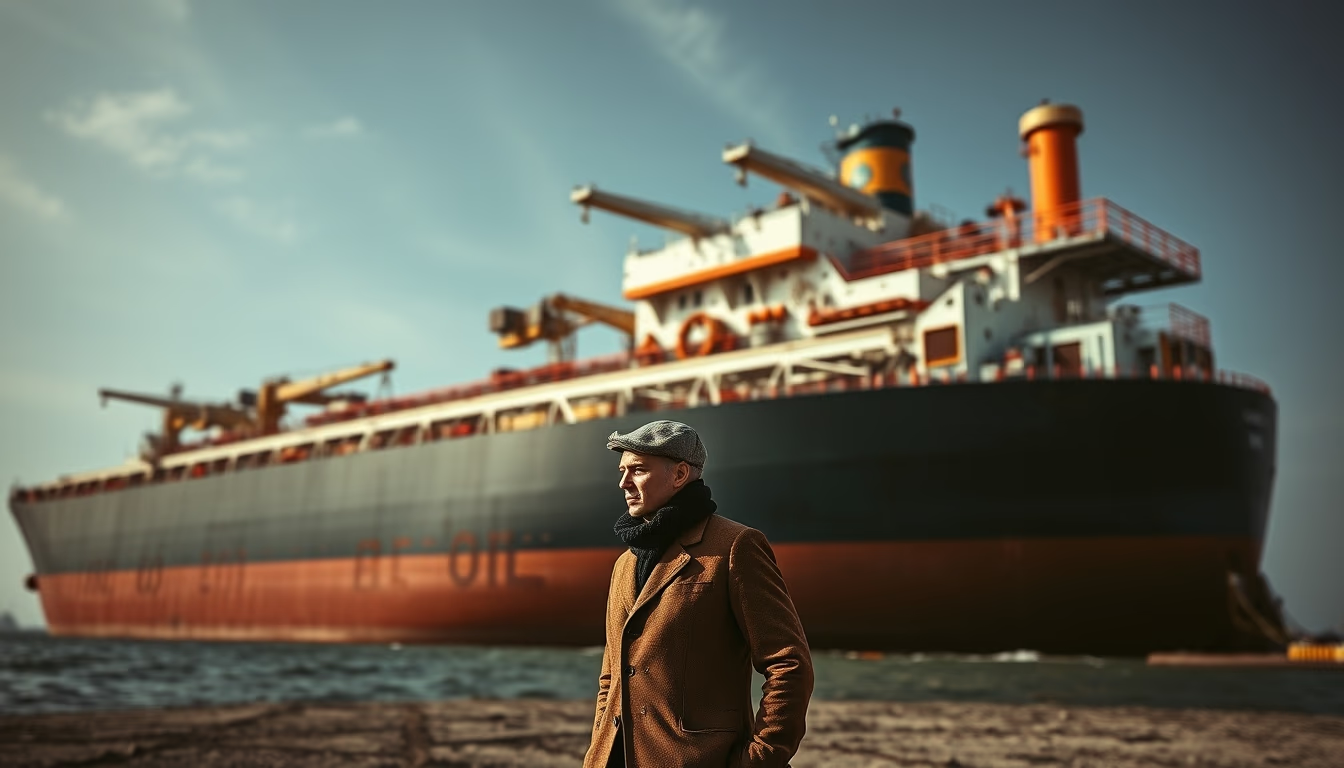
A massive oil tanker, crucial for global transport of crude oil and petroleum products, with capacity exceeding 200,000 tons.
About this subject
Large oil tankers, such as Very Large Crude Carriers (VLCC) and Ultra Large Crude Carriers (ULCC), handle approximately 60% of global crude oil transportation. These vessels can exceed 300 meters in length and have a draft over 20 meters, requiring specially adapted ports and channels. The largest ever built, the Seawise Giant, measured 458 meters and could carry 564,000 tons of cargo.
Oil logistics rely on these giants to connect producing regions like the Middle East, Africa, and Latin America to refining centers in Asia, Europe, and the US. A single VLCC voyage can transport enough oil to supply a small country for months. However, size imposes challenges: minimum navigation depth is around 25 meters, restricting routes like the Panama Canal or the Strait of Malacca.
Environmentally, tanker accidents cause catastrophic damage, such as the Exxon Valdez (1989) or Prestige (2002) spills. To mitigate risks, the International Maritime Organization implemented double-hull requirements, mandatory for new ships since 1993. The global tanker fleet exceeds 10,000 vessels, moving about 2 billion tons of oil annually.
Economically, tanker freight rates are volatile, influenced by oil supply and demand, geopolitical tensions, and idle capacity. Shipping companies invest in ever-larger vessels for economies of scale, but oversupply has led to periods of low rates. Decarbonization pressures the sector to seek alternative fuels like LNG or ammonia to reduce emissions.
Frequently Asked Questions
What is the typical capacity of a VLCC oil tanker?
A VLCC (Very Large Crude Carrier) carries between 200,000 and 320,000 tons of crude oil, equivalent to about 2 million barrels.
What are the main environmental risks of oil tankers?
Accidental spills can devastate marine and coastal ecosystems. Measures like double hulls and ballast systems reduce risk but do not eliminate accidents.
How is the tanker industry adapting to decarbonization targets?
New vessels are being designed to use cleaner fuels such as LNG, methanol, or ammonia. Energy efficiency also improves with optimized hull designs and wind-assisted propulsion.
Direct URL
https://pub-c7d6a6ea828543ac903a74a341ccb2e1.r2.dev/imagens/oil-tanker-massive-high-fashion-editorial-p11.avifHow to credit
Include a visible link back to UtilizAí. Copy one of the snippets below:
<a href="https://xn--utiliza-eza.com/en/midia/imagens/oil-tanker-massive-high-fashion-editorial-p11">Oil tanker massive</a> by <a href="https://xn--utiliza-eza.com">UtilizAí</a>, licensed under <a href="https://creativecommons.org/licenses/by/4.0/">CC BY 4.0</a>.
[Oil tanker massive](https://xn--utiliza-eza.com/en/midia/imagens/oil-tanker-massive-high-fashion-editorial-p11) by [UtilizAí](https://xn--utiliza-eza.com), CC BY 4.0
License: CC-BY-4.0