Oil tanker massive
1344×768 · AVIF · CC BY 4.0
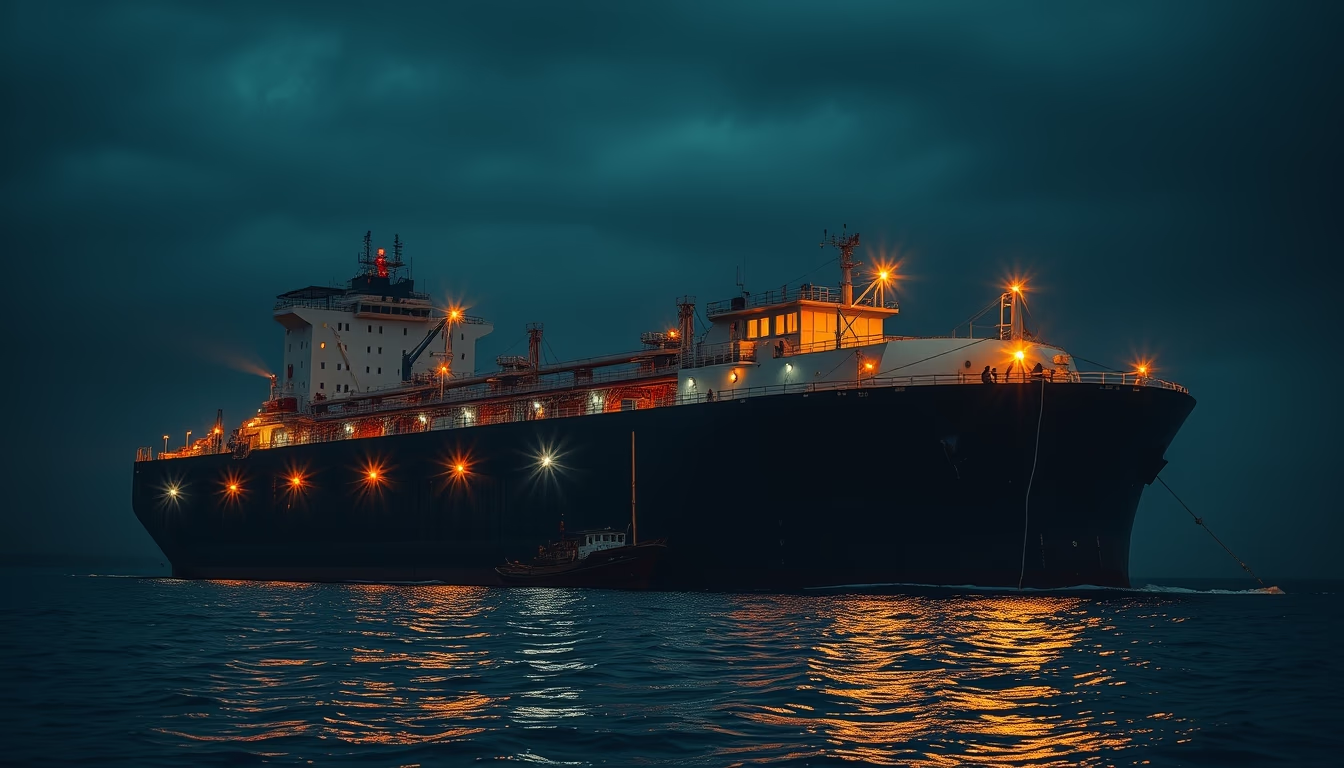
Oil tankers are among the largest mobile structures ever built by humans, transporting millions of barrels of petroleum across oceans.
About this subject
Oil tankers, also known as petroleum tankers, are vessels designed for transporting crude oil and its derivatives. They vary greatly in size, from small coastal ships to giants like the Seawise Giant, which measured over 458 meters in length and had a deadweight tonnage of about 564,000 tons. These supertankers are classified as VLCC (Very Large Crude Carrier) or ULCC (Ultra Large Crude Carrier), with cargo capacities exceeding 200,000 tons.
The history of oil tankers dates back to the late 19th century, with the development of the first modern tanker, the Zoroaster, in 1878. Since then, the growth of global oil trade drove the construction of increasingly larger vessels, especially after World War II. The oil crisis and the closure of the Suez Canal in the 1960s-1970s prompted the building of ULCCs to navigate around the Cape of Good Hope, a longer route that demanded greater capacity.
Maritime transportation of oil is crucial for the global economy, moving approximately 60% of all oil produced. However, the operation of these ships carries significant environmental risks, such as oil spills that can cause long-term ecological damage. Historical accidents, like the Exxon Valdez in 1989 and the Prestige in 2002, led to stricter regulations, including the requirement for double hulls on new tankers starting in the 1990s.
Today, tankers are built with advanced navigation and safety systems, such as segregated ballast and emergency response equipment. The global tanker fleet consists of thousands of vessels, with prominent flag of convenience countries like Panama and Liberia. Despite challenges, oil tankers remain the backbone of the world's energy supply.
Frequently Asked Questions
What is the largest oil tanker ever built?
The largest oil tanker ever built was the Seawise Giant, also known as Knock Nevis. It measured 458.45 meters in length and had a deadweight tonnage of about 564,000 tons. It was constructed in 1979 and scrapped in 2010.
How many barrels of oil can an oil tanker carry?
A typical VLCC tanker can carry about 2 million barrels of oil, while an ULCC can carry up to 4 million barrels. Capacity varies based on the ship's size and design.
What are the main environmental risks associated with oil tankers?
The primary risk is oil spills, which can occur due to collisions, groundings, or structural failures. Spills cause severe damage to marine life and coastal ecosystems, with impacts lasting decades. Measures like double hulls and crew training aim to reduce these risks.
Direct URL
https://pub-c7d6a6ea828543ac903a74a341ccb2e1.r2.dev/imagens/oil-tanker-massive-fine-art-photography-p6.avifHow to credit
Include a visible link back to UtilizAí. Copy one of the snippets below:
<a href="https://xn--utiliza-eza.com/en/midia/imagens/oil-tanker-massive-fine-art-photography-p6">Oil tanker massive</a> by <a href="https://xn--utiliza-eza.com">UtilizAí</a>, licensed under <a href="https://creativecommons.org/licenses/by/4.0/">CC BY 4.0</a>.
[Oil tanker massive](https://xn--utiliza-eza.com/en/midia/imagens/oil-tanker-massive-fine-art-photography-p6) by [UtilizAí](https://xn--utiliza-eza.com), CC BY 4.0
License: CC-BY-4.0