Oil tanker massive
1344×768 · AVIF · CC BY 4.0
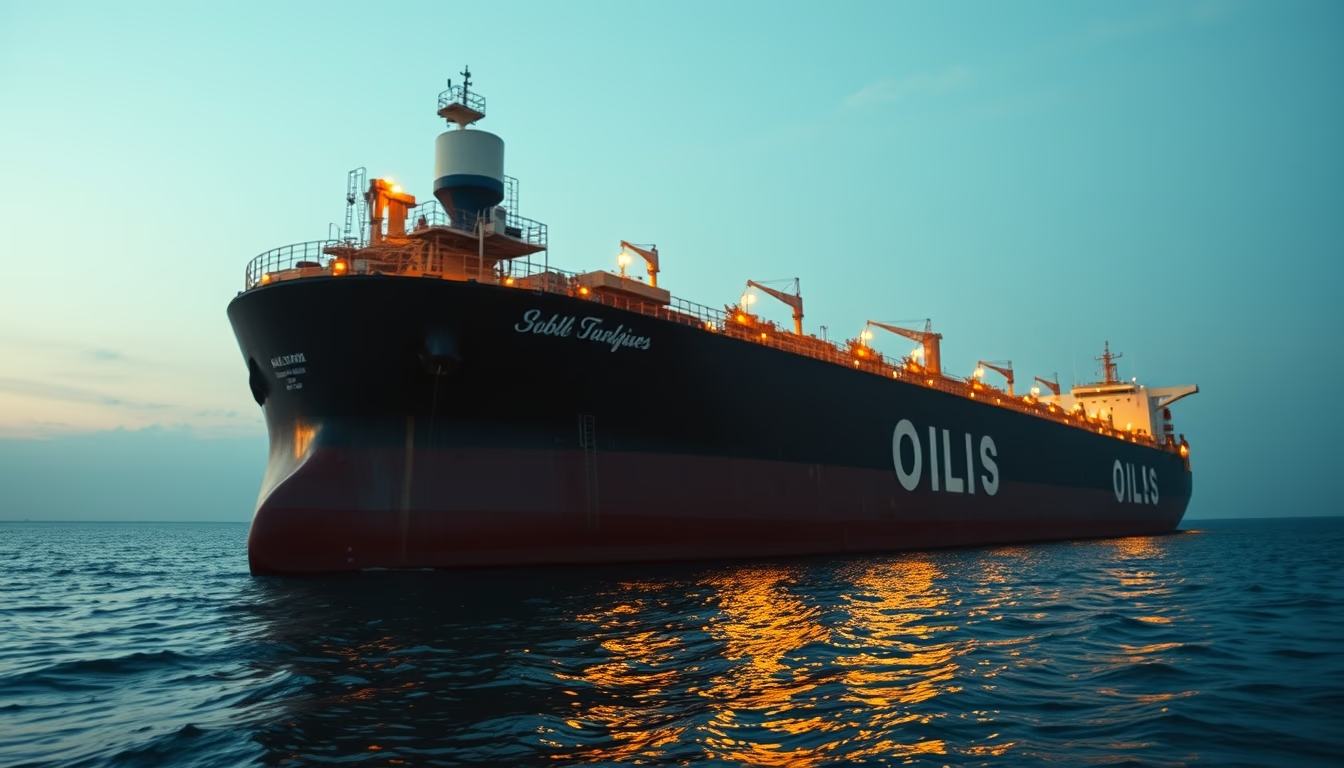
Massive oil tanker used for transporting crude oil and petroleum products across the world's oceans.
About this subject
Oil tankers are vessels specifically designed for transporting crude oil and its refined products. They are classified by size: VLCCs (Very Large Crude Carriers) have a deadweight tonnage (DWT) between 200,000 and 320,000, while ULCCs (Ultra Large Crude Carriers) exceed 320,000 DWT. The first modern oil tanker, the Glückauf, was launched in 1886, revolutionizing the maritime oil trade. Today, the largest tankers can measure over 400 meters in length and carry up to 2 million barrels of oil.
These ships are economically crucial, moving approximately 60% of globally traded oil. Major routes originate in the Middle East, heading to Asia, Europe, and the Americas, passing through chokepoints like the Strait of Hormuz and the Suez Canal. Their deep draft, often exceeding 20 meters, limits the ports that can accommodate them, requiring deepwater terminals or offshore lightering operations.
Environmental concerns are central to the debate on oil tankers. Spills such as the Exxon Valdez (1989) and Prestige (2002) led to stricter regulations, including mandatory double hulls for new vessels starting in the 1990s. Additionally, inert gas systems and crude oil washing protocols reduce explosion risks and pollution. Despite improvements, maintenance and enforcement remain challenges, particularly for older ships.
Frequently Asked Questions
How much oil can an oil tanker carry?
Capacity varies by class. VLCCs carry between 200,000 and 320,000 deadweight tons, equivalent to about 1.5 to 2 million barrels of oil. ULCCs can reach 550,000 DWT (approximately 4 million barrels).
What is the largest oil tanker ever built?
The largest oil tanker was the Seawise Giant (also known as Knock Nevis), with a length of 458 meters and 564,763 DWT. Launched in 1979, it was scrapped in 2010.
How do oil tankers prevent oil spills?
Modern tankers have double hulls, segregated ballast tanks, and inert gas systems. They also conduct constant pressure monitoring and use sensors, adhering to international regulations such as MARPOL.
Direct URL
https://pub-c7d6a6ea828543ac903a74a341ccb2e1.r2.dev/imagens/oil-tanker-massive-documentary-photography-p0.avifHow to credit
Include a visible link back to UtilizAí. Copy one of the snippets below:
<a href="https://xn--utiliza-eza.com/en/midia/imagens/oil-tanker-massive-documentary-photography-p0">Oil tanker massive</a> by <a href="https://xn--utiliza-eza.com">UtilizAí</a>, licensed under <a href="https://creativecommons.org/licenses/by/4.0/">CC BY 4.0</a>.
[Oil tanker massive](https://xn--utiliza-eza.com/en/midia/imagens/oil-tanker-massive-documentary-photography-p0) by [UtilizAí](https://xn--utiliza-eza.com), CC BY 4.0
License: CC-BY-4.0