Oil tanker massive
1344×768 · AVIF · CC BY 4.0
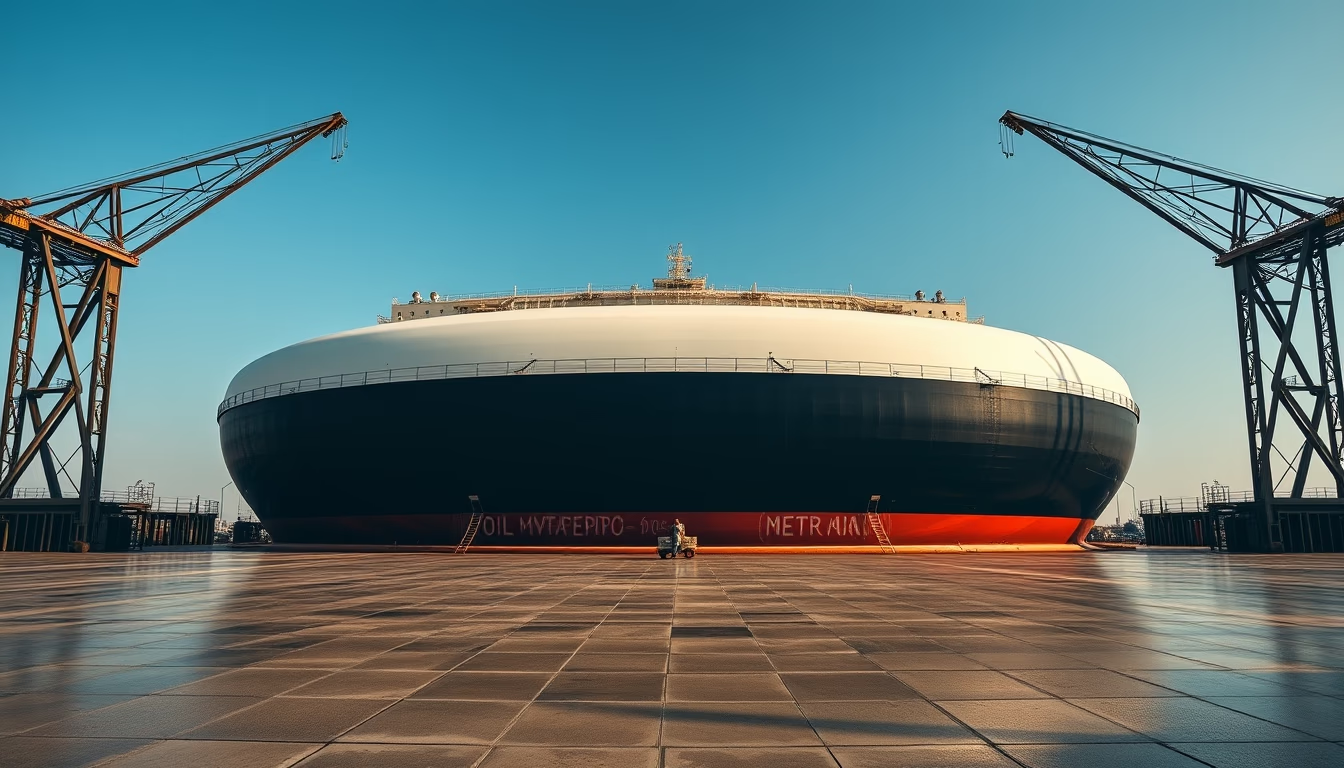
Massive oil tanker vital for global crude oil and petroleum product transport, capable of carrying millions of barrels.
About this subject
Oil tankers, such as the one depicted, are designed to transport crude oil or petroleum products in bulk. They range from small barges to gigantic ULCCs (Ultra Large Crude Carriers) and VLCCs (Very Large Crude Carriers), which can exceed 300 meters in length and 200,000 deadweight tonnage. Over 30% of global maritime trade by tonnage is carried by these vessels, following strategic routes from the Middle East to Asia, Europe, and North America.
The architecture of these ships is optimized for efficiency and safety. The hull is divided into tanks separated by watertight bulkheads, and since the 1990s, double hulls have been mandatory to prevent spills. The largest tanker ever built, the Seawise Giant (over 500,000 DWT), was later converted into a storage platform. Architectural photography highlights the monumental scale and functional lines of these sea giants, which even at rest convey an industrial power.
Historical accidents like the Exxon Valdez (1989) and Torrey Canyon (1967) led to strict environmental regulations, including the US Oil Pollution Act and IMO maritime safety rules. Modern tankers feature advanced navigation systems and maneuver with tugboat assistance in busy ports such as Rotterdam, Singapore, and Santos.
In Brazil, Petrobras operates a fleet of tankers to export pre-salt oil. Suezmax vessels (120,000-200,000 DWT) are common in the Campos Basin. The image, categorized as architectural photography, captures the imposing presence of these floating structures, combining naval engineering and global logistics.
Frequently Asked Questions
What is the cargo capacity of a typical oil tanker?
A typical VLCC can carry up to 2 million barrels of oil, equivalent to about 300,000 tons.
What is a double hull and why is it important?
A double hull is a structure with two steel layers separated by a void, reducing spill risk in collisions or groundings. It has been mandatory for new tankers since 1993.
How do oil tankers discharge oil at port?
Through onboard pumps that transfer the cargo to onshore tanks via flexible hoses connected to specialized terminals.
Direct URL
https://pub-c7d6a6ea828543ac903a74a341ccb2e1.r2.dev/imagens/oil-tanker-massive-architectural-photography-p12.avifHow to credit
Include a visible link back to UtilizAí. Copy one of the snippets below:
<a href="https://xn--utiliza-eza.com/en/midia/imagens/oil-tanker-massive-architectural-photography-p12">Oil tanker massive</a> by <a href="https://xn--utiliza-eza.com">UtilizAí</a>, licensed under <a href="https://creativecommons.org/licenses/by/4.0/">CC BY 4.0</a>.
[Oil tanker massive](https://xn--utiliza-eza.com/en/midia/imagens/oil-tanker-massive-architectural-photography-p12) by [UtilizAí](https://xn--utiliza-eza.com), CC BY 4.0
License: CC-BY-4.0