Mussel ropes ocean
1344×768 · AVIF · CC BY 4.0
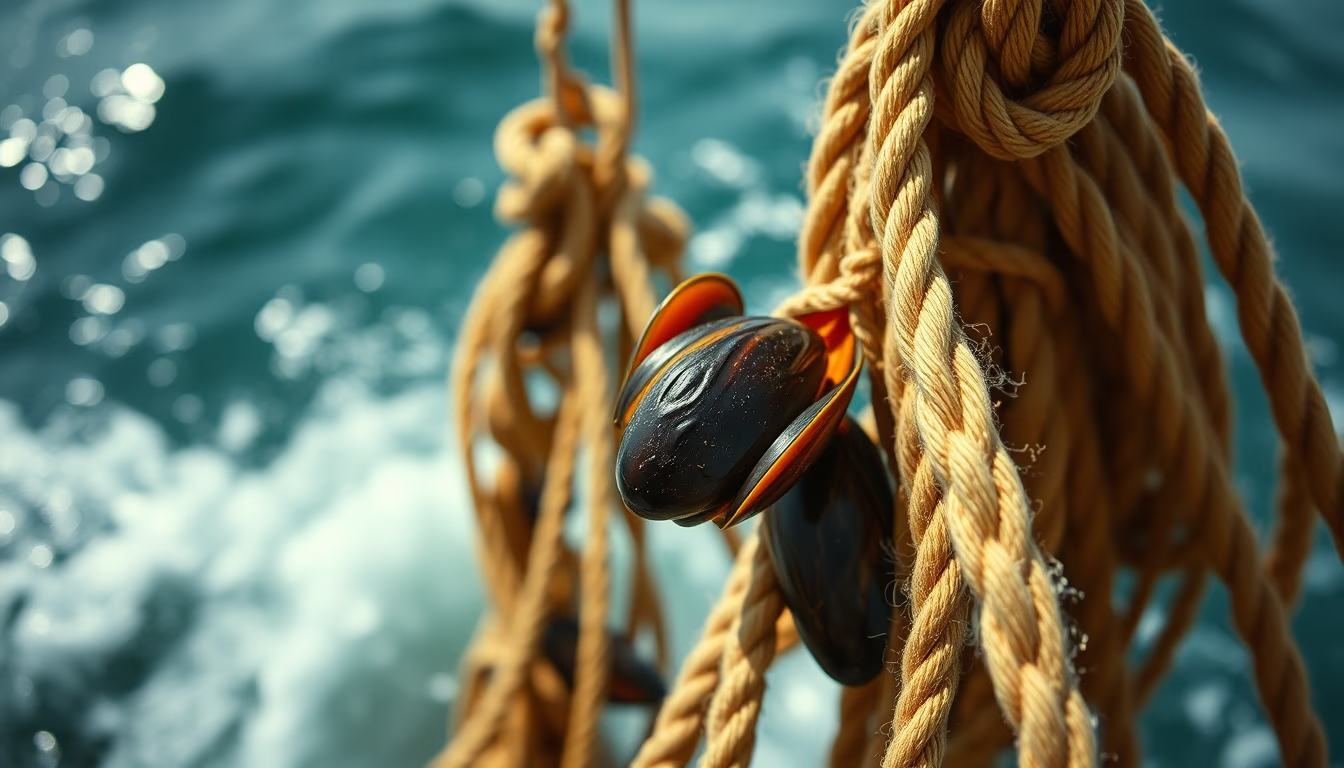
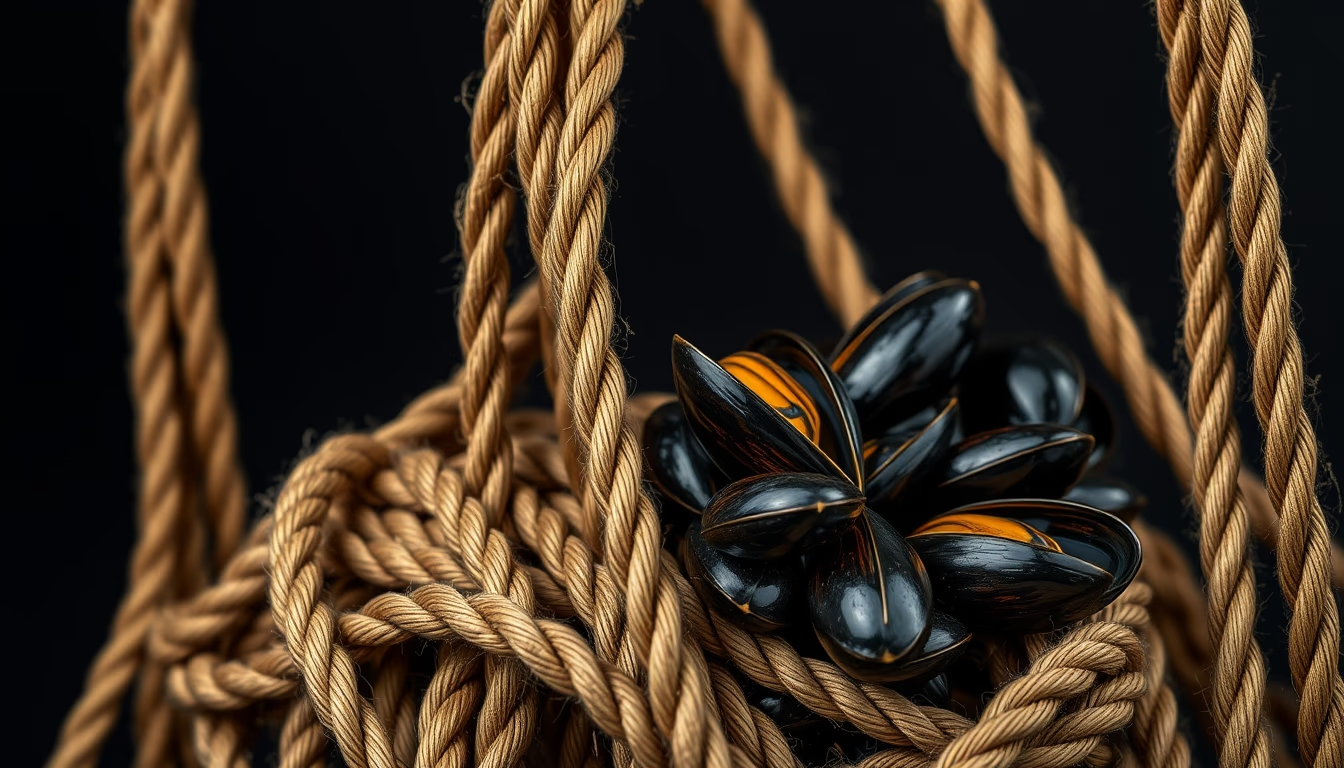
Mussel ropes suspended in the sea form the backbone of mussel farming, a technique that supports coastal communities.
About this subject
Mussel farming, or miticulture, uses ropes suspended from floating structures in the ocean to grow bivalve mollusks. The ropes, typically made of synthetic or natural fibers, are submerged in the water column and serve as a substrate for mussel larvae to attach and develop until they reach commercial size.
In Brazil, most mussel production occurs along the coast of Santa Catarina, especially in Florianópolis and the bays of São Francisco do Sul and Santa Catarina Island. The state accounts for about 95% of national production, involving over 5,000 mariculturists. The rope technique is the most widespread because of its low cost and high density potential in open sea or sheltered bays.
The cultivation cycle lasts 6 to 9 months, depending on water temperature and food availability (phytoplankton). Mussels are natural filter feeders: one individual can filter up to 5 liters of water per hour, helping to clarify the water and reduce nutrient excess. This makes mussel farming a low environmental impact activity compared to other intensive aquaculture methods.
Economically, mussel production generates income for fishing communities and boosts local economies, mainly through fresh sales or processed products (frozen, canned). Demand has been rising both domestically and abroad, with exports to Europe and the United States. Despite challenges such as pollution and climate change, mussel farming is considered sustainable with growth potential.
Frequently Asked Questions
How are mussel ropes installed at sea?
Ropes are attached to floating structures such as long-lines or rafts and kept submerged by buoys and weights. Mussel larvae (spat) can be collected from the wild or added artificially.
How long does it take for mussels to grow on the ropes?
The cultivation cycle lasts 6 to 9 months, depending on water temperature and food availability. After this period, mussels reach commercial size (about 5 to 8 cm in length).
Does mussel farming harm the marine environment?
No. Mussels are filter feeders that improve water quality by removing suspended particles. The cultivation has low impact if properly managed, without excess density or use of chemicals.
Direct URL
https://pub-c7d6a6ea828543ac903a74a341ccb2e1.r2.dev/imagens/mussel-ropes-ocean-lo-fi-disposable-camera-fresh9.avifHow to credit
Include a visible link back to UtilizAí. Copy one of the snippets below:
<a href="https://xn--utiliza-eza.com/en/midia/imagens/mussel-ropes-ocean-lo-fi-disposable-camera-fresh9">Mussel ropes ocean</a> by <a href="https://xn--utiliza-eza.com">UtilizAí</a>, licensed under <a href="https://creativecommons.org/licenses/by/4.0/">CC BY 4.0</a>.
[Mussel ropes ocean](https://xn--utiliza-eza.com/en/midia/imagens/mussel-ropes-ocean-lo-fi-disposable-camera-fresh9) by [UtilizAí](https://xn--utiliza-eza.com), CC BY 4.0
License: CC-BY-4.0