Mussel ropes ocean
1344×768 · AVIF · CC BY 4.0
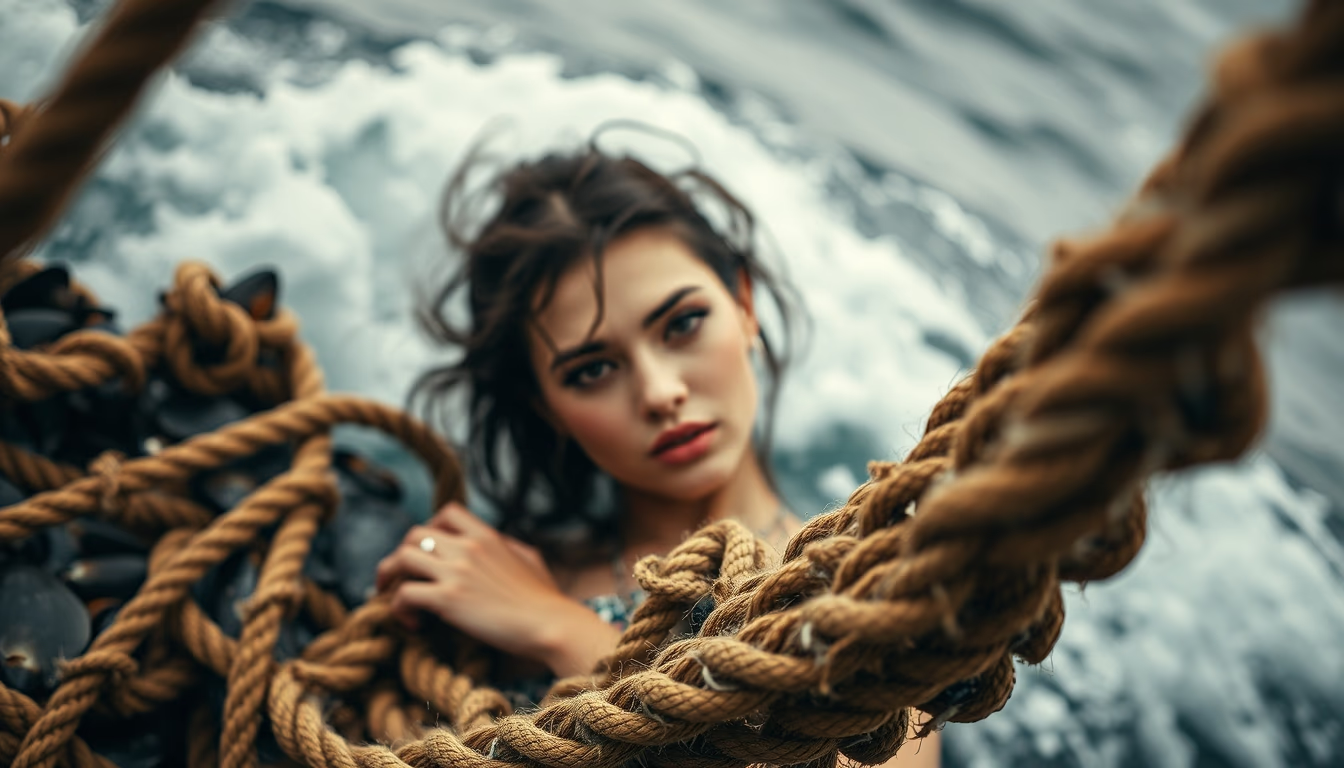
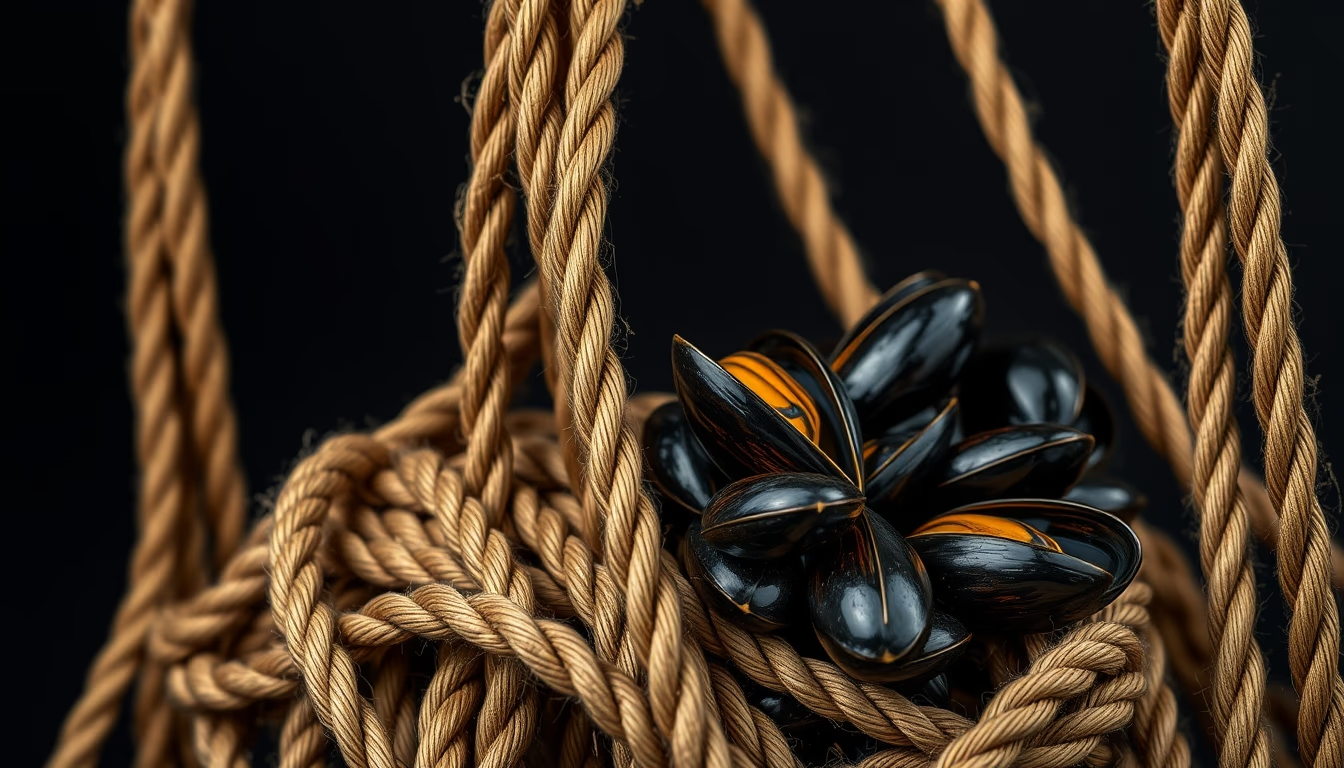
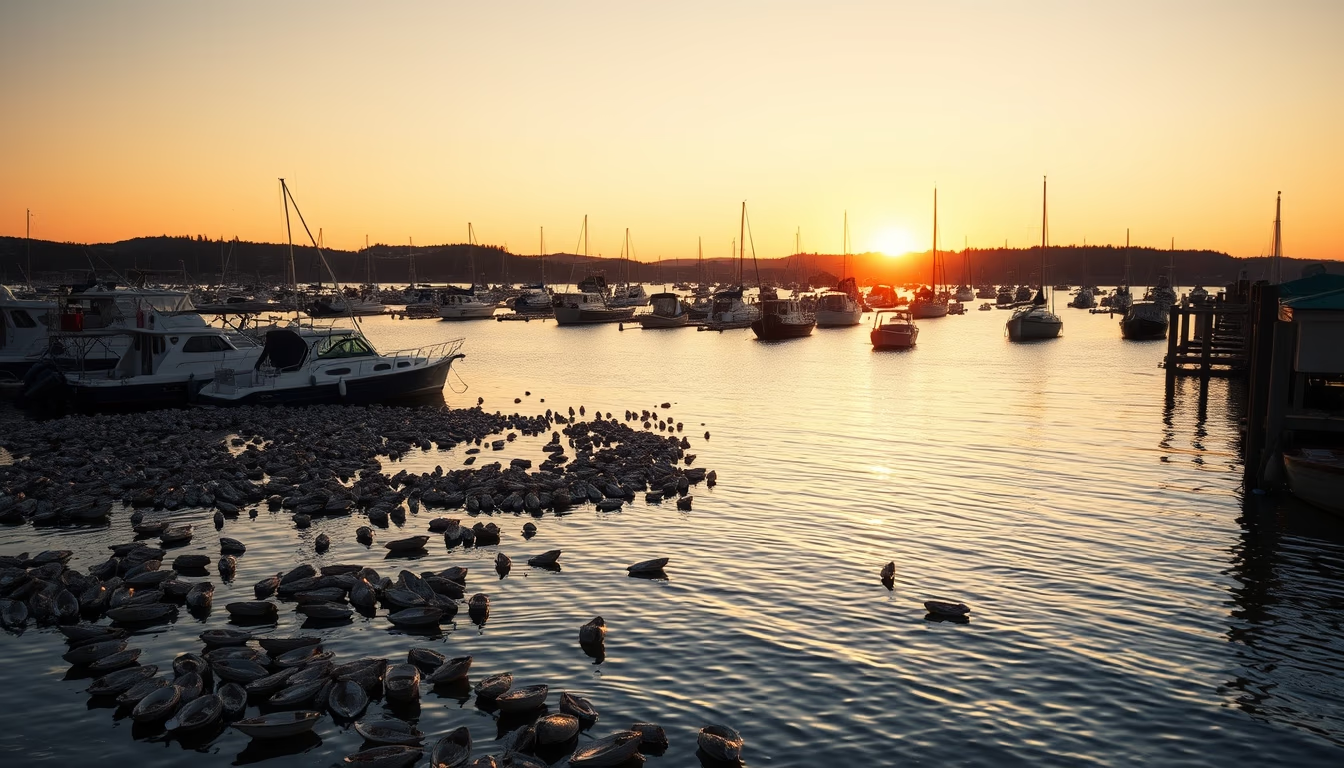
Mussel farming on suspended ropes in the ocean is a sustainable and productive technique, widely used along the Brazilian coast.
About this subject
Mussel farming using suspended ropes, known as long-line systems, involves polypropylene or nylon ropes attached to buoys. Mussel seeds are fixed onto these ropes, which remain submerged for months until harvest. This method avoids contact with the seafloor, reducing predation and sediment buildup, resulting in cleaner meat.
In Brazil, Santa Catarina state accounts for over 90% of national production, mainly in cities like Florianópolis, Palhoça, and Bombinhas. The rope culture technique was introduced in the 1990s and now supports thousands of artisanal fishing families. The region benefits from plankton-rich waters and moderate currents.
Environmentally, rope farming requires no feed or antibiotics, as mussels filter natural nutrients from the water. This improves surrounding water quality by reducing turbidity and excess phytoplankton. Studies indicate that a mussel farm can filter up to 200,000 liters of water per hour per hectare.
Economically, the production chain generates direct and indirect jobs, from seed production to processing for fresh or canned consumption. Brazil still imports mussels from Europe and Chile, but domestic production is growing, supported by policies favoring family aquaculture.
Frequently Asked Questions
How are mussels cultivated on suspended ropes?
Mussel seeds are attached to polypropylene or nylon ropes that are suspended from buoys. After 6 to 12 months, the mussels reach market size and are harvested manually or with machinery.
What are the environmental benefits of rope culture?
This method requires no feed, antibiotics, or chemicals, as mussels feed by filtration. It helps clarify water and reduce eutrophication. Additionally, there is no impact on the seafloor, and the structures act as artificial reefs for other species.
Where in Brazil is mussel farming most prominent?
Santa Catarina state leads production, especially in the bays of Florianópolis, Palhoça, and Bombinhas. Other states like São Paulo, Rio de Janeiro, and Paraná have smaller-scale operations.
Direct URL
https://pub-c7d6a6ea828543ac903a74a341ccb2e1.r2.dev/imagens/mussel-ropes-ocean-high-fashion-editorial-fresh6.avifHow to credit
Include a visible link back to UtilizAí. Copy one of the snippets below:
<a href="https://xn--utiliza-eza.com/en/midia/imagens/mussel-ropes-ocean-high-fashion-editorial-fresh6">Mussel ropes ocean</a> by <a href="https://xn--utiliza-eza.com">UtilizAí</a>, licensed under <a href="https://creativecommons.org/licenses/by/4.0/">CC BY 4.0</a>.
[Mussel ropes ocean](https://xn--utiliza-eza.com/en/midia/imagens/mussel-ropes-ocean-high-fashion-editorial-fresh6) by [UtilizAí](https://xn--utiliza-eza.com), CC BY 4.0
License: CC-BY-4.0