Mussel ropes ocean
1344×768 · AVIF · CC BY 4.0
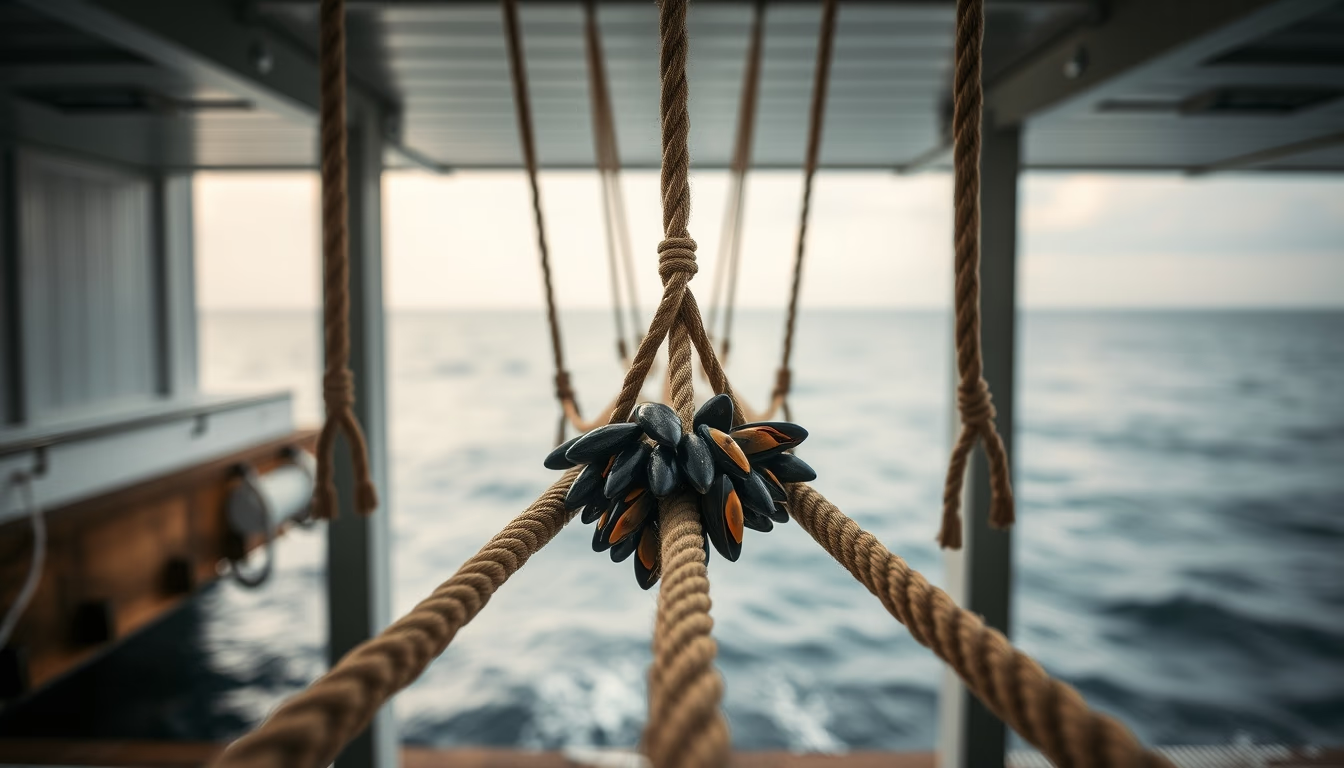
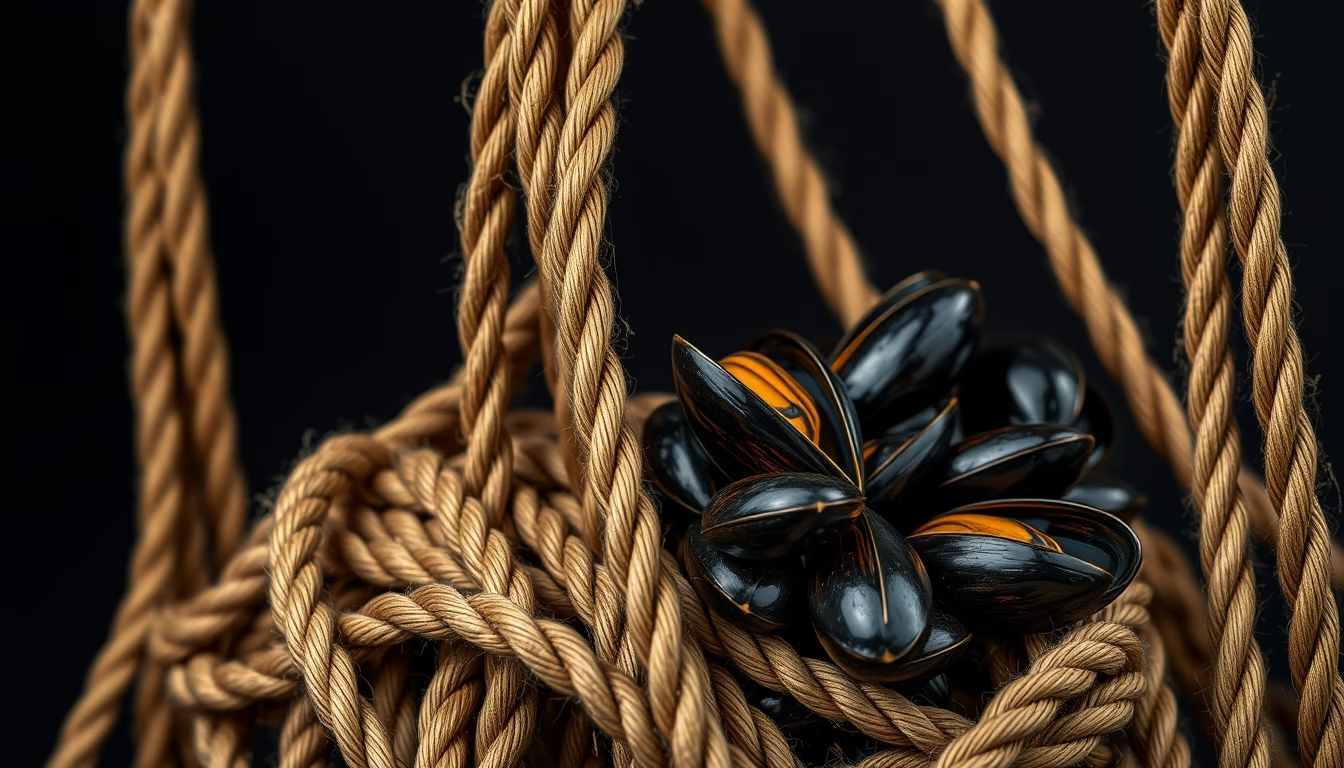
Exploration of mussel ropes in the ocean, an aquaculture technique that produces mollusks suspended on long floating lines, common along Brazilian and global coastlines.
About this subject
Mussel aquaculture, also known as miticulture, involves growing mussels on ropes or long-lines suspended in the water column, typically in sheltered coastal areas. In this system, ropes are stretched horizontally and kept afloat by buoys, while mussel spat attaches naturally or is manually seeded. As they grow, the mollusks form clusters along the ropes, which are periodically inspected and harvested. In Brazil, the native species Perna perna is the most cultivated, especially in the states of Santa Catarina and São Paulo, where production reaches about 20 thousand tons per year.
The rope culture method is efficient because it allows high density of animals in a small area, using water currents for natural feeding by filtration. Mussels are filter feeders that consume plankton and suspended organic matter, improving water quality around the farms. This makes mussel farming a low-impact aquaculture practice when properly managed. Mussel farms also provide habitat for other marine species, enhancing local biodiversity.
Globally, mussel production exceeds 2 million tons annually, with leading producers including China, Chile, and European countries such as Spain and France. In Brazil, the activity is predominantly small-scale, carried out by coastal communities and cooperatives. Harvesting occurs after 6 to 12 months of cultivation, when mussels reach market size. The ropes are removed from the water, and the mollusks are separated manually or by machines, then processed. Mussel farming contributes to food security and income generation while offering a sustainable alternative to extractive fisheries.
Frequently Asked Questions
How does mussel rope culture work?
Rope culture uses long floating lines attached to buoys, where mussel spat attaches. The mollusks grow suspended in the water, feeding by filtration, and are harvested after 6 to 12 months.
Which mussel species are cultivated in Brazil?
The main cultivated species in Brazil is the brown mussel Perna perna, native to the Brazilian coast. Exotic species like Mytilus galloprovincialis are also farmed in some regions.
What is the ecological importance of mussel farming?
Mussels are filter feeders that remove suspended particles from water, improving quality. Farm structures create artificial reefs that host other organisms, enhancing local biodiversity.
Direct URL
https://pub-c7d6a6ea828543ac903a74a341ccb2e1.r2.dev/imagens/mussel-ropes-ocean-architectural-photography-fresh7.avifHow to credit
Include a visible link back to UtilizAí. Copy one of the snippets below:
<a href="https://xn--utiliza-eza.com/en/midia/imagens/mussel-ropes-ocean-architectural-photography-fresh7">Mussel ropes ocean</a> by <a href="https://xn--utiliza-eza.com">UtilizAí</a>, licensed under <a href="https://creativecommons.org/licenses/by/4.0/">CC BY 4.0</a>.
[Mussel ropes ocean](https://xn--utiliza-eza.com/en/midia/imagens/mussel-ropes-ocean-architectural-photography-fresh7) by [UtilizAí](https://xn--utiliza-eza.com), CC BY 4.0
License: CC-BY-4.0