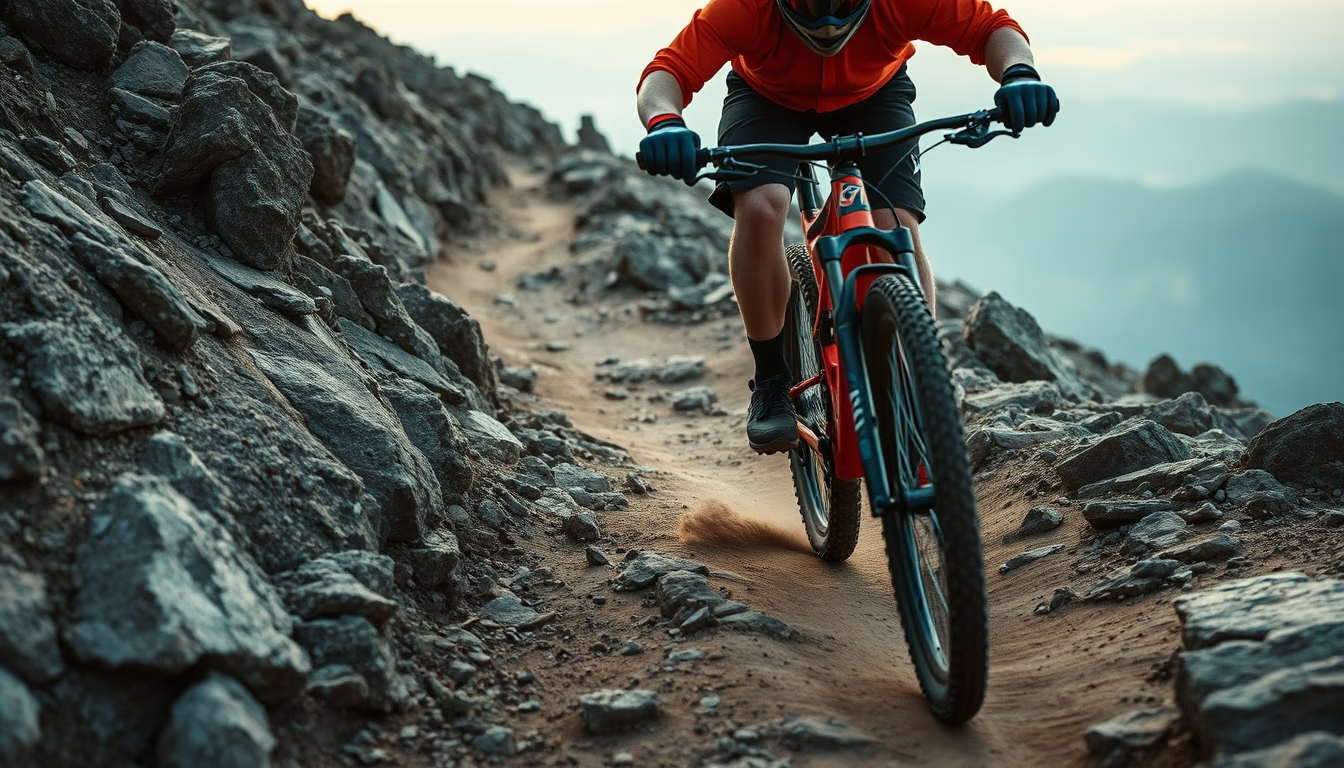
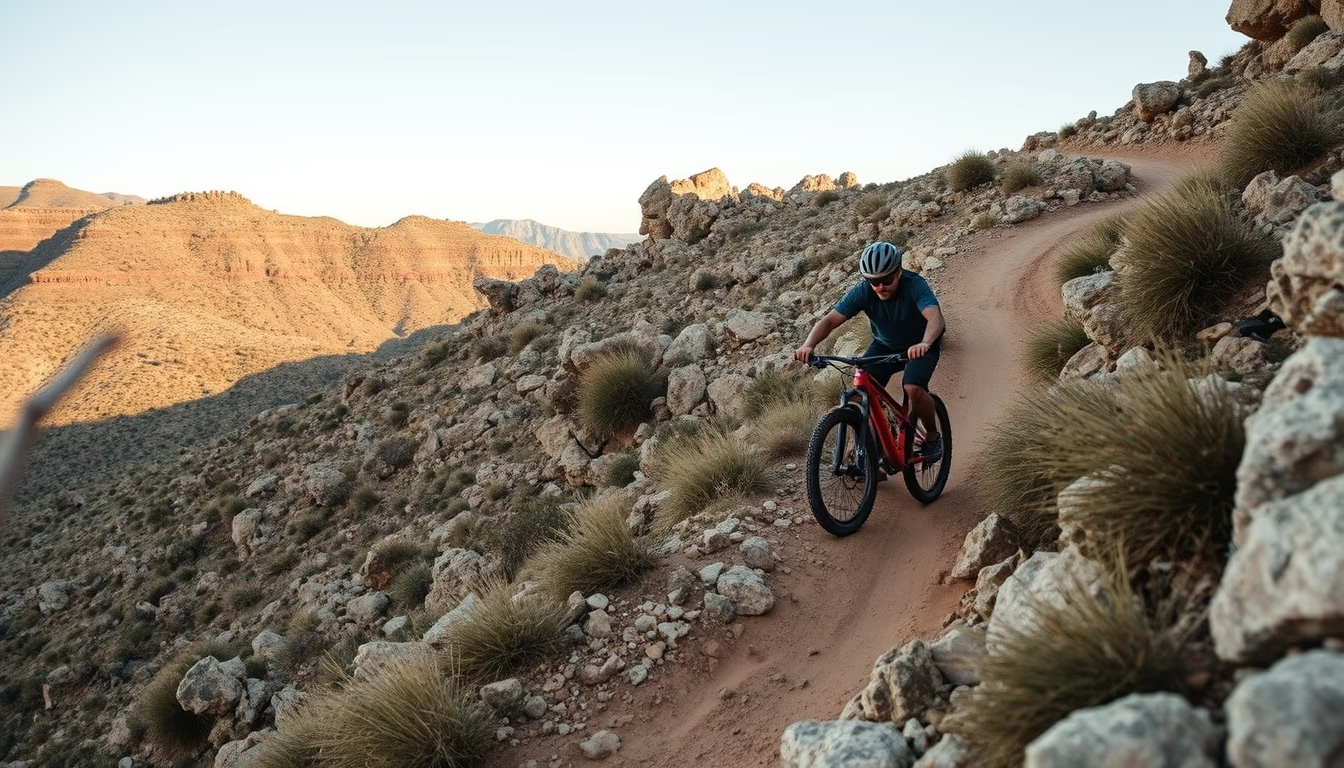
Mtb rocky trail descent
1344×768 · AVIF · CC BY 4.0
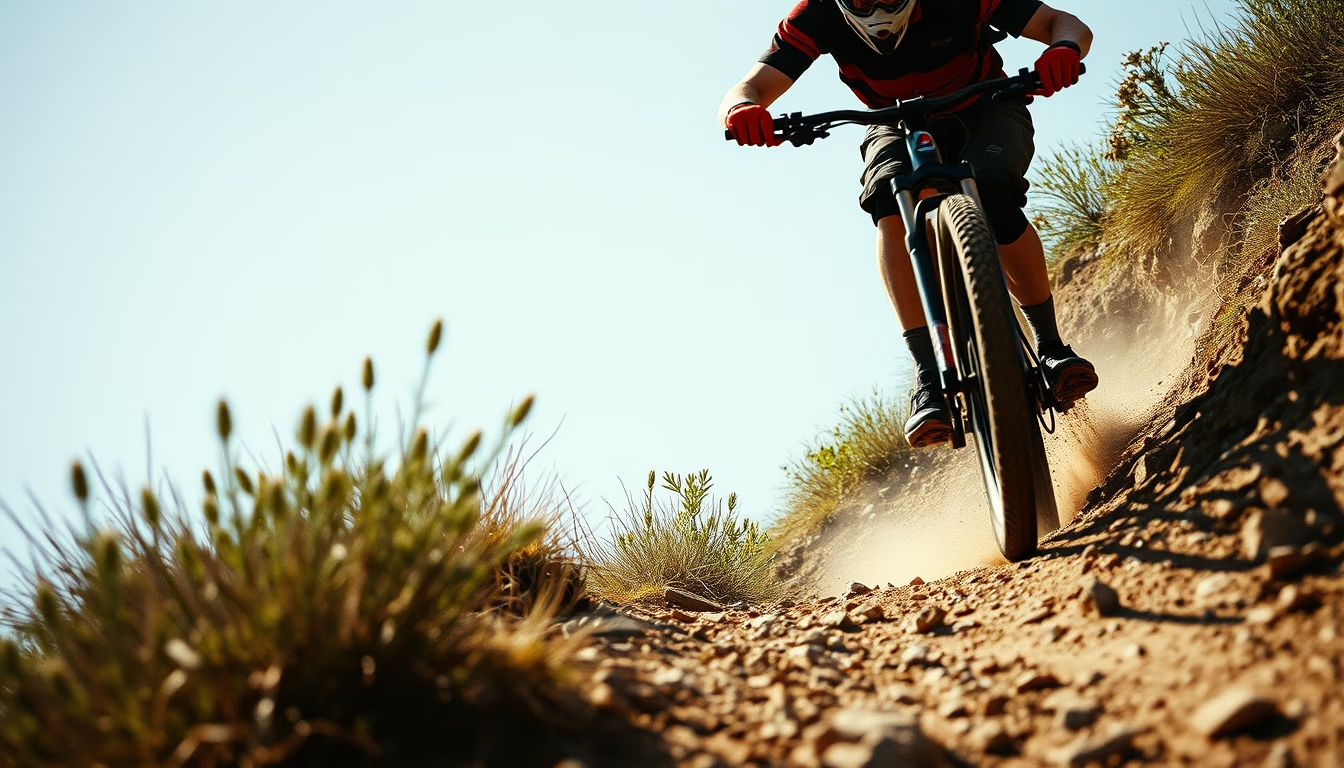
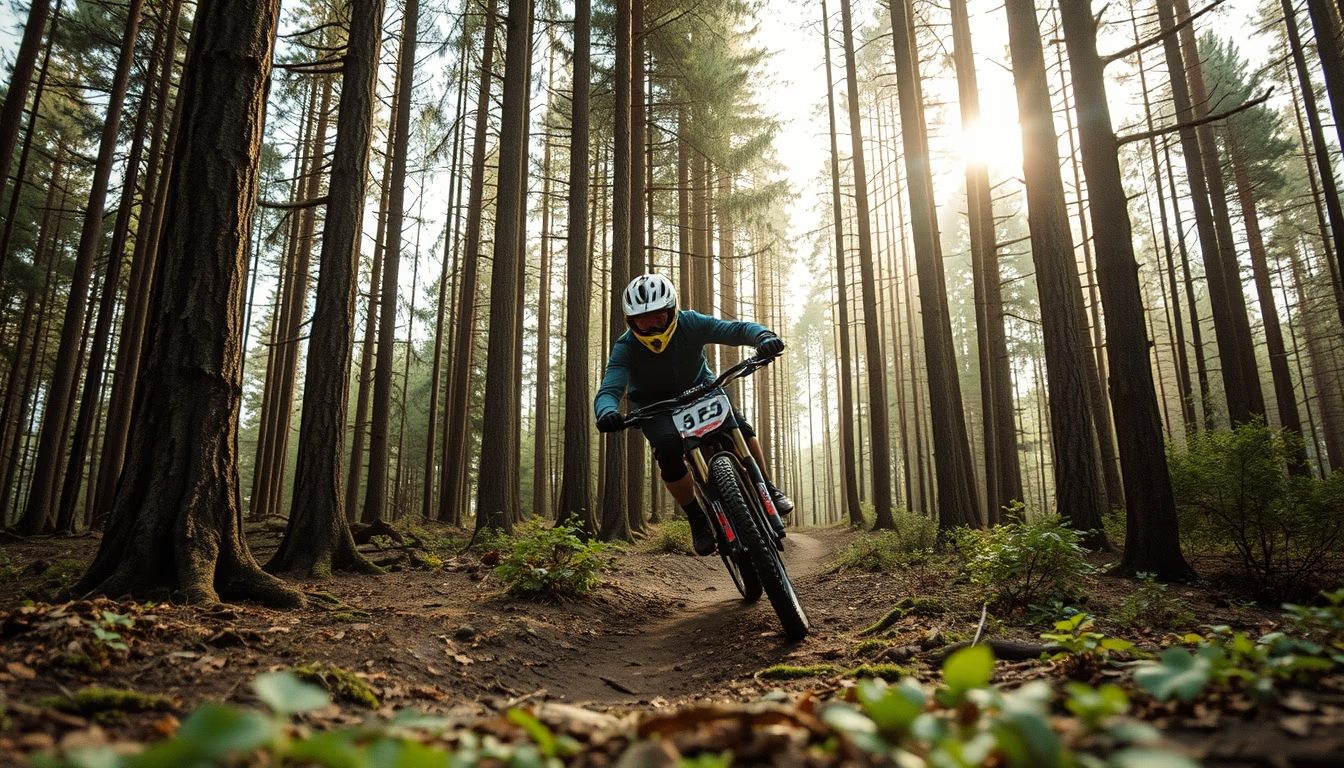
Technical mountain bike descent on rocky trail: technique, equipment, and tips for riding safely on rough terrain.
About this subject
Mountain bike descending on rocky trails is one of the most challenging and exciting aspects of the sport. It requires precise bike control, rapid terrain reading, and mastery of techniques such as neutral position, modulated braking, and line choice. In Brazil, mountainous regions like Serra do Mar (SP/PR) and Chapada Diamantina (BA) offer iconic sections with loose rocks and steep gradients, often used in enduro and cross-country competitions.
Equipment preparation is crucial: wide-knob tires (2.4 to 2.6 inches), front suspension with 120, 160 mm travel, and hydraulic disc brakes with 180, 203 mm rotors ensure grip and stopping power. Tire pressure is reduced to increase contact area, typically between 20 and 25 psi depending on rider weight and rock type. Frame protectors and puncture-proof liners are also common.
Descending technique involves keeping the center of gravity low, elbows and knees bent, and looking ahead to anticipate obstacles. Brake modulation is primarily on the front (about 70% force), but on tight corners or slippery rocks, the rear brake takes priority to avoid flipping. Practice on trails like "Desafio das Pedras" in Petrópolis (RJ) or "Rota dos Cânions" in Urubici (SC) helps develop the necessary feel.
Trivia: the world speed record for MTB descent is 167.6 km/h, set by Eric Barone in 2017 on La Maxence track (France). In Brazil, extreme downhill gained prominence with the Brazilian Downhill Championship held at places like Cantareira State Park (SP). Studies show that technical descents increase heart rate to up to 90% of maximum, requiring both physical and mental preparation.
Frequently Asked Questions
What is the correct braking technique on rocky descents?
Use the front brake mostly (about 70% force), but on corners or loose rocks, prioritize the rear to avoid flipping. Keep fingers on levers and modulate pressure smoothly.
What is the ideal tire pressure for rocky trails?
Between 20 and 25 psi, adjusted according to rider weight and rock type. Lower pressure increases grip but risks punctures; using a puncture-proof liner is recommended.
What are the best places in Brazil for technical MTB descents?
Mountain regions like Serra do Mar (SP/PR), Chapada Diamantina (BA), Petrópolis (RJ), and Urubici (SC) offer challenging trails with rocks and gradients, plus enduro and downhill competitions.
Direct URL
https://pub-c7d6a6ea828543ac903a74a341ccb2e1.r2.dev/imagens/mtb-rocky-trail-descent-film-grain-authentic-fresh0.avifHow to credit
Include a visible link back to UtilizAí. Copy one of the snippets below:
<a href="https://xn--utiliza-eza.com/en/midia/imagens/mtb-rocky-trail-descent-film-grain-authentic-fresh0">Mtb rocky trail descent</a> by <a href="https://xn--utiliza-eza.com">UtilizAí</a>, licensed under <a href="https://creativecommons.org/licenses/by/4.0/">CC BY 4.0</a>.
[Mtb rocky trail descent](https://xn--utiliza-eza.com/en/midia/imagens/mtb-rocky-trail-descent-film-grain-authentic-fresh0) by [UtilizAí](https://xn--utiliza-eza.com), CC BY 4.0
License: CC-BY-4.0